Add TOPKHOJ as a Preferred Source on Google
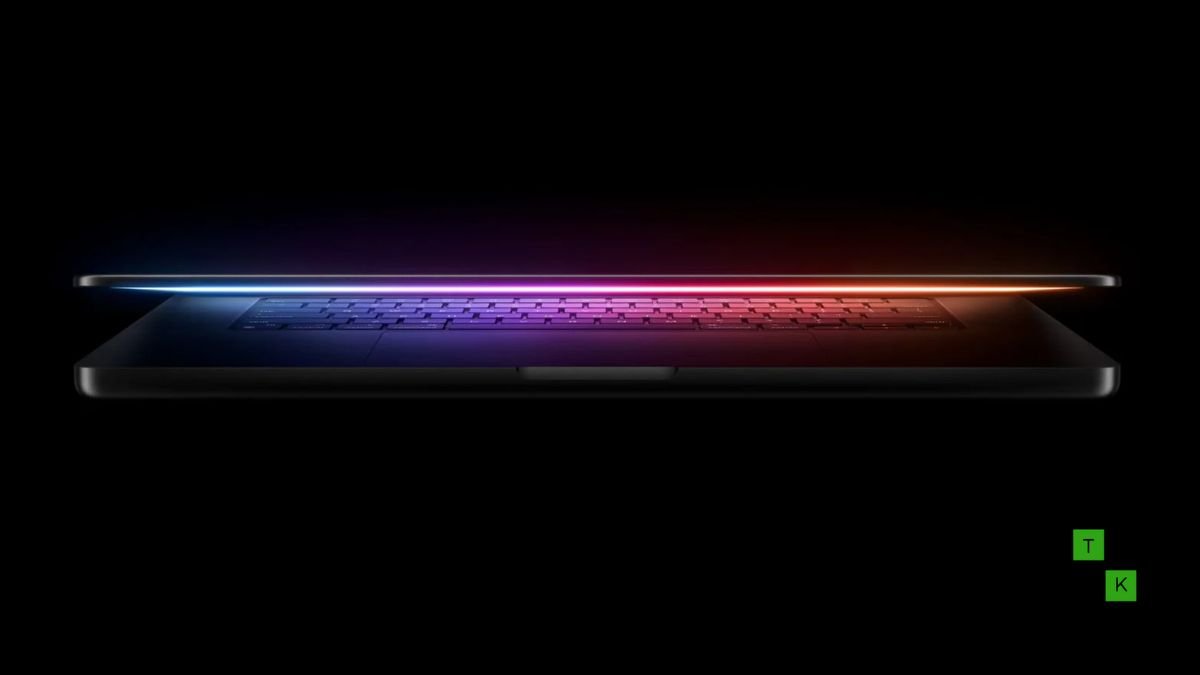
After pioneering two-stack Tandem OLED displays on the iPad Pro, Apple is preparing to bring that same display technology to the Mac. Supply-chain reports from display analyst Ross Young, TF Securities analyst Ming-Chi Kuo, and Bloomberg’s Mark Gurman indicate that Apple has accelerated testing of an all-new MacBook Pro featuring a Tandem OLED touchscreen.
Internally validated alongside upcoming macOS 27.1 builds, the next-generation 14-inch and 16-inch flagships mark the first major aesthetic and functional redesign of Apple’s pro-grade laptops since the 2021 chassis reboot. Beyond introducing true pixel-level blacks and dramatic power-efficiency gains, the upcoming machines are set to introduce on-cell touchscreen digitizers, an ultra-slim chassis profile, and the removal of the display notch in favor of a discreet punch-hole camera.
Tandem OLED: The Next Leap Beyond Mini-LED Liquid Retina XDR
Since late 2021, the 14-inch and 16-inch MacBook Pro have relied on Liquid Retina XDR mini-LED panels. While mini-LED offers impressive peak brightness, it suffers from blooming (halo effects around bright text against dark backgrounds) and slow pixel response times.
- Two-Stack Tandem Architecture: Sourced primarily from Samsung Display and LG Display, the panels stack two organic light-emitting layers in series. This doubles peak luminance, quadruples panel lifespan, and mitigates the burn-in vulnerabilities historically associated with desktop user interfaces.
- True Pixel-Level Blacks & Infinite Contrast: Unlike mini-LED local-dimming zones, every subpixel on an OLED panel illuminates and shuts off independently, eliminating backlight blooming for video colorists, photographers, and 3D animators working in high-contrast HDR environments.
- Up to 2,000 Nits Peak HDR: The Tandem OLED panels are engineered to hit up to 1,000 nits full-screen sustained brightness and up to 2,000 nits peak HDR output, while dropping down to a single nit in pitch-dark environments for comfortable late-night editing.
- Enhanced ProMotion Efficiency: An upgraded LTPO backplane enables dynamic refresh scaling from 1Hz up to 120Hz, reducing idle power consumption when displaying static text documents or code repositories.
The First Touchscreen Mac: Reinforced Hinge and macOS 27.1
For over a decade, Apple leadership dismissed touch-enabled laptop screens, with Steve Jobs famously arguing that vertical touch surfaces caused “gorilla arm” fatigue. The upcoming OLED MacBook Pro is set to bridge that historical philosophical divide:
- On-Cell Touch Digitizers: Touch sensors are integrated directly into the display glass rather than layered as a separate sheet, keeping panel thickness to a minimum while maintaining maximum optical clarity.
- Reinforced Torque Hinge: To resolve screen wobble when tapping on a vertical laptop display, Apple has engineered a high-rigidity hinge mechanism that stabilizes the screen when interacted with by hand or digital stylus.
- macOS 27 Touch Gestures: Internal macOS 27.1 builds reveal touch-friendly UI adaptations, including expanded menu-item hitboxes, redesigned gesture shortcuts in window management, and native palm-rejection algorithms designed to differentiate casual screen pointing from purposeful input.
Thinner Unibody & The End of the Display Notch
To match the svelte design language introduced with the M4 iPad Pro, Apple’s industrial design team has re-engineered the MacBook Pro chassis:
- Slimmer Profile: The current aluminum unibody measures approximately 15.5mm (0.61 inches) thick. The OLED redesign is expected to shave several millimeters off that footprint, making it the thinnest pro-grade notebook Apple has produced since the Intel butterfly era-without compromising thermal headroom.
- Punch-Hole Camera Cutout: The rectangular top notch that debuted in 2021 is slated to be retired. In its place, Apple is introducing a centered hole-punch camera cutout, with software integration that mimics the Dynamic Island on iPhone to house contextual activities, audio playback indicators, and AirDrop transfers.
- Studio-Grade Webcam: Housed within the smaller cutout is an upgraded 12MP Center Stage camera supporting 4K video capture and Desk View perspective correction for remote conferencing.
Liquid Retina XDR (Mini-LED) vs. Next-Gen Tandem OLED MacBook Pro
| Hardware Feature | Current MacBook Pro (M4/M5 Generation) | Upcoming OLED MacBook Pro Redesign |
| Display Panel Tech | Mini-LED (Liquid Retina XDR) | Dual-Stack Tandem OLED |
| Pixel-Level Contrast | Local Dimming Zones (~10,000 Mini-LEDs) | Per-Pixel Emission (True 0-Nit Blacks, Zero Bloom) |
| Peak HDR Luminance | 1,600 nits peak / 1,000 nits sustained | Up to 2,000 nits peak / 1,000 nits sustained |
| Touchscreen Input | None (Trackpad & Keyboard Only) | On-Cell Multi-Touch with Reinforced Hinge |
| Bezel & Camera Housing | Physical Rectangular Display Notch | Centered Punch-Hole Cutout (Dynamic Island UI) |
| Chassis Thickness | 15.5 mm (14-inch) / 16.8 mm (16-inch) | Ultra-Slim Profile (~12.5 mm – 13.5 mm) |
| Silicon Platform | M4 / M5 Pro and M5 Max | Upgraded M5 Pro / M5 Max (and future 2nm M6) |
| Operating System | macOS Sequoia / macOS 26 | macOS 27 with Touch Optimizations |
| Expected Price Tier | Starts at $1,999 (14″) / $2,499 (16″) | Premium Pricing Expected (~$200 – $300 Premium) |
Under the Hood: Apple Silicon & Apple Intelligence
The OLED MacBook Pro models are undergoing software validation on M5 Pro and M5 Max silicon:
- Next-Gen Neural Engine: Built to power local Apple Intelligence workflows, the onboard NPU features upgraded matrix math accelerators designed to execute multi-billion-parameter LLMs locally without cloud latency.
- High-Bandwidth Unified Memory: Configured with up to 128GB of high-speed unified memory, delivering the throughput required for rendering 8K ProRes RAW video timelines and training localized machine-learning weights.
- Roadmap to 2nm M6 Silicon: While early validation units pair the OLED display with high-binned M5-series processors, supply-chain analysts note that this chassis redesign is architected to serve as the long-term host for TSMC’s upcoming 2nm M6 processor family, expected to introduce another leap in performance-per-watt.
Pricing Expectations and Release Window
The integration of dual-stack Tandem OLED displays is expected to position the new models as an ultra-premium tier in Apple’s portable lineup:
- Pricing Tier: Industry analysts predict a price increase of $200 to $300 over current models, mirroring the pricing adjustment observed when the iPad Pro transitioned to Tandem OLED.
- Expected Launch Timing: While initial projections pointed to early 2027, recent code sightings in macOS 27.1 and accelerated panel production schedules suggest Apple could unveil the redesigned flagships in a late 2026 special event window (October/November), with broader commercial availability rolling out through early 2027.
The transition to Tandem OLED touchscreens represents the most significant evolution of the MacBook Pro line in half a decade. By eliminating blooming, introducing touch interactions, and slimming the chassis, Apple is preparing to set a new benchmark for creative and developer workstations.
🚨 Stay Updated with TopKhoj! 🚨
Get the latest tech news, deals, and exclusive offers first!
📰 Visit News Section📲 Join our Telegram Channel for real-time updates and best deals!
🔗 Join Telegram Now💡 Stay informed and never miss a great deal with TopKhoj!
⚠️ Disclaimer: Any link provided in the article related to a product or service will redirect you to our affiliate partner(s)' website, which are affiliate links. This means that if you make a purchase through these links, we may earn a commission at no extra cost to you. This commission helps support our blog and our work.
🔔 All prices mentioned above are subject to change based on current offers and availability on e-commerce platforms. Please check the latest price and product details on the product page before making a purchase.