Add TOPKHOJ on Google:
 Preferred Source
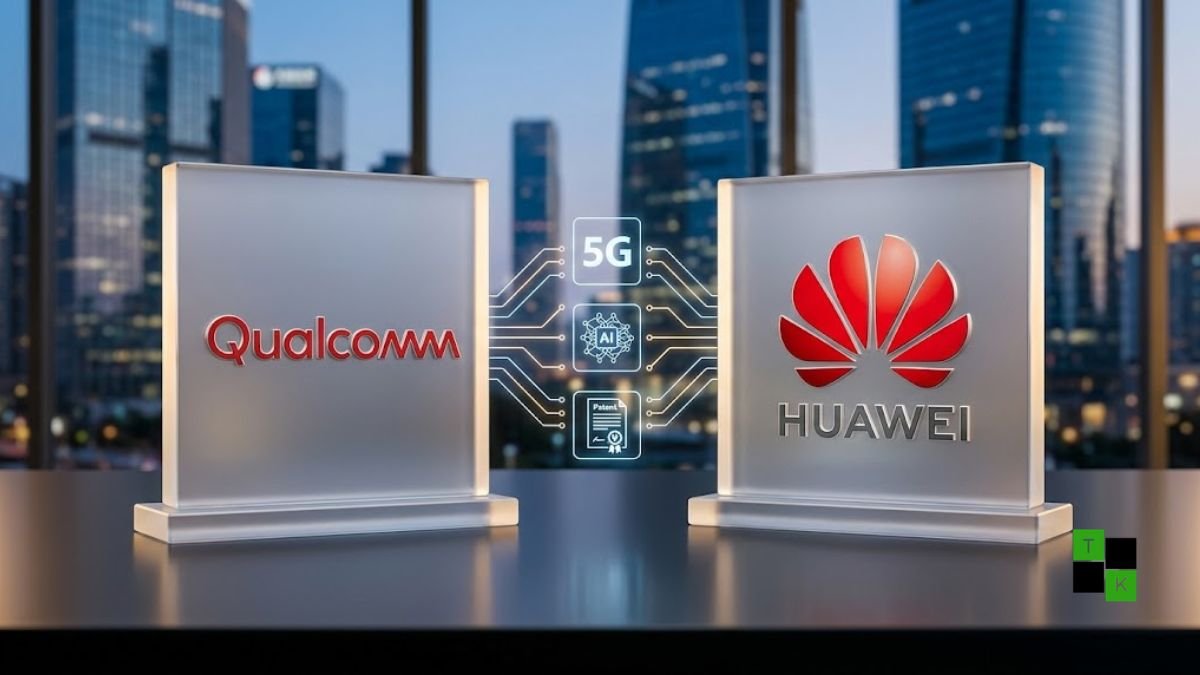
In a major cross-border development for the global telecommunications and semiconductor industries, Chinese technology leader Huawei Technologies and American wireless chip designer Qualcomm have officially announced a broad, multi-year patent license agreement. The comprehensive pact establishes mutual cross-licenses across both corporations’ extensive intellectual property (IP) portfolios, spanning standard-essential 5G telecommunications, computing architectures, artificial intelligence (AI), and enterprise networking technologies.
Crucially, the landmark transaction also includes Qualcomm’s direct purchase of select Huawei-held U.S. patents across compute, AI, and networking fields (subject to customary U.S. regulatory clearances). Marking the first time Qualcomm has agreed to license and acquire patent assets from Huawei in 5G and advanced computing, the agreement pushes the cumulative contract value of Huawei’s global patent licensing business beyond $6.9 billion.
5G, AI, and Compute: The Scope of the Cross-Licensing Pact
The multi-year arrangement represents a substantial broadening of legal peace between the two mobile technology titans:
- First 5G Licensing Pact Between the Two Giants: While previous legal settlements resolved historical 3G and 4G CDMA/LTE disputes, this deal marks Huawei’s first formal patent licensing agreement with Qualcomm covering 5G cellular standards.
- Expansion into AI and High-Performance Compute: Moving beyond pure cellular wireless standards, the agreement extends cross-licensing coverage into artificial intelligence processing, machine-learning accelerator architectures, high-throughput enterprise networking, and general-purpose compute topologies.
- Mutual Recognition of Foundational IP: In a joint release, both companies underscored the arrangement as mutual recognition of foundational contributions-validating Huawei’s continuous, heavy domestic R&D capital expenditure alongside Qualcomm’s fundamental innovations in modern wireless communication systems.
Qualcomm Purchases Select Huawei U.S. Patents
A particularly striking dimension of the agreement is Qualcomm’s agreement to acquire an undisclosed batch of Huawei’s United States patent portfolio:
- Asset Monetization Amid Trade Curbs: Following years of strict U.S. export controls and Entity List restrictions that limited Huawei’s direct product sales and semiconductor foundry access in Western markets, transferring select U.S. patents to an American corporate leader provides Huawei with substantial financial monetization.
- Strengthening Qualcomm’s AI and Networking Arsenal: For Qualcomm, acquiring Huawei’s U.S. patents reinforces its patent defense moat in enterprise compute, server networking, and edge-device AI acceleration as the chipmaker expands into data centers and automotive cockpits.
- Regulatory Oversight: The patent transfer provisions remain subject to statutory regulatory approvals in the United States before final closing, though standard patent cross-licensing arrangements generally fall outside direct hardware export bans.
The 25-Year Arc: From 2001 Royaltor to IP Exporter
The 2026 agreement highlights a remarkable 25-year transformation in the balance of technological intellectual property:
| Milestone Year | Key Intellectual Property Development | Industry Significance |
| 2001 | Huawei makes its first-ever IP licensing payment to Qualcomm | Marks Huawei’s early entry as a licensee of foreign CDMA wireless tech |
| 2011 | Huawei receives its first outbound IP licensing revenue (from Motorola) | Signals the beginning of Huawei’s transition into a net global IP contributor |
| 2019 – 2020 | U.S. Entity List sanctions; Qualcomm & Huawei settle legacy licensing | $1.8 billion back-payment settled; handset chip supply restricted |
| August 2026 | Huawei signs global Wi-Fi patent cross-licensing pact with HP Inc. | Demonstrates continued Western enterprise engagement with Huawei IP |
| October 2026 | Huawei & Qualcomm sign multi-year 5G, AI, and Compute agreement | First 5G deal; Qualcomm acquires Huawei U.S. patents; $6.9B milestone |
R&D Reinvestment Drives $6.9 Billion Milestone
Huawei disclosed that following the execution of the Qualcomm agreement, the expected total contract value of its active global patent licensing deals has surpassed $6.9 billion.
- Net Positive IP Revenue: Huawei’s intellectual property licensing unit has generated net positive revenue annually since 2021, offsetting hardware supply bottlenecks through outbound technology licensing.
- Massive Research Expenditure: Confronting restricted access to foreign EDA software and advanced semiconductor lithography equipment since 2019, Huawei has systematically reinvested over 20% to 23% of its annual revenues into internal R&D. This intensive domestic research drive propelled the company into the world’s top ranks for patent filings at the World Intellectual Property Organization (WIPO).
- Cross-Industry Momentum: The Qualcomm transaction follows closely behind a major cross-licensing pact struck with HP Inc. in August 2026 covering standard Wi-Fi protocols, alongside longstanding bilateral patent agreements with European automakers (including Mercedes-Benz, Audi, and BMW) for connected-vehicle communications.
Industry Implications for Global Tech Normalization
While geopolitical divisions between Washington and Beijing have prompted decoupling across hardware supply chains, Monday’s announcement underscores that foundational intellectual property remains deeply interdependent:
- FRAND and Standard-Essential Realities: Both Huawei and Qualcomm possess vast war chests of Standard-Essential Patents (SEPs) governed by Fair, Reasonable, and Non-Discriminatory (FRAND) licensing terms. Without bilateral licensing, neither company could design modern modems, microprocessors, or base stations without protracted litigation.
- Commercial Pragmatism Prevails: Following Qualcomm’s recent patent licensing extension with Apple, securing a comprehensive, multi-year cross-licensing treaty with Huawei provides Qualcomm with long-term legal certainty across mobile and AI markets.
- Validation of Chinese Innovation: Despite extensive export barriers, global semiconductor heavyweights continue to validate and pay for Chinese technological contributions in telecommunications and compute architecture.
Financial terms of the transaction were not publicly disclosed. Both companies confirmed that administrative teams have begun the filing process for relevant regulatory approvals to conclude the patent asset transfers.
🚨 Stay Updated with TopKhoj! 🚨
Get the latest tech news, deals, and exclusive offers first!
📰 Visit News Section📲 Join our Telegram Channel for real-time updates and best deals!
🔗 Join Telegram Now💡 Stay informed and never miss a great deal with TopKhoj!
⚠️ Disclaimer: Any link provided in the article related to a product or service will redirect you to our affiliate partner(s)' website, which are affiliate links. This means that if you make a purchase through these links, we may earn a commission at no extra cost to you. This commission helps support our blog and our work.
🔔 All prices mentioned above are subject to change based on current offers and availability on e-commerce platforms. Please check the latest price and product details on the product page before making a purchase.