Add TOPKHOJ as a Preferred Source on Google
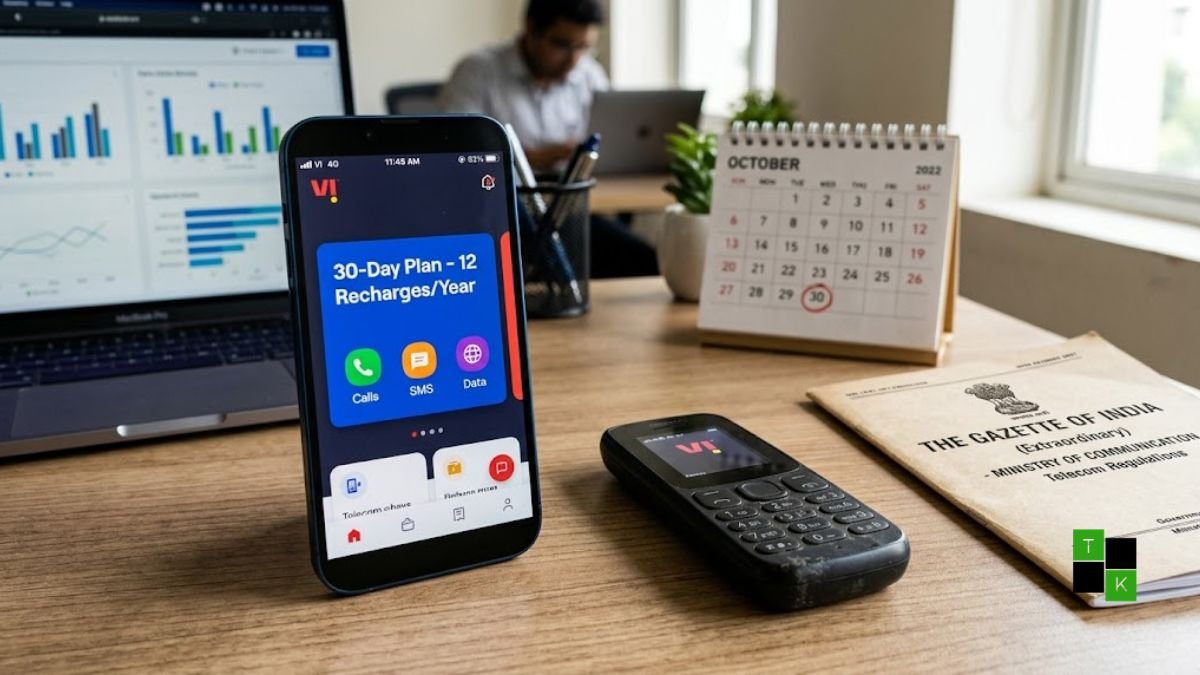
The Telecom Regulatory Authority of India (TRAI) has officially overhauled prepaid tariff regulations across the country, issuing the Telecom Consumer Protection (Thirteenth Amendment) Regulations, 2026. The landmark regulatory framework directs all major telecom service providers-including Reliance Jio, Bharti Airtel, Vodafone Idea, and BSNL-to introduce true 30-day validity recharge vouchers, monthly-renewable plans, and standalone voice-and-SMS-only packs devoid of forced internet data bundles.
The move addresses long-standing consumer dissatisfaction with the industry-standard “28-day cycle,” a mathematical structure that effectively forced prepaid users to purchase 13 monthly recharges per calendar year rather than 12. Following widespread public feedback-including over 1,100 stakeholder submissions during consultations and formal representation in Parliament by Rajya Sabha MP Raghav Chadha-the regulatory directive establishes consumer flexibility while curbing unnecessary spending for over 300 million feature-phone owners, seniors, and secondary SIM users.
Ending the “28-Day Math”: 12 Recharges Instead of 13
For years, the standard monthly recharge sold by Indian telecom operators was fixed at 28 days. Over the course of a 365-day year, a 28-day renewal cycle results in an accumulated deficit of roughly 29 days, compelling users to purchase a 13th recharge every year:
- True 30-Day Special Tariff Vouchers (STVs): Operators are now required to offer Special Tariff Vouchers with an explicit validity period of 30 days, cutting down the total annual recharges to 12 and saving users an entire month’s recharge cost each year.
- Calendar-Date Monthly Renewability: Telecom companies must also offer at least one plan that renews on the exact same numerical date each month (e.g., renewing on the 5th of every month). If a renewal date does not occur in a shorter month-such as February 29, 30, or 31-the system must automatically roll over the renewal to the final calendar day of that month.
- Longer Validity Options: In addition to 30-day options, telecom operators must maintain at least one voice-and-SMS plan that exceeds standard 30-day durations to accommodate quarterly and annual budgets.
Unbundling Data: Voice and SMS-Only Plans Mandated
Beyond cycle durations, the Thirteenth Amendment addresses the widespread practice of forcing users to buy bundled daily data allocations (typically 1GB to 2GB per day) just to maintain active incoming and outgoing calling lines:
- Proportionate Price Drops: TRAI has mandated that operators introduce voice-and-SMS-only STVs corresponding to each bundled data validity tier. Crucially, the regulator specified that these voice-only vouchers must feature a proportionate reduction in tariff, ensuring that non-data subscribers do not continue paying an implicit data surcharge.
- No Artificial Price Caps: In keeping with India’s forbearance policy on mobile tariffs, TRAI has refrained from fixing hard price ceilings. However, operators are required to structure plans transparently so the removal of data reflects tangible retail savings.
- Prominent Storefront Visibility: Operators must prominently publish and display these voice-only vouchers across mobile applications, self-care portals, customer service desks, and retail recharge outlets, preventing plans from being concealed behind high-tier bundled options.
Regulatory Shift: Old Tariff Structure vs. New TRAI 2026 Framework
| Parameter | Previous Industry Practice | New TRAI 2026 Regulation |
| Standard “Monthly” Validity | 28 Days (Accumulates 13 cycles/year) | 30 Days / Same-Date Monthly Renewal |
| Annual Recharges Required | 13 Recharges per Year | 12 Recharges per Year |
| Voice & Calling Packs | Heavily bundled with daily 4G/5G data | Standalone Voice + SMS Only Vouchers |
| Pricing Rationale | Full bundle price even if data unused | Proportionately discounted for no-data users |
| Primary Beneficiaries | Smartphone heavy data consumers | Feature-phone users, seniors, low-income tiers |
| Renewal Mechanism | Fixed day countdowns only | Exact calendar date matching (last-day fallback) |
Protection for 300 Million Feature-Phone Owners & Seniors
Consumer advocacy groups and legislative representatives highlighted that bundled data packs place an unfair financial burden on digitally inactive segments:
- Preventing Forced Purchases: India is home to an estimated 300 million to 350 million keypad feature-phone users, with over 100 million of them consuming zero internet data. Consumer groups noted that low-income households were collectively spending between ₹15,000 crore and ₹20,000 crore annually on bundled mobile data they could not use.
- Relief for Secondary SIMs & OTP Lines: Millions of urban consumers maintain secondary SIM cards solely for receiving bank transaction one-time passwords (OTPs) or emergency family calls. The new voice-and-SMS options allow users to keep connections active without paying for redundant 5G data bundles.
- Parliamentary Push: The issue gained momentum following formal interventions in the Rajya Sabha by MP Raghav Chadha on March 11, who urged the central government and TRAI to end the exploitative “28-day math” and safeguard basic telecom affordability.
Telecom Operators’ Stand and Implementation Timeline
During the consultation phase, private telecom operators voiced reservations regarding mandatory voice-only plans. Reliance Jio argued that all-IP 4G and 5G networks inherently treat voice as an application layer over packet data, while cautioning that ultra-cheap short-validity vouchers could reduce barriers for spam dialers and financial fraudsters. Airtel and Vodafone Idea also raised concerns about unintentional background data charges causing customer bill friction.
However, TRAI concluded that market forces had failed to supply adequate short-validity, affordable voice options after the previous 2024 regulations. By enforcing parallel voice-only options across all validity brackets, the regulator aims to protect consumer choice while maintaining the financial health of the telecom sector.
The Telecom Consumer Protection (Thirteenth Amendment) Regulations, 2026, are live on the regulator’s portal, with telecom operators actively preparing compliant voucher tiers across their digital recharge channels.
🚨 Stay Updated with TopKhoj! 🚨
Get the latest tech news, deals, and exclusive offers first!
📰 Visit News Section📲 Join our Telegram Channel for real-time updates and best deals!
🔗 Join Telegram Now💡 Stay informed and never miss a great deal with TopKhoj!
⚠️ Disclaimer: Any link provided in the article related to a product or service will redirect you to our affiliate partner(s)' website, which are affiliate links. This means that if you make a purchase through these links, we may earn a commission at no extra cost to you. This commission helps support our blog and our work.
🔔 All prices mentioned above are subject to change based on current offers and availability on e-commerce platforms. Please check the latest price and product details on the product page before making a purchase.