Add TOPKHOJ on Google:
 Preferred Source
In a move reminiscent of the iPhone X, Apple is widely expected to bypass the iPhone 19 moniker and launch the iPhone 20 in 2027 to mark two decades since the debut of the original iPhone. Early supply chain samples and insider reports suggest this commemorative device will introduce the most significant physical redesign in years, alongside fundamental shifts in how the camera processes image data.
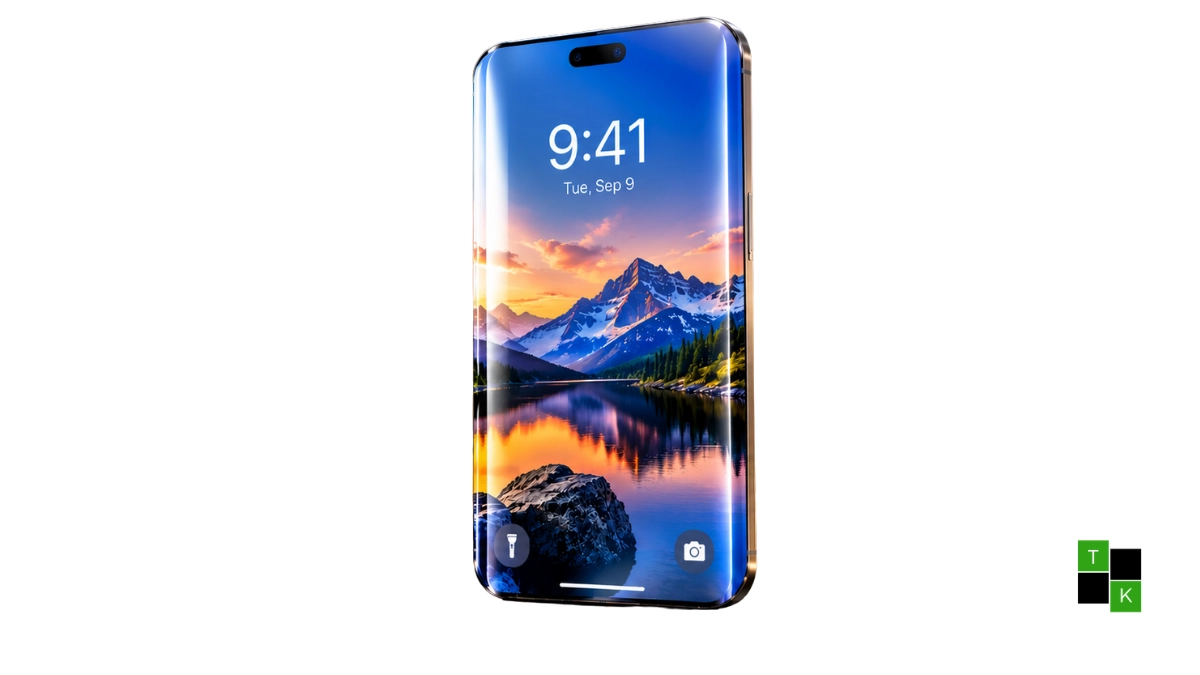
The “3D Quad-Curved” Glass Overhaul
According to prominent leaker Ice Universe and other industry insiders, Apple is developing a new quad-curved OLED display that wraps around the edges of the device.
A recently leaked physical sample of the cover glass reveals edges that bend downward toward the frame on all four sides, effectively hiding the middle metal band. Internally codenamed V73 for the Pro model and V74 for the Pro Max, the new chassis features rounded corners and smaller top cutouts for Face ID and the front-facing camera. Supply chain whispers also suggest the displays could increase slightly in size to accommodate the new geometry, expanding to 6.41 inches on the Pro and 6.96 inches on the Pro Max.
17nm Camera Sensor Logic
Beyond the exterior glass, the iPhone 20 Pro’s imaging system is expected to receive a major architectural update. The flagship is tipped to feature a stacked main camera sensor equipped with a logic layer manufactured on a 17nm process. By stacking the light-capturing pixels separately from this advanced 17nm logic circuitry, the camera module can read and transfer image data much faster while consuming less power.
Processing Benefits and Samsung’s Role
Faster readout speeds at the sensor level directly combat rolling shutter distortion when capturing fast-moving subjects. This processing efficiency allows the camera module to handle complex image data closer to the hardware, enhancing computational photography and high dynamic range (HDR) performance before the main A-series processor even touches the file.
Notably, a recent industry report indicated that Samsung has developed a 17nm Low Power Value (17LPV) process specifically for image sensor signal processing. Apple is reportedly collaborating with Samsung at its Austin, Texas facility to produce advanced three-layer stacked sensors, though it remains unconfirmed if this specific facility is responsible for the leaked 17nm component.
Rumored iPhone 20 Pro Specifications
| Feature | Rumored Detail |
| Release Target | September 2027 (20th Anniversary) |
| Internal Codenames | V73 (Pro), V74 (Pro Max) |
| Cover Glass Design | 3D Quad-Curved Glass (all four sides) |
| Display Sizes | 6.41-inch (Pro) / 6.96-inch (Pro Max) |
| Main Camera Sensor | Stacked sensor with 17nm logic layer |
| Key Camera Benefits | Faster readout, reduced rolling shutter, lower power |
Given that Apple generally locks in major design decisions roughly a year in advance, the emergence of physical glass samples aligns with traditional development timelines for a late-2027 release. However, manufacturing processes and sensor architectures often undergo multiple revisions before mass production begins, meaning these features are subject to iteration over the coming development cycle.
🚨 Stay Updated with TopKhoj! 🚨
Get the latest tech news, deals, and exclusive offers first!
📰 Visit News Section📲 Join our Telegram Channel for real-time updates and best deals!
🔗 Join Telegram Now💡 Stay informed and never miss a great deal with TopKhoj!
⚠️ Disclaimer: Any link provided in the article related to a product or service will redirect you to our affiliate partner(s)' website, which are affiliate links. This means that if you make a purchase through these links, we may earn a commission at no extra cost to you. This commission helps support our blog and our work.
🔔 All prices mentioned above are subject to change based on current offers and availability on e-commerce platforms. Please check the latest price and product details on the product page before making a purchase.