Add TOPKHOJ as a Preferred Source on Google
Following a wave of customer confusion sparked by conflicting launch-day reports, Apple has officially clarified the hardware compatibility boundaries for its upcoming conversational voice assistant: Siri AI is strictly exclusive to the newly announced HomePod mini 2 and select Apple TV 4K models, shutting the door on software upgrades for the original 2020 HomePod mini.
The controversy originated earlier in the week when a report from CNET indicated that the first-generation HomePod mini-powered by the Apple S5 processor-would receive Siri AI compatibility later this year alongside the rollout of HomePod software 27.2. Following inquiries from tech publications including 9to5Mac, CNET issued a formal correction, and Apple confirmed that the original model will remain restricted to the standard “classic” Siri voice assistant. The upgraded assistant, built on Apple’s proprietary Foundation Models, requires the faster Apple S10 chip found inside the new $149 HomePod mini 2.
The Silicon Bottleneck: Apple S5 vs. Apple S10
The decision to wall off Siri AI from the original HomePod mini comes down to raw on-device processing power and memory architecture:
- The 2020 S5 Architecture: The original HomePod mini, launched six years ago in October 2020, inherited the Apple S5 processor originally designed for the 2019 Apple Watch Series 5. Built on an older 7-nanometer architecture with tight memory bandwidth, the S5 was engineered to handle basic audio equalisation, standard speech-to-text heuristics, and single-turn command parsing (such as alarms, music playback, and HomeKit light toggles).
- The S10 Computational Leap: The HomePod mini 2 jumps five generations of silicon to the Apple S10 chip. Featuring an integrated Neural Engine and high-efficiency vector compute units, the S10 can run compressed on-device foundation models locally. This allows the speaker to process contextual natural-language syntax, manage speaker diarization, and execute multi-turn intent resolution before determining whether a query needs Private Cloud Compute offloading.
- Why Cloud-Only Processing Was Ruled Out: While some users questioned why Apple couldn’t simply route all speech on older speakers to cloud servers, Apple’s architecture mandates local tokenization, voice identification for up to six household members, and acoustic noise isolation directly on the endpoint to protect user privacy and eliminate latency. The S5 silicon cannot maintain those pipelines without introducing severe delays into daily interactions.
Siri AI Rollout: Staggered Deployment Timeline
For buyers picking up the refreshed HomePod mini 2 at its $149 (₹18,900) retail price point, Apple has reiterated that Siri AI will not be available on day one:
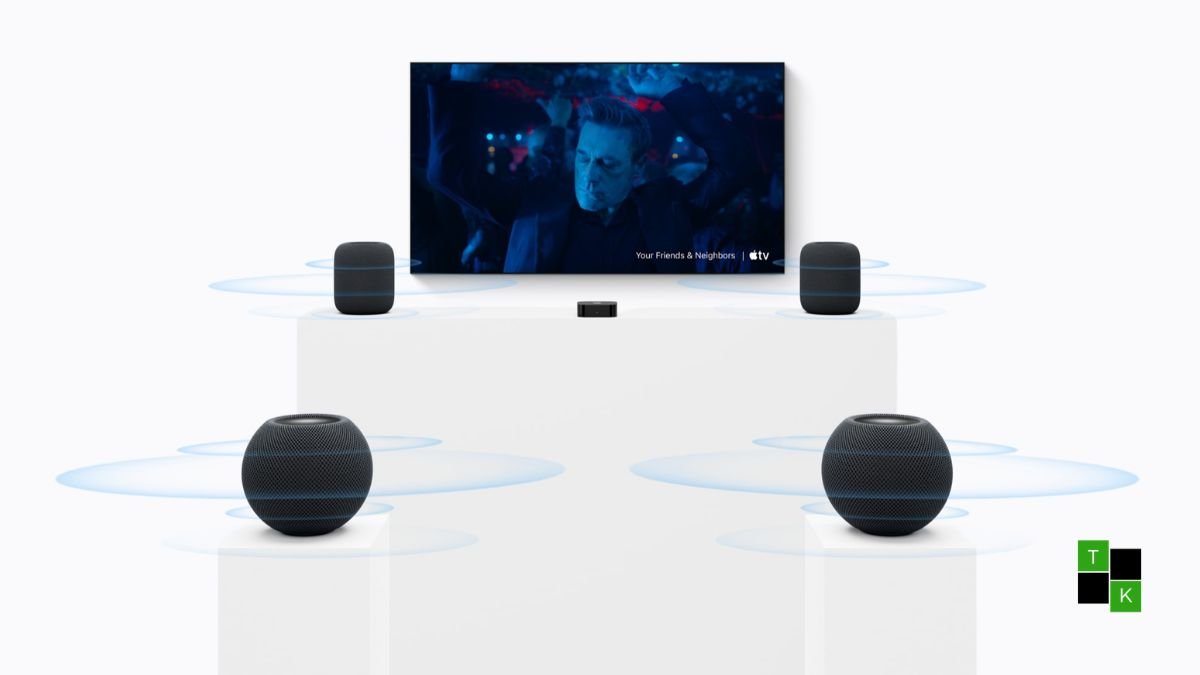
- Hardware Release (October 30, 2026): Units arriving to pre-order customers will ship with classic Siri out of the box, running on HomePod software 27.2. At launch, users will have access to hardware-level upgrades including Sound Glow (the music-reactive top visualizer), enhanced 360-degree acoustic tuning, Wi-Fi 6E connectivity, and four-speaker surround sound when paired with the Apple TV 4K.
- Siri AI Activation via Software Update: Apple confirmed that the advanced Siri AI assistant will arrive via an over-the-air firmware update scheduled for late 2026 or early 2027.
- Regional Gating: The initial rollout of Siri AI on HomePod mini 2 will support English across eight primary launch regions: the United States, India, the United Kingdom, Canada, Australia, New Zealand, Singapore, and South Africa. Additional languages and European territories will follow as regulatory and localization milestones are achieved.
Hardware Compatibility Matrix: Apple Living-Room Hardware
| Apple Home Device | Processor Silicon | Siri AI Support Status | Required Conditions / Notes |
| HomePod mini 2 (2026) | Apple S10 Chip | Yes (Full Siri AI) | Arriving via future over-the-air update |
| HomePod mini (1st Gen, 2020) | Apple S5 Chip | No (Classic Siri Only) | Restricted to legacy voice controls |
| Apple TV 4K (4th Gen, 2026) | Apple A19 Chip | Yes (Full Siri AI) | Native hands-free 3-mic array on box |
| Apple TV 4K (3rd Gen, 2022) | Apple A15 Bionic | Yes (Selected Features) | Supported via connected Siri Remote mic |
| Apple TV 4K (2nd Gen, 2021) | Apple A12 Bionic | Yes (Selected Features) | Supported via connected Siri Remote mic |
| HomePod (2nd Gen, 2023) | Apple S7 Chip | Under Evaluation | Software expansion hinted for future builds |
| HomeView Smart Display (2026) | Apple A18 Chip | Yes (Full Siri AI) | Native on-device screen and voice agent |
What About the Full-Size HomePod (2nd Gen)?
While Apple officially closed the door on the original mini, the status of the full-size HomePod (2nd generation) remains more fluid:
- The S7 Chip Advantage: The 2023 full-size HomePod utilizes the Apple S7 chip (derived from the Apple Watch Series 7). While it lacks the dedicated AI throughput of the S10 or A18/A19 chips, it features significantly higher memory bandwidth and floating-point capacity than the obsolete S5.
- Potential Future Inclusion: Industry insiders and Apple’s ecosystem footnotes suggest that select conversational enhancements could bridge to the full-size speaker down the line. However, Apple’s official documentation currently emphasizes the HomePod mini 2, the Apple TV 4K family (2nd gen or later), and the newly unveiled HomeView smart display as the primary pillars of the Siri AI home rollout.
What Original HomePod mini Owners Retain
For the millions of households operating the original 2020 HomePod mini, Apple emphasized that the devices are not being abandoned:
- Continuous Everyday Utility: Classic Siri will continue to handle timers, alarms, music streaming via Apple Music and AirPlay 2, intercom broadcasts, and HomeKit/Matter smart home automation commands.
- Thread & Sensor Functionality: The integrated temperature and humidity sensors, Thread border routing, and Sound Recognition alerts for smoke and carbon monoxide detectors remain fully operational under HomePod software 27.x updates.
- Stereo Pairing Limitations: Original HomePod mini units cannot be stereo-paired with a HomePod mini 2. Users wishing to configure an Left/Right stereo audio pair must use two speakers of the exact same hardware generation.
Consumer Verdict & Upgrade Perspective
Apple’s clarification establishes a clear dividing line across its smart speaker portfolio. While the visual differences between the 2020 and 2026 mini models are subtle-distinguished primarily by new color options like Green and Pink and the top Sound Glow lighting canvas-the silicon shift from the S5 to the S10 represents a definitive generational boundary.
For users whose current HomePod mini setups are dedicated strictly to kitchen timers, smart bulb switches, and casual background music, the original speaker remains functional. However, for those seeking contextual personal assistance, six-user conversational memory, and four-speaker home theater surround sound, upgrading to the HomePod mini 2 at $149 / ₹18,900 is a mandatory prerequisite for Apple’s next era of ambient intelligence.
🚨 Stay Updated with TopKhoj! 🚨
Get the latest tech news, deals, and exclusive offers first!
📰 Visit News Section📲 Join our Telegram Channel for real-time updates and best deals!
🔗 Join Telegram Now💡 Stay informed and never miss a great deal with TopKhoj!
⚠️ Disclaimer: Any link provided in the article related to a product or service will redirect you to our affiliate partner(s)' website, which are affiliate links. This means that if you make a purchase through these links, we may earn a commission at no extra cost to you. This commission helps support our blog and our work.
🔔 All prices mentioned above are subject to change based on current offers and availability on e-commerce platforms. Please check the latest price and product details on the product page before making a purchase.