Add TOPKHOJ as a Preferred Source on Google
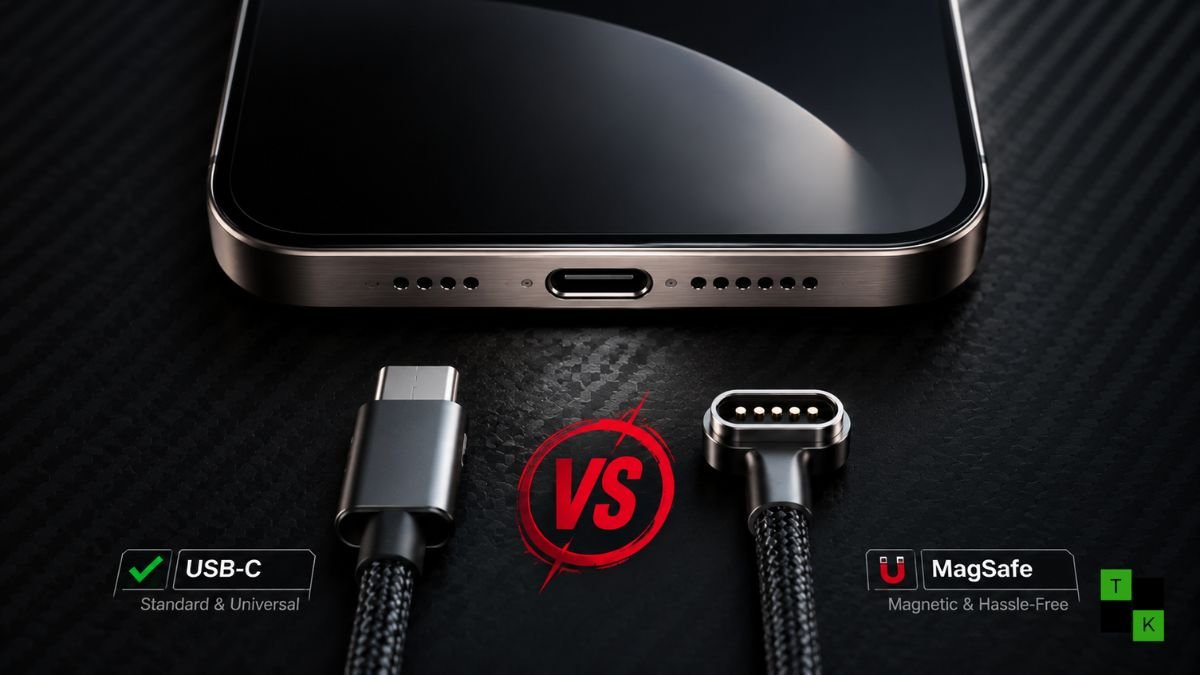
Viral social media claims asserting that Apple’s iPhone 18 is swapping its USB-C port for a magnetic connector with multiple gold pins in an oval slot are completely false. Originating from an AI-generated 3D concept render created for engagement on TikTok and X, the claim has been widely debunked by tech analysts, supply-chain reports, and global consumer electronics regulations.
Apple will continue using the standardized USB-C port on its upcoming iPhone lineups, supplementing it with standard rear-glass MagSafe wireless charging.
Fact-Check Summary Matrix
| Claim Element | Viral Rumor Claim | Verified Reality / Fact-Check Verdict |
| The Core Claim | Apple is ditching USB-C on iPhone 18 for a MacBook-like magnetic port. | FALSE. Apple is retaining the physical USB-C port. |
| Origin Source | Leaked internal Apple prototype video. | FALSE. Sourced from an AI concept clip by @AppleLuxs. |
| Physical Design | Oval slot with 5 gold contact pins on phone bottom. | Purely conceptual recreation of MacBook MagSafe 3. |
| Regulatory Feasibility | Apple can introduce proprietary ports freely. | ILLEGAL in EU. Direct violation of the EU USB-C Mandate. |
| Data Transfer Role | Magnetic pins handle external SSDs and CarPlay. | UNFEASIBLE. Pins lack physical latching for ProRes video. |
Read Also: iPhone vs Samsung Battery Life & Durability: Flagship Test
Where Did the Rumor Come From?
The claim originated from a short CGI concept video published by the social media account @AppleLuxs. The clip depicted a 3D-rendered “iPhone 18” featuring a recessed oval port lined with five gold pogo pins at the bottom, identical in appearance to Apple’s MagSafe 3 connector used on MacBook Pro laptops.
The clip went viral across TikTok and X (formerly Twitter), garnering tens of millions of views. Many reshared posts erroneously claimed that Apple was “forcing users to buy new proprietary charging cables” to increase corporate accessory revenue.
Why Apple Cannot and Will Not Replace USB-C on iPhone 18
1. The European Union USB-C Common Charger Mandate
The most decisive factor debunking this rumor is international law. Under the European Union’s Directive (EU) 2022/2380, all smartphones, tablets, cameras, and handheld electronics sold within the 27 EU member states must feature a standard USB Type-C receptacle.
If Apple were to eliminate USB-C in favor of a proprietary magnetic pin slot, the iPhone 18 would be immediately banned from legal sale across Europe. Producing a separate hardware variant exclusively for non-EU markets would introduce unnecessary manufacturing costs and supply-chain fragmentation.
2. The Danger of Pocket Magnet Debris and Pin Corrosion
While a magnetic port with exposed gold pins works effectively on a MacBook that rests on a clean desk, it presents significant engineering hazards for a pocket device:
- Magnetic Metal Accumulation: Strong rare-earth magnets inside a bottom port attract iron dust, pocket lint, and metallic debris, creating a high risk of electrical short circuits.
- Liquid and Sweat Corrosion: Exposed electrical contact pins in an open slot oxidize quickly when exposed to sweat, rain, or humidity during everyday handheld carry.
Why MacBook MagSafe Fails on Smartphones
 ├── Pocket Debris ──> Magnets attract metallic dust & shavings into the slot
 ├── Moisture Exposure ──> Exposed energized pins corrode when in contact with sweat
 └── Cable Disconnection ──> Accidental bumps unseat the cable during hand-held gaming/navigation
3. Professional Wired Data Workflows and SSD Tethering
Since the introduction of USB-C on the iPhone 15 Pro, creators and filmmakers have relied on the port’s 10Gbps to 40Gbps data bandwidth to record 4K ProRes video directly to external USB-C SSDs.
A shallow magnetic snap connector lacks the mechanical lock-in latch necessary to maintain high-speed, continuous data streams without disconnecting when the phone is moved.
Clearing Up the “MagSafe” Confusion
A major reason this hoax gained traction is the dual meaning of the name MagSafe within Apple’s branding:
- MagSafe for Mac: A physical, breakaway magnetic cable plug with gold pins designed to prevent laptops from tumbling off tables when the cord is tripped over.
- MagSafe for iPhone: A circular magnetic ring embedded beneath the rear glass that aligns wireless Qi2 inductive charging coils and snaps onto accessories like wallets and car mounts.
Apple has never utilized physical magnetic contact pins as the primary charging port for the iPhone, and the two technologies serve entirely separate mechanical purposes.
Verdict: Completely False
The claim that Apple’s iPhone 18 is swapping its USB-C port for an oval magnetic connector with gold pins is a total internet hoax built on conceptual AI animations. Apple will retain the universal USB-C standard across future iPhone generations to maintain regulatory compliance, professional external drive support, and global accessory compatibility.
🚨 Stay Updated with TopKhoj! 🚨
Get the latest tech news, deals, and exclusive offers first!
📰 Visit News Section📲 Join our Telegram Channel for real-time updates and best deals!
🔗 Join Telegram Now💡 Stay informed and never miss a great deal with TopKhoj!
⚠️ Disclaimer: Any link provided in the article related to a product or service will redirect you to our affiliate partner(s)' website, which are affiliate links. This means that if you make a purchase through these links, we may earn a commission at no extra cost to you. This commission helps support our blog and our work.
🔔 All prices mentioned above are subject to change based on current offers and availability on e-commerce platforms. Please check the latest price and product details on the product page before making a purchase.