Add TOPKHOJ as a Preferred Source on Google
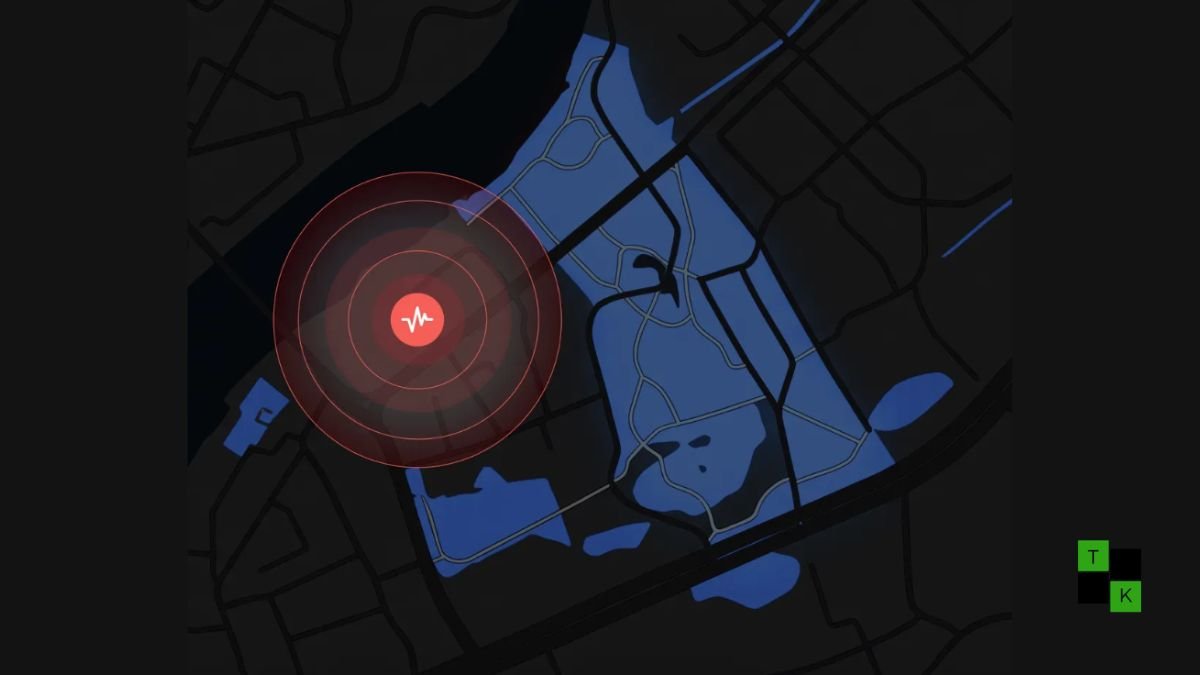
In one of the most expansive deployments of consumer public-safety technology to date, Google has officially announced that its Android Earthquake Alerts System is now expanding to more than 200 countries and territories worldwide. The rollout more than doubles the platform’s previous coverage of 98 countries, establishing an early seismic detection network across almost every seismically active corridor on the globe.
The milestone announcement follows confirmation from Alphabet and Google CEO Sundar Pichai that the system has delivered more than one billion earthquake alerts to mobile users since its operational debut. Alongside the worldwide geographic expansion to regions such as Panama and Guatemala, Google is rolling out an updated three-tier warning classification-designed to provide actionable guidance when seconds count-and upgraded machine-learning filters that have halved the system’s median magnitude estimation error.
Turning Everyday Smartphones into a Global Seismograph Grid
Traditional seismic early-warning networks require millions of dollars in dense ground-sensor arrays, deep borehole seismometers, and specialized government telecommunications infrastructure-resources unavailable across many emerging economies. Google’s platform circumvents these hardware deficits by turning everyday smartphones into pocket-sized seismometers:
- Micro-Electro-Mechanical Accelerometers (MEMS): The miniature motion sensors already built into Android phones to detect screen orientation and steps are sensitive enough to measure the distinct vibrational signatures of seismic waves. The software can differentiate between benign movements (such as dropping a phone or driving over a speed bump) and the deep, rhythmic shockwaves of moving tectonic plates.
- P-Wave vs. S-Wave Physics: Earthquakes produce two primary wave types. The faster, non-damaging Primary (P) waves travel through the crust first, followed closely by the slower, violently destructive Secondary (S) waves. When thousands of stationary Android devices in an area register P-wave vibrations nearly simultaneously, they transmit high-speed data packets to Google’s detection servers.
- Speed-of-Light Warning Delivery: Because electronic data travels through fiber and wireless networks at near the speed of light-far faster than seismic shear waves travel through rock and soil-Google’s servers can calculate the epicenter and estimated magnitude, instantly broadcasting push alerts to surrounding towns and cities seconds to tens of seconds before the violent S-waves arrive.
Redesigned 3-Tier Alert System: Be Aware, Be Ready, Take Action
Recognizing that confusing alarm states can cause panic or hesitation during emergencies, Google has streamlined the alert interface into three distinct threat thresholds:
- “Be Aware” (Light Shaking): Designed for minor tremors or users positioned far from the epicenter. Delivered as a standard system notification banner with a gentle chime, this alert informs users that low-level shaking has been detected in their vicinity, allowing them to remain mindful of their surroundings without evacuation panic.
- “Be Ready” (Noticeable / Moderate Shaking): Triggered when models estimate shaking will be strong enough to rattle shelves and sway ceiling fixtures, but unlikely to cause structural failure. The alert uses an elevated notification priority, advising occupants to secure unstable objects and prepare safe paths.
- “Take Action” (Heavy / Destructive Shaking): Reserved for severe, potentially damaging earthquakes (typically Modified Mercalli Intensity V and above). This tier bypasses Do Not Disturb (DND) modes, sets the phone’s screen to maximum brightness, sounds a loud, pulsing warning siren, and displays clear visual directives: “Drop, Cover, and Hold On” alongside post-quake safety checklists (e.g., checking gas lines, putting on shoes).
Hardware Sensor Crowdsourcing vs. Institutional Networks
Google’s architecture operates via a hybrid model, combining crowdsourced mobile telemetry with official government networks where available:
| Region / Market | Primary Detection Backbone | Complementary Framework |
| United States (West Coast) | USGS ShakeAlert Network (Government Seismometers) | Android Alert Broadcast Gateway |
| India | Android Phone Accelerometer Grid + NDMA Coordination | National Disaster Management Authority Integration |
| Latin America (Panama, Guatemala, Venezuela) | Android Phone Accelerometer Crowdsourcing | Regional Academic & Civil Defense Monitoring |
| Global Expansion (200+ Territories) | Direct Android Device Mesh Network | Google Crisis Response & Cloud Infrastructure |
Algorithm Refinements: Median Error Halved to 0.25
Alongside its geographic expansion, Google shared key technical milestones from real-world seismic events:
- Accuracy Gains: Over the past three years of machine-learning training across billions of telemetry datapoints, the median error of the system’s initial magnitude estimates has dropped from 0.50 down to 0.25. This brings the crowdsourced mobile network’s initial calculation speed and accuracy into close alignment with traditional geological survey stations.
- Real-World Impact in South America: During recent seismic events in Venezuela, the Android Earthquake Alerts System successfully delivered early warnings to 11.4 million people, including nearly 1.4 million highest-priority “Take Action” alarms. Depending on their distance from the fault line, residents received between a few seconds and up to two minutes of advance warning before the strongest shaking hit their structures.
System Limitations: Understanding the “Blind Zone”
While the technology provides an invaluable safety layer, emergency response authorities and seismologists emphasize that phone-based alert systems operate under real-world physical constraints:
- The Epicentral Blind Zone: If you are located right at or immediately adjacent to the earthquake’s shallow epicenter, the destructive S-waves will reach you before the initial P-wave data can complete the round trip from surrounding phones to Google’s cloud servers and back. In these zero-distance scenarios, shaking begins before the alert sounds.
- Network Connectivity Dependencies: Unlike radio-based cell broadcast networks (such as standard government Emergency Alerts), Android’s phone-based detection requires active Wi-Fi or cellular mobile data alongside enabled Location Services. Devices in airplane mode or deep inside concrete basements with zero reception cannot send or receive alerts.
How to Verify and Enable Earthquake Alerts on Your Android Phone
Android Earthquake Alerts are built directly into Google Play Services on all handsets running Android 12 and newer (and supported on legacy devices down to Android 5.0). Users can verify that the safeguard is active in under a minute:
- Open your device’s Settings app.
- Scroll down and tap Safety & Emergency (on select custom interfaces, navigate to Location > Advanced > Earthquake Alerts).
- Tap Earthquake Alerts.
- Ensure the toggle switch is turned ON.
- Ensure your phone’s Location Services are active, as Google’s servers require coarse geographical coordinates to direct relevant alerts to your specific zone.
- (Optional) Tap See a demo at the bottom of the menu to preview the high-priority siren and full-screen visual layout.
By scaling this crowdsourced early-warning system across more than 200 countries, Google has effectively turned the global fleet of Android smartphones into the world’s largest decentralized seismic safety net, offering millions of households vital seconds to take cover when natural disasters strike.
🚨 Stay Updated with TopKhoj! 🚨
Get the latest tech news, deals, and exclusive offers first!
📰 Visit News Section📲 Join our Telegram Channel for real-time updates and best deals!
🔗 Join Telegram Now💡 Stay informed and never miss a great deal with TopKhoj!
⚠️ Disclaimer: Any link provided in the article related to a product or service will redirect you to our affiliate partner(s)' website, which are affiliate links. This means that if you make a purchase through these links, we may earn a commission at no extra cost to you. This commission helps support our blog and our work.
🔔 All prices mentioned above are subject to change based on current offers and availability on e-commerce platforms. Please check the latest price and product details on the product page before making a purchase.