Add TOPKHOJ as a Preferred Source on Google
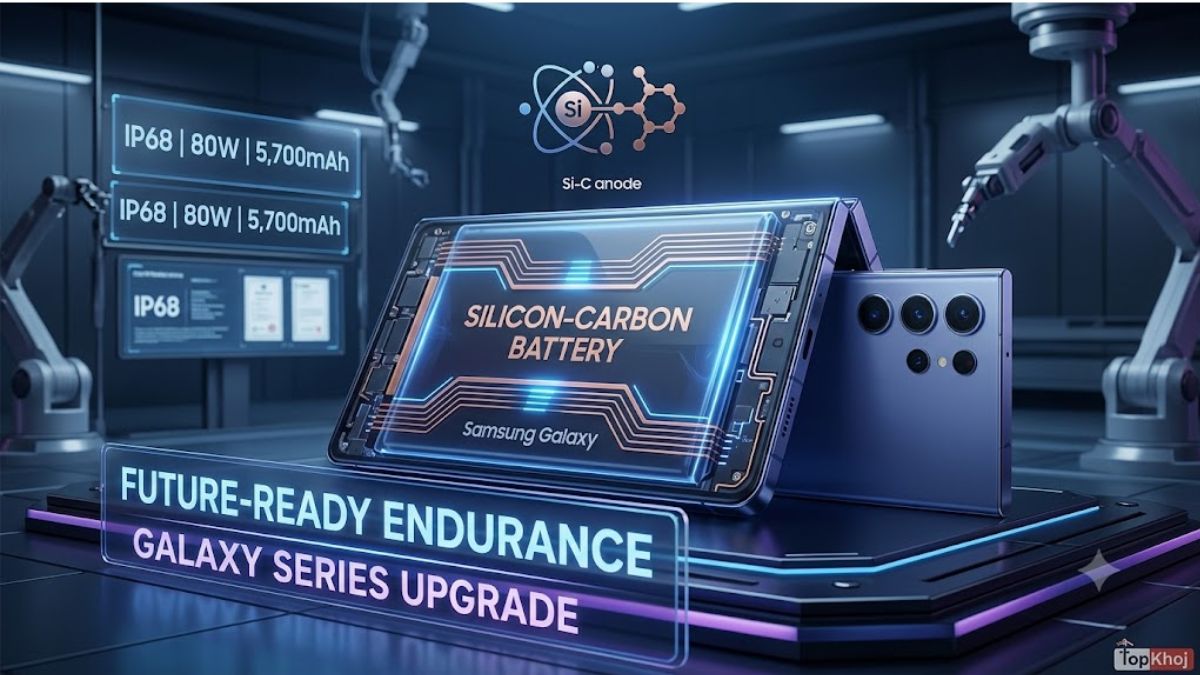
During a recent media briefing following its Galaxy Unpacked launch event, Samsung officially addressed its strategy regarding silicon-carbon (Si-C) battery technology. After years of relying on traditional lithium-ion chemistry, the Korean technology manufacturer introduced silicon-carbon anode batteries across its latest flagship foldable devices, including the Galaxy Z Fold 8 Ultra, Galaxy Z Fold 8, and Galaxy Z Flip 8.
Speaking to reporters and industry analysts, Samsung executives hinted that the deployment of silicon-carbon batteries will not remain exclusive to foldable form factors. The company confirmed plans to evaluate bringing high-density silicon anodes to broader Galaxy product lines, provided the technology continues to meet strict internal standards for safety, long-term degradation, and thermal stability.
Main News Details
Samsung’s transition to silicon-carbon chemistry marks a notable evolution in its mobile hardware engineering. While competing smartphone brands began adopting silicon-anode materials in early 2024 to fit large battery capacities into slim chassis, Samsung maintained a cautious approach, prioritizing long-term cell stability and battery safety over aggressive capacity figures.
In statements reported by Korean publication Kyunghyang Shinmun and confirmed during media roundtables, Samsung explained that applying silicon-carbon anode materials allowed engineers to increase energy density significantly without enlarging physical battery dimensions. Executive comments indicate that future rollouts across non-foldable smartphones will depend directly on whether the technology improves overall customer usability without compromising structural integrity.
Industry reports following the briefing suggest that Samsung is already evaluating similar high-density cells for its next flagship family, the Galaxy S27 series, which is expected to debut in early 2027.
Key Highlights
- Commercial Debut: Silicon-carbon anode technology officially debuted on the Galaxy Z Fold 8 Ultra, Galaxy Z Fold 8, and Galaxy Z Flip 8.
- Energy Density Boost: Achieved a 14 percent increase in battery capacity on the Z Fold 8 Ultra (5,000mAh) compared to the Z Fold 7 (4,400mAh) within the same physical dimensions.
- Expansion Plans: Samsung confirmed it is evaluating silicon-carbon batteries for additional Galaxy smartphones based on customer experience metrics.
- Safety First: The company emphasized a conservative engineering approach prioritizing safety, thermal stability, and low expansion rates over chasing extreme capacity numbers.
- Upcoming Candidate: Supply chain leaks point to the Galaxy S27 series as the primary candidate to receive silicon-carbon battery upgrades next.
Detailed Explanation
Understanding Silicon-Carbon Anode Technology
Traditional smartphone batteries rely on graphite anodes to store and release lithium ions during charge cycles. Silicon-carbon technology replaces or mixes pure graphite with silicon-carbon composite materials. Because silicon can hold significantly more lithium ions by weight than graphite, silicon-anode cells achieve substantially higher volumetric energy density.
This increased density allows manufacturers to fit larger battery capacities into thinner hardware profiles. However, silicon expands physically during charging cycles, which can place stress on surrounding internal components if not managed with structural buffers and controlled silicon ratios.
Which Phones Feature and Will Get Silicon-Carbon Batteries?
Samsung’s rollout of silicon-carbon battery chemistry follows a multi-phase hardware strategy:
Currently Released & Confirmed Phones (Featuring Si-C Batteries):
- Samsung Galaxy Z Fold 8 Ultra: Houses a 5,000mAh silicon-carbon battery, delivering a 14 percent capacity increase over its predecessor while maintaining a slim chassis profile.
- Samsung Galaxy Z Fold 8: Equipped with a 4,800mAh silicon-carbon cell, offering improved multi-day battery life in a foldable form factor.
- Samsung Galaxy Z Flip 8: Integrates a custom dual-cell silicon-carbon battery that enabled Samsung to reduce lower-housing thickness without sacrificing daily endurance.
- Samsung Galaxy Watch Ultra 2: Incorporates compact silicon-carbon chemistry to extend wearable battery life in outdoor environments.
Future & Tipped Phones Expected to Adopt Si-C Batteries:
- Samsung Galaxy S27 Series (S27, S27 Plus/Pro, S27 Ultra): Supply chain reports indicate that Samsung is actively testing silicon-carbon cells for the Galaxy S27 family. Applying a similar 14 percent energy density gain could push the Galaxy S27 Ultra’s battery capacity from 5,000mAh up to roughly 5,600mAh–5,700mAh without increasing device weight or thickness.
- Next-Generation Galaxy Z Series: Future foldables across the Z Fold and Z Flip lines are expected to standardize silicon-carbon chemistry as production yields scale.
Samsung’s Conservative Safety Principles
During post-launch briefings, Samsung stressed that its approach to silicon-carbon technology remains guided by strict safety protocols. Following historical battery recalls nearly a decade ago, Samsung prioritizes long-term cell reliability over aggressive capacity boosts.
Because silicon anodes swell over extended charge cycles, Samsung limits the silicon blend percentage and incorporates physical protective barriers inside the battery bay. This ensures that the cell does not exert pressure on the display assembly or internal motherboard layers over years of daily operation.
Timeline
- July 22, 2026: Samsung formally launched the Galaxy Z Fold 8 Ultra, Z Fold 8, and Z Flip 8 at Galaxy Unpacked, introducing silicon-carbon batteries to its lineup.
- July 27, 2026: Samsung held media briefings explaining its conservative silicon-carbon strategy and hinted at expanding the technology to future Galaxy products.
- Early 2027 (Anticipated): Expected launch window for the Galaxy S27 series, rumored to be the next major lineup adopting high-density silicon-carbon batteries.
What is Confirmed
- Current Integration: The Galaxy Z Fold 8 Ultra, Galaxy Z Fold 8, and Galaxy Z Flip 8 are officially confirmed to feature silicon-carbon batteries.
- Official Intent: Samsung officially confirmed it is exploring silicon-carbon deployment across future Galaxy smartphones.
- Safety Focus: Safety, thermal stability, and low cell expansion rates are confirmed as Samsung’s primary evaluation criteria.
What is Not Confirmed
- S27 Series Specs: Samsung has not officially confirmed battery specifications or chemistry for the unannounced Galaxy S27 series.
- Mid-Range Timeline: Specific release windows for when silicon-carbon technology might trickle down to Galaxy A-series or FE-series devices remain unannounced.
Why This News Matters
Samsung’s adoption of silicon-carbon battery technology marks a significant turning point for mainstream Android hardware. For years, foldable phones and compact flagships suffered from battery life constraints due to physical space limitations. By increasing energy density through silicon anode chemistry, manufacturers can deliver longer battery life without making devices thicker or heavier.
Furthermore, Samsung entering the silicon-carbon market validates the commercial maturity of the technology, paving the way for wider adoption across global consumer electronics.
What Happens Next
As production yields for silicon-carbon battery cells stabilize, Samsung is expected to begin preliminary testing for its early 2027 flagship lineup. Regulatory certification listings with agencies like Safety Korea in late 2026 should provide further details on cell capacities for the Galaxy S27 series.
Conclusion
Samsung’s introduction of silicon-carbon batteries on the Galaxy Z Fold 8 series opens a new chapter in the company’s hardware development. With official hints pointing toward broader adoption across future devices, the technology promises to bring meaningful battery life upgrades to upcoming Galaxy flagships like the Galaxy S27 series while preserving slim form factors and strict safety standards.
🚨 Stay Updated with TopKhoj! 🚨
Get the latest tech news, deals, and exclusive offers first!
📰 Visit News Section📲 Join our Telegram Channel for real-time updates and best deals!
🔗 Join Telegram Now💡 Stay informed and never miss a great deal with TopKhoj!
⚠️ Disclaimer: Any link provided in the article related to a product or service will redirect you to our affiliate partner(s)' website, which are affiliate links. This means that if you make a purchase through these links, we may earn a commission at no extra cost to you. This commission helps support our blog and our work.
🔔 All prices mentioned above are subject to change based on current offers and availability on e-commerce platforms. Please check the latest price and product details on the product page before making a purchase.