Add TOPKHOJ as a Preferred Source on Google
With pre-orders already stretching shipping estimates deep into next year, the official iPhone Duo launch date on October 23, 2026, represents Apple’s most consequential-and expensive-hardware gamble in over a decade. Priced from an eye-watering $1,999 (₹2,99,900 in India) for the base 256GB model, Apple’s first foldable smartphone has ignited unprecedented luxury demand across more than 70 launch countries since order books opened on October 16. The launch arrives amidst a storm of supply constraints and aggressive retail policing.
To prevent scalpers from cornering stock and inflating secondary markets, Apple has taken the rare step of actively auditing and canceling suspicious automated bulk orders, aiming to ensure launch-day units end up in the hands of everyday consumers.
Simultaneously, Cupertino is using the high-profile release to champion domestic supply chains, announcing a $100 million investment with Pennsylvania-based Perryman Company to forge the phone’s custom Grade 5 titanium chassis. Yet, as early press units land in reviewers’ hands, the device is already generating debate over first-generation display creases, unoptimized third-party software, and delivery windows that slip as far as 14 weeks out.
Supply-Chain Crunch: 14-Week Backlogs and Bot Cancellations
Consumer appetite for Apple’s book-style foldable has caught supply planners off guard, creating some of the longest shipping queues seen since the iPhone X:
- Slipping Into 2027: Within hours of pre-orders opening, delivery dates for the top-tier 1TB ($2,599) and 2TB ($3,199) configurations slipped from launch day out to 12 to 14 weeks, pushing expected doorstep arrivals into January and February 2027. Financial analysts at JPMorgan have already trimmed their 2026 shipment estimates to 8 million–9 million units purely due to component assembly bottlenecks.
- Cracking Down on Scalpers: To protect legitimate retail buyers from losing inventory to automated checkout scripts, Apple’s fraud-prevention teams have been aggressively canceling duplicate and bot-flagged pre-orders, releasing canceled units back into the regional launch-day pickup pools.
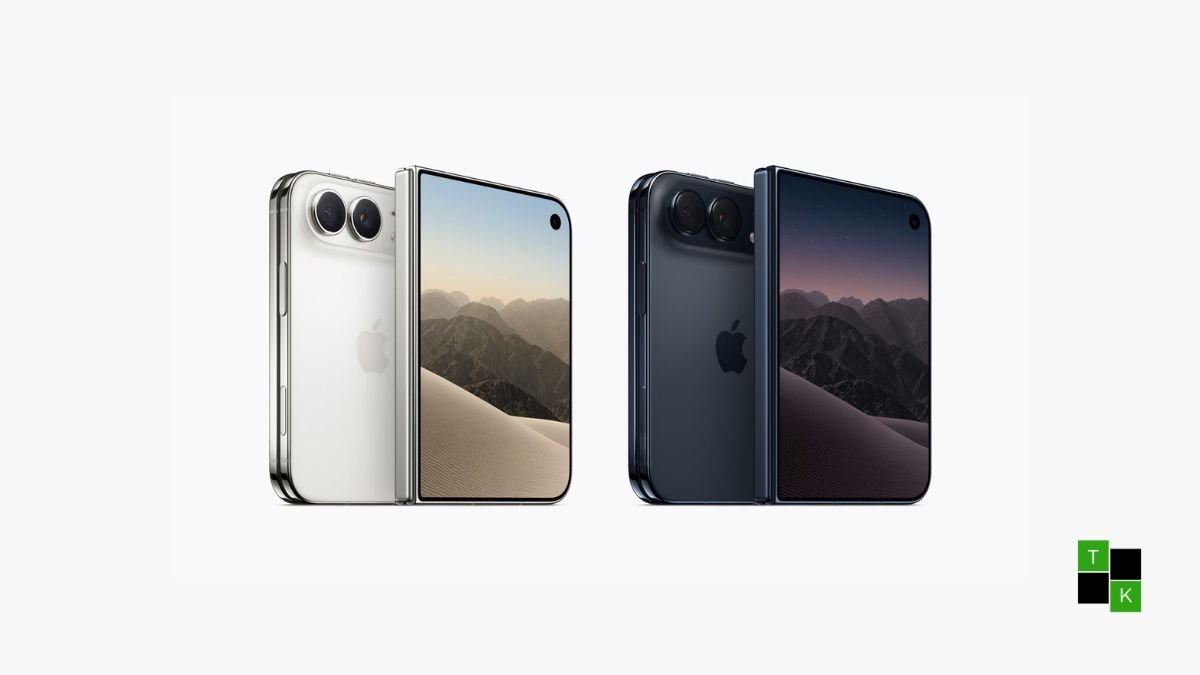
- Two Understated Finishes: Apple has kept production complexity manageable by offering only two finishes: a pearlescent Star White and a deep, cosmic Night Sky.
American Metallurgy: The $100 Million Perryman Titanium Deal
While the majority of consumer electronics manufacturing remains anchored in Asia, Apple is using the iPhone Duo to highlight its American Manufacturing Program (AMP):
- Forged in Pennsylvania: Apple has entered into a multi-year agreement valued at up to $100 million with Perryman Company, a family-owned titanium specialist based in Houston, Pennsylvania. Perryman melts, forges, and rolls the specialized Grade 5 titanium used to construct the phone’s structural chassis and outer hinge housing.
- 80% Recycled Content: The titanium enclosure incorporates a minimum of 80% recycled aerospace titanium, balancing extreme torsional rigidity with environmental commitments.
- Qnity Optical Films: Alongside Perryman, Apple announced expanded component partnerships with domestic suppliers like Qnity Electronics, which produces precision optical films for the camera modules. In total, Apple claims nearly 100 components inside its newest hardware are sourced across more than a dozen US states.
The Dual Displays: 7.6-Inch Canvas vs. The Reality of Creases
Structurally, the iPhone Duo adopts a passport-style book fold, offering two distinct displays:
- 5.4-Inch Outer Display: When closed, the phone functions like a compact smartphone via a 5.4-inch Super Retina XDR screen with ProMotion and an outdoor peak brightness reaching 3,000 nits. Because Apple matched the aspect ratio of both screens at 1.41:1, apps transition between folded and unfolded states without visual distortion.
- 7.6-Inch Folding Inner Canvas: Opening the device reveals an expansive 7.6-inch Super Retina XDR folding OLED screen treated with an anti-reflective nano-texture finish. An under-display camera is hidden beneath the glass for FaceTime calls, keeping the inner workspace uncluttered.
- The Crease Debate: While Apple’s multi-gear hinge and nano-texture coating significantly soften optical glare, early hands-on impressions confirm that a central display crease remains physically palpable and visible under angled light. Just like foldables from Samsung, Google, and OnePlus, Apple has not defied the laws of physics: bending glass repeatedly still leaves a subtle structural wrinkle.
First-Gen Growing Pains: iOS 27 Multitasking and Unoptimized Apps
To make the expansive 7.6-inch canvas practical, Apple updated its mobile platform to iOS 27.1, borrowing interface principles directly from iPadOS:
- Split-Screen Multitasking: For the first time on an iPhone, users can run two active applications side-by-side, complete with drag-and-drop file transfers between windows. When partially folded like a laptop on a flat surface, the bottom half automatically converts into a virtual keyboard or trackpad.
- The Optimization Gap: The software development kit (SDK) requires app developers to explicitly update their layouts. For unoptimized third-party apps, iOS 27 displays an empty pillarbox margin along the right edge of the screen-a temporary blemish that early adopters will have to tolerate until mainstream developers update their software.
- Future Apple Pencil Support: The hardware is structurally engineered to support the Apple Pencil (USB-C), marking a historic reversal of Steve Jobs’ famous 2007 anti-stylus stance, though firmware support will only roll out via a subsequent software patch later this winter.
iPhone Duo: Confirmed Specifications & Pricing Tiers
| Feature Dimension | Apple iPhone Duo Specifications |
| Global Launch Date | Friday, October 23, 2026 (In Stores) |
| Base Price (US / India) | $1,999 / ₹2,99,900 (256GB Model) |
| Upper Storage Pricing | 512GB ($2,199 / ₹3,24,900) | 1TB ($2,599 / ₹3,74,900) | 2TB ($3,199 / ₹4,49,900) |
| Cover Display | 5.4-inch Super Retina XDR OLED (120Hz ProMotion, 3,000 Nits) |
| Inner Folding Display | 7.6-inch Foldable Super Retina XDR (Nano-Texture, ProMotion) |
| Chassis Materials | Grade 5 Recycled Titanium (Forged by Perryman Co.) |
| Primary Processor | Apple A20 Pro Silicon (2nm Node with Vapor Chamber Cooling) |
| Rear Camera System | 48MP Dual Fusion Array (48MP Main f/1.6 + 48MP Ultra-Wide) |
| Front Cameras | 12MP Center Stage Cover Camera + Under-Display Inner Camera |
| Battery & Charging | Dual-Cell Battery (Up to 24 hrs mixed use; 50% in 20 mins) |
| Connectivity | Apple C2 Cellular Modem + Apple N1 Chip (Wi-Fi 7, Thread) |
| Operating System | iOS 27.1 (iPadOS-Style Multitasking & Duo Flex Modes) |
| Available Colorways | Star White and Night Sky |
Market Verdict: Who Is the $2,000 iPhone Duo Actually For?
At a starting price equivalent to two baseline iPhones or a well-equipped MacBook Pro, the iPhone Duo is not intended as a mass-market replacement for the standard iPhone lineup:
- The Ultimate Executive & Power-User Tool: If you spend your workdays toggling between spreadsheets, Slack threads, document signing, and video calls, having an iPad mini-sized canvas that folds into a pocketable titanium candybar is genuinely transformative.
- First-Gen Realities: If you demand an invisible crease, long optical periscope zoom lenses, or pristine software scaling across every indie app from day one, you should hold off. This is a pioneering first-generation device, complete with the physical compromises that come with early hardware transitions.
- The Scarcity Factor: With delivery times slipping past three months and scalper filters actively purging inventory, walking into an Apple Store on October 23 and walking out with an iPhone Duo will be a luxury reserved for the fastest pre-order customers.
For Apple, the iPhone Duo proves that the company can still build daring, boundary-pushing hardware. For everyone else, it offers a fascinating-if wildly expensive-first look at where mobile computing is heading over the next decade.
🚨 Stay Updated with TopKhoj! 🚨
Get the latest tech news, deals, and exclusive offers first!
📰 Visit News Section📲 Join our Telegram Channel for real-time updates and best deals!
🔗 Join Telegram Now💡 Stay informed and never miss a great deal with TopKhoj!
⚠️ Disclaimer: Any link provided in the article related to a product or service will redirect you to our affiliate partner(s)' website, which are affiliate links. This means that if you make a purchase through these links, we may earn a commission at no extra cost to you. This commission helps support our blog and our work.
🔔 All prices mentioned above are subject to change based on current offers and availability on e-commerce platforms. Please check the latest price and product details on the product page before making a purchase.