Add TOPKHOJ as a Preferred Source on Google
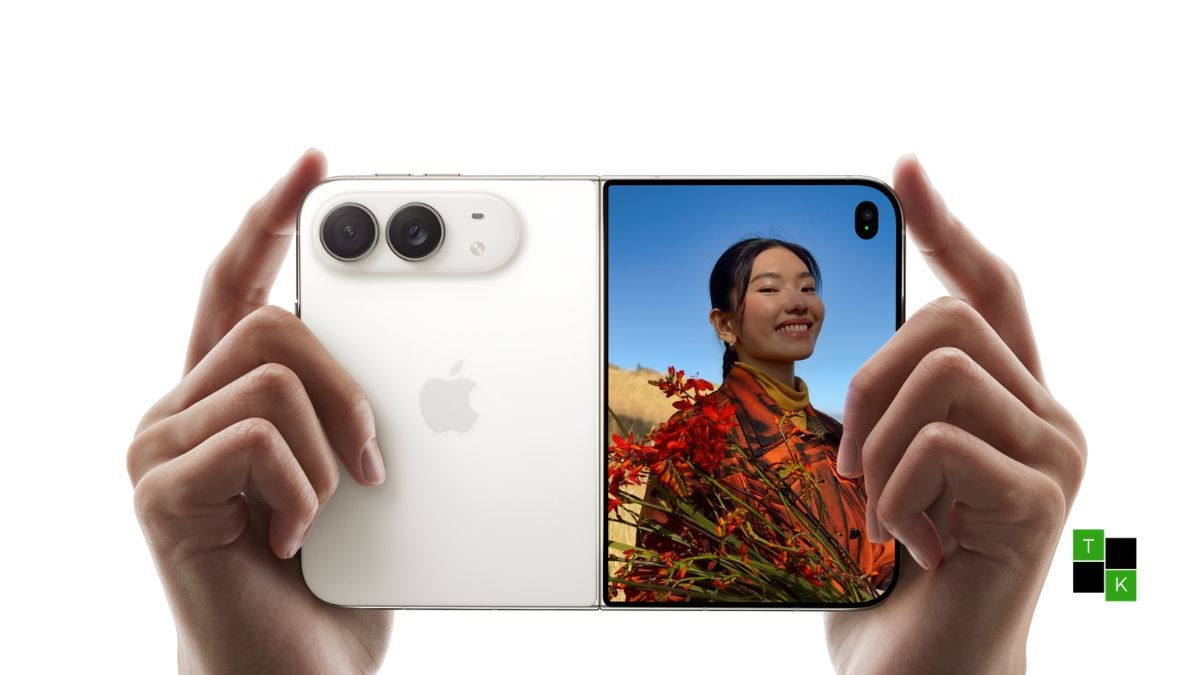
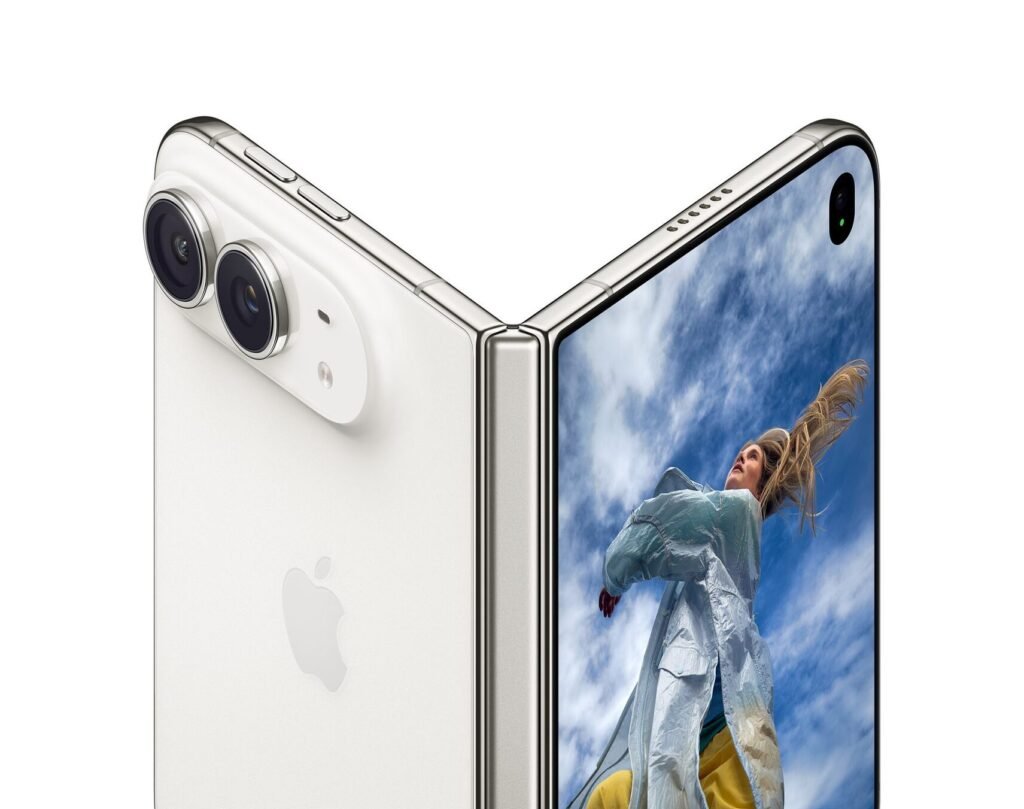
Apple has finally entered the foldable-phone market with the iPhone Duo, its first foldable iPhone and arguably the company’s biggest iPhone hardware change in years.
Unveiled at Apple’s September 9, 2026 “Surprise and Shine” event in Cupertino, the iPhone Duo uses a book-style folding design with a 7.6-inch inner OLED display and a 5.4-inch outer screen. It is powered by the A20 Pro, uses a dual-battery architecture, features two 48MP rear cameras, supports Touch ID instead of Face ID and runs a foldable-optimized version of iOS 27.
In India, the iPhone Duo starts at ₹2,99,900 for 256GB, while storage goes all the way to 2TB at ₹4,49,900. Pre-orders begin at 5:30 PM IST on October 16, with availability from October 23. Apple says India is among more than 70 countries and regions receiving the phone in the first wave.
30-Second TL;DR
Core News: Apple has launched the iPhone Duo, its first foldable iPhone.
Big Hardware: It has a 7.6-inch inner OLED, 5.4-inch outer OLED, A20 Pro, dual 48MP cameras, Touch ID and a dual-battery system.
India Price: The iPhone Duo starts at ₹2,99,900 for 256GB, with pre-orders opening October 16 and sales starting October 23.
iPhone Duo Is Apple’s First Foldable iPhone
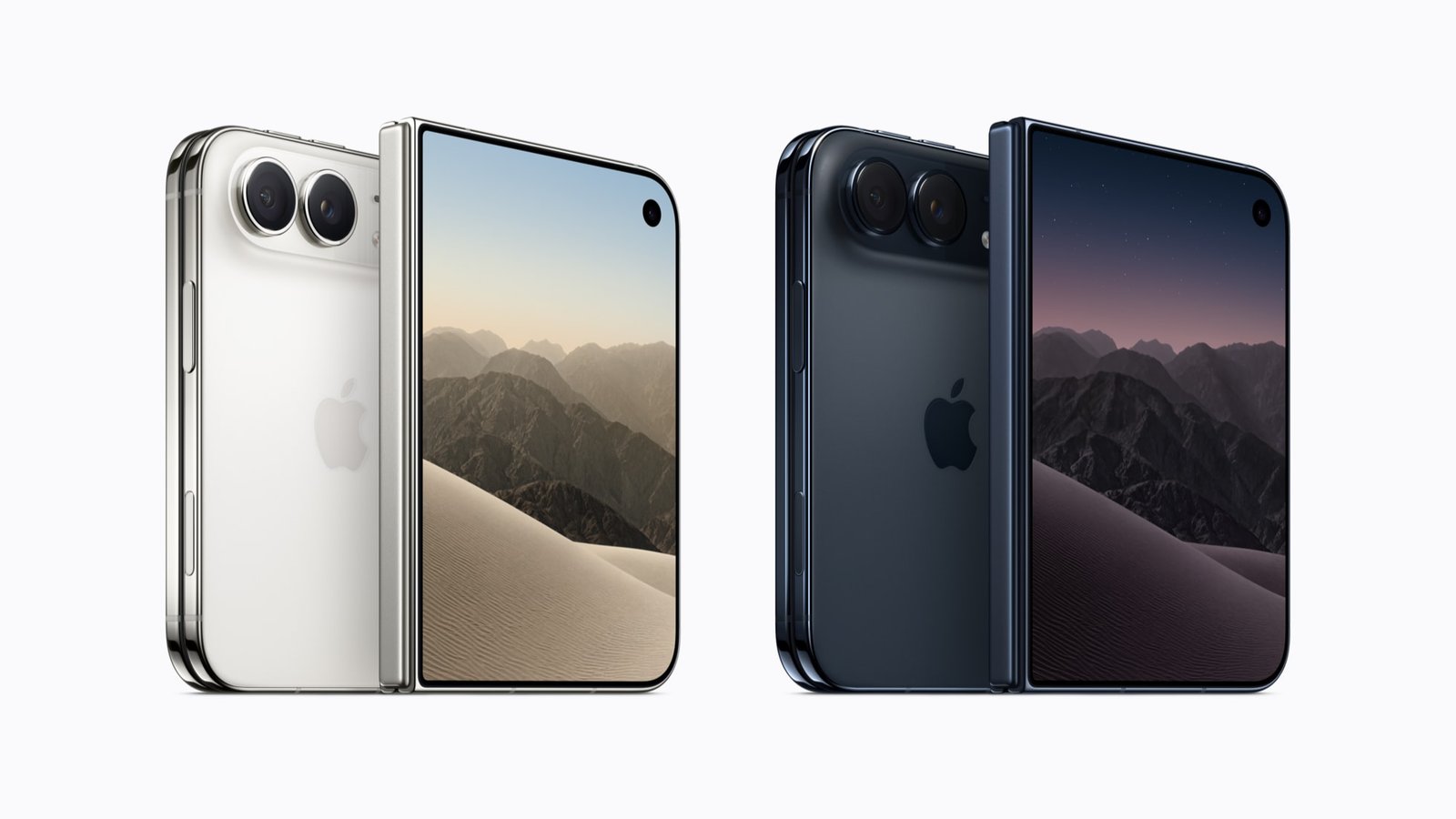
The iPhone Duo is not a compact flip phone.
Apple has chosen a book-style foldable design, meaning the device behaves like a conventional smartphone when closed and opens horizontally to reveal a much larger display.
When closed, the phone measures 84.1mm wide, 117.8mm high and 11.3mm thick. Open it up and the width expands to 164.6mm, while thickness drops to just 5.2mm. The device weighs 254 grams.
Apple describes the closed Duo as being similar in size to a passport. More importantly, the company says the inner display is 50% larger than the iPhone 18 Pro Max, while the outer screen provides 90% of the screen area of the iPhone 18 Pro.
This gives the Duo two very different personalities.
Closed, it is intended for ordinary phone tasks and one-handed use. Open, it becomes a much larger workspace for watching videos, gaming, browsing, reading and multitasking.
7.6-Inch OLED Is the Star of the Show
The inner screen is a 7.6-inch Super Retina XDR folding OLED with a resolution of 1878 × 2670 pixels and 430ppi.
The outer display is a 5.4-inch Super Retina XDR OLED with a resolution of 1398 × 2034 pixels and 460ppi.
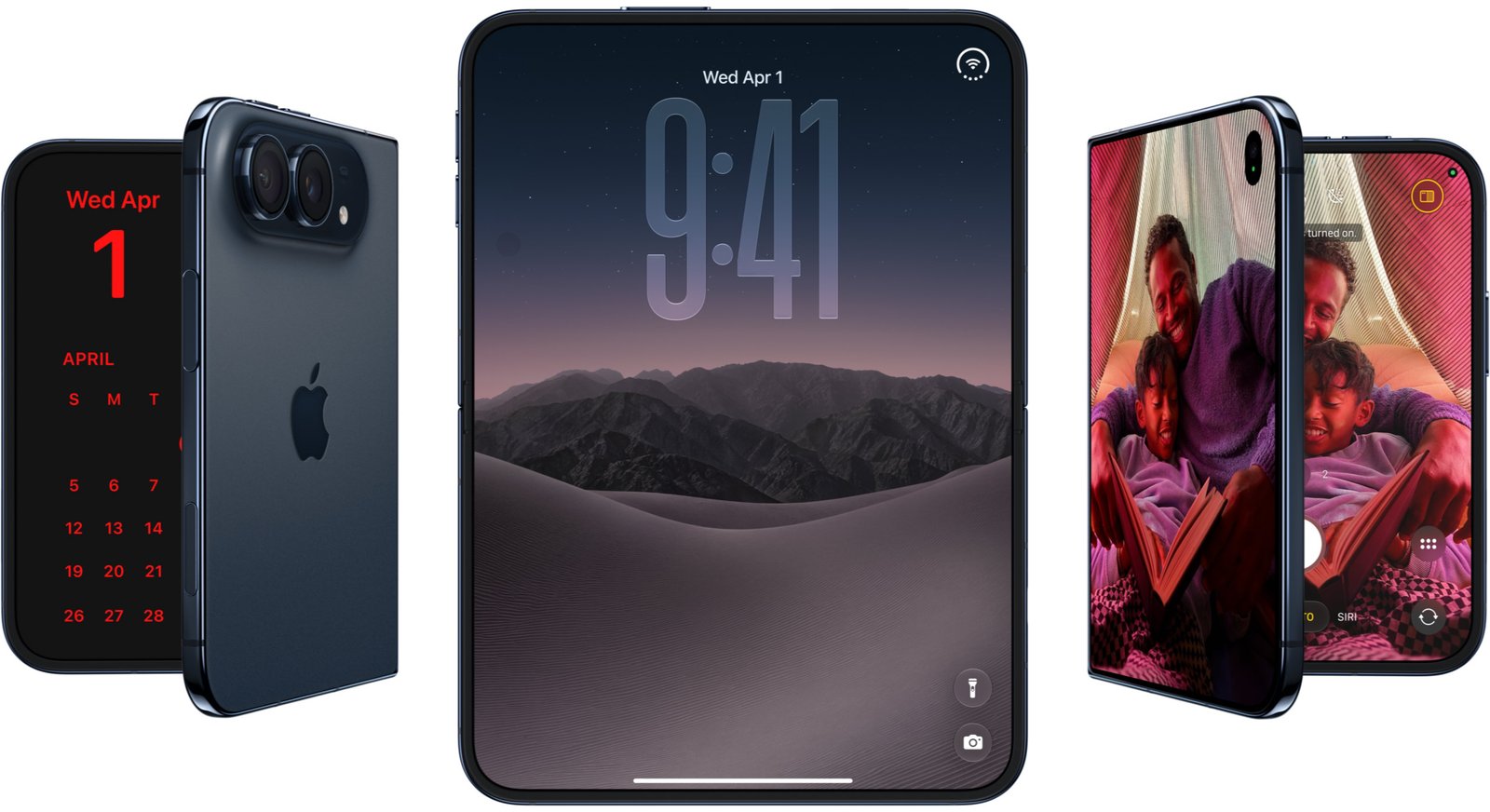
Both displays feature:
- ProMotion up to 120Hz
- Always-On display
- HDR
- True Tone
- P3 wide color
- Haptic Touch
- up to 3,000 nits outdoor peak brightness
- 1-nit minimum brightness
- anti-reflective coating
They also share the same basic aspect ratio philosophy, allowing content to transition between the two screens without completely changing its layout.
That continuity is one of Apple’s key software-and-hardware arguments for the Duo.
Instead of making the outer screen feel like a completely different phone, Apple is trying to make opening and closing the device feel like moving between different versions of the same interface.
Apple Has Gone After the Foldable Crease
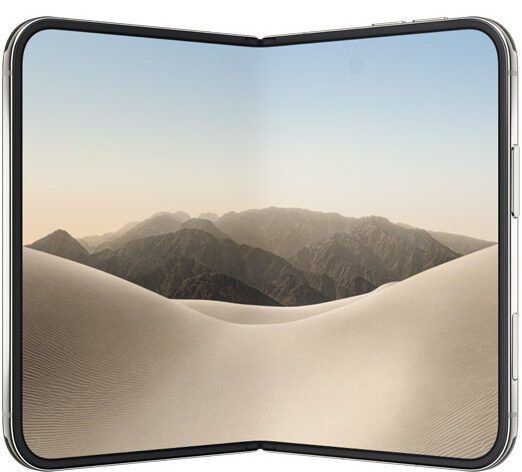
One of the most talked-about parts of any foldable phone is the crease.
Apple does not actually promise that the Duo has literally zero crease. Instead, it describes the inner display as exceptionally smooth and flat and says its custom nano-texture finish, optical adhesives and layered construction work together to minimize crease and folding stress.
The inner panel contains 10 ultra-thin layers, with a custom nano-texture finish designed to reduce glare and reflections. Wide-angle OLED technology is also used to maintain viewing quality.
Apple says the display layers can glide against one another as the phone folds, helping relieve bend stress.
That is why I would describe the Duo as having a minimized or nearly invisible crease, rather than repeating the stronger “crease-free” claim as an absolute fact.
The Hinge Is Doing a Lot of Work
The Duo’s hinge is more complicated than it might look.
Apple says the precision hinge contains more than 100 components and is engineered to control the opening and closing motion while supporting the center of the unfolded display. An integrated magnet array helps the two halves close securely.
Inside, structural support ribs add stiffness, while ceramic-fiber inserts are used around antenna sections.
The hinge cover itself is 3D-printed titanium, and Apple combines it with a Grade 5 titanium frame.
That construction is part of Apple’s attempt to make the Duo feel like a premium iPhone first and a delicate foldable second.
Titanium, Ceramic Shield and IP68 Protection
Apple isn’t treating durability as an afterthought.
The iPhone Duo uses a Grade 5 titanium structure with a polished finish, Ceramic Shield 2 on the outer display and Ceramic Shield on the rear. The inner folding display also receives a scratch-resistant coating and nano-textured cover layer.
The phone carries an IP68 rating, with Apple’s India specification sheet listing resistance to a maximum depth of 6 meters for up to 30 minutes under IEC 60529 testing conditions.
Apple says the inner display uses materials designed specifically to handle the stresses created by repeated folding.
Still, an IP68 rating does not mean the hinge or folding display should be treated like a conventional slab phone.
Touch ID Returns to the iPhone
One of the biggest changes is hiding in the side button.
The iPhone Duo uses Touch ID, with the fingerprint sensor integrated into the side button. It does not use Face ID for biometric authentication.
That decision makes practical sense for a foldable.
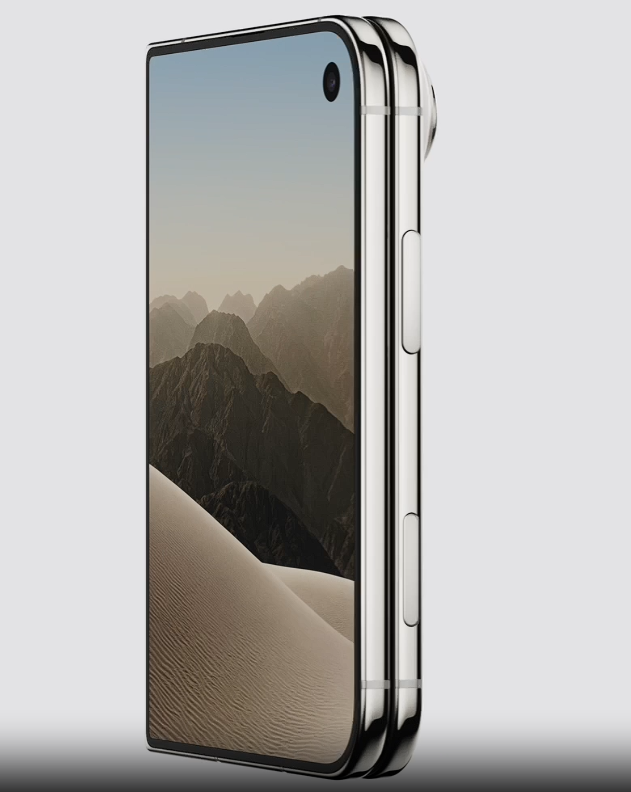
A traditional Face ID system requires a more complex collection of front-facing sensors and cameras. Apple has instead placed an under-display FaceTime camera beneath the inner screen and used Touch ID for secure unlocking.
The phone also retains Camera Control, giving users quick access to photography controls.
A20 Pro Gives the Duo Pro-Level Performance
Inside is Apple’s A20 Pro, the same processor family used in the iPhone 18 Pro models.
The chip has:
- 6-core CPU
- 7-core GPU
- Neural Accelerators
- Dual 16-core Neural Engine
- hardware-accelerated ray tracing
Apple says the CPU is up to 20% faster than A19 Pro, the GPU is up to 40% faster, and the Neural Engine provides 2x the compute power for on-device AI models. A20 Pro also offers 50% more unified memory bandwidth and uses a 2nm process.
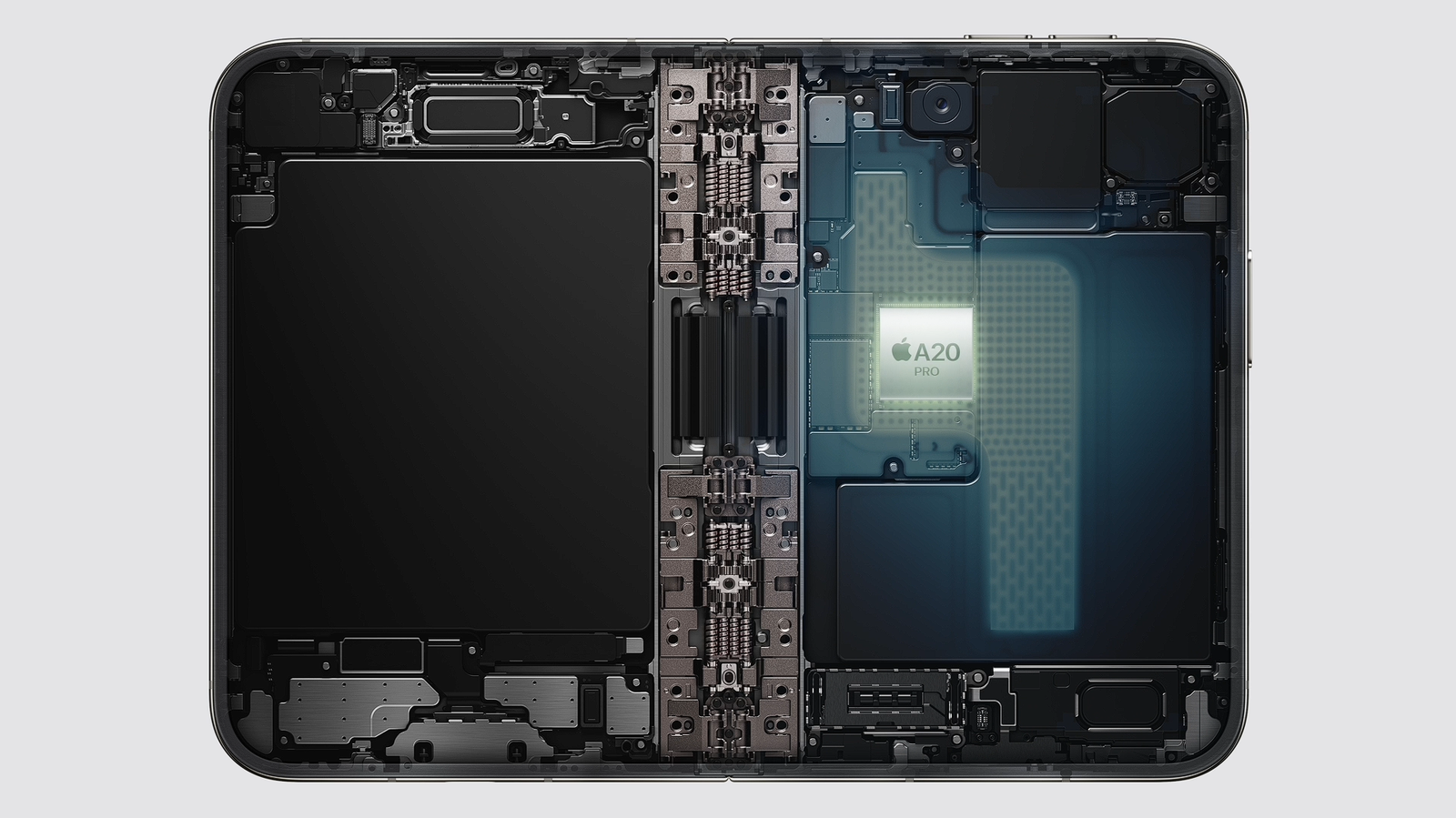
Those are Apple’s own performance claims, so independent testing will still be needed to determine how much of that performance advantage users see in actual applications.
For the Duo, however, there is another reason the A20 Pro matters: it has to drive a much larger display and support more sophisticated multitasking than a conventional iPhone.
Vapor Cooling Helps the Foldable Sustain Performance
Foldable phones have limited internal space, making cooling especially challenging.
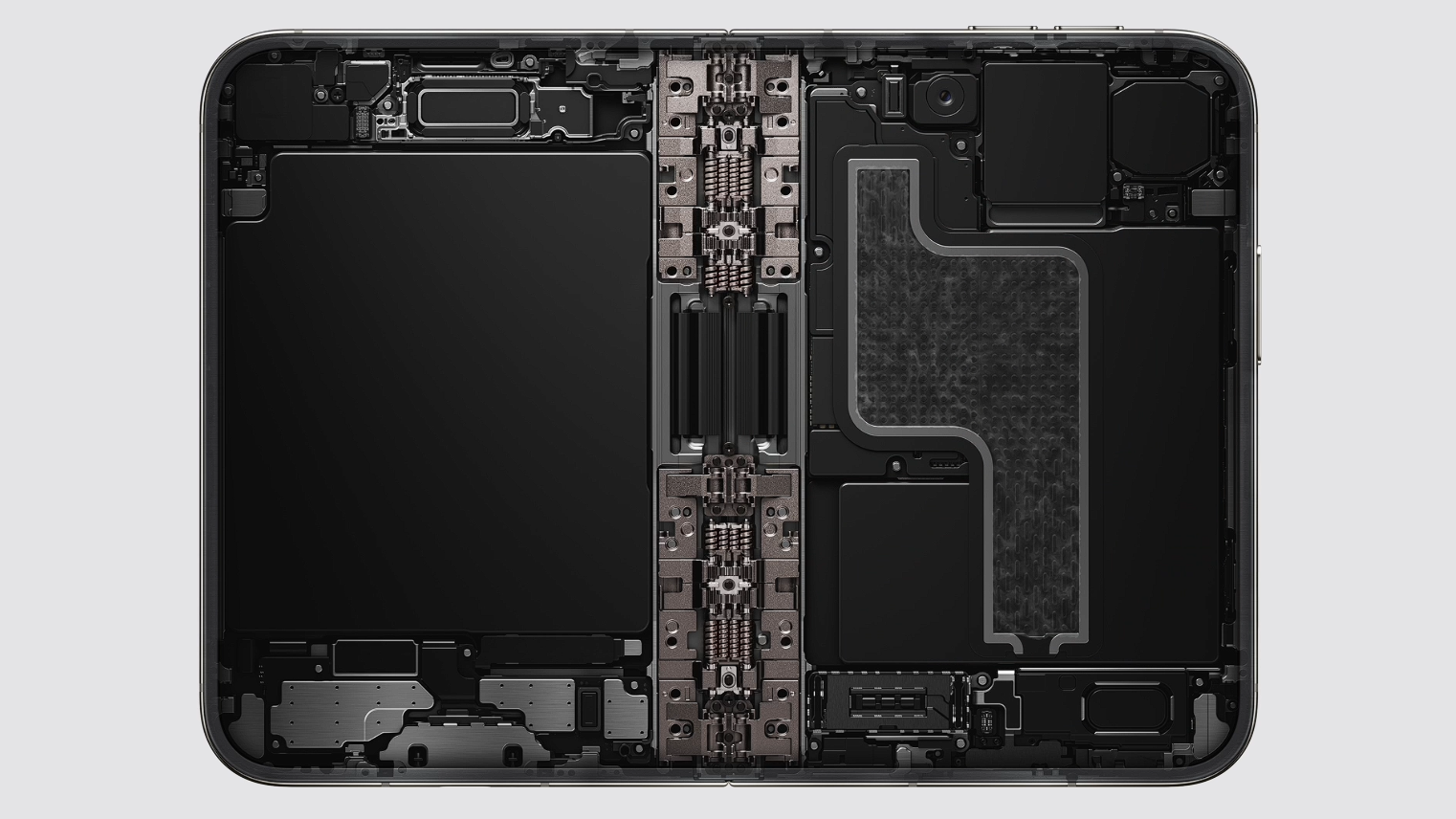
Apple says the Duo uses a custom vapor chamber connected directly to the A20 Pro through a new chip-packaging design inspired by its M-series processors.
Apple claims the combination delivers up to 35% better sustained performance than the iPhone 17 Pro.
This is particularly relevant for:
- high-frame-rate gaming
- extended video processing
- multitasking
- local AI workloads
- demanding applications
Peak performance is one thing.
Keeping the phone fast after several minutes of heavy use is another.
Apple is clearly trying to solve the second problem.
Two Batteries, One Power System
The iPhone Duo uses an iPhone-first dual-battery architecture (you can see in the above image), with one high-energy battery on each side of the foldable chassis.
Apple says software and energy-rebalancing algorithms allow the two cells to operate as a unified system.
Apple’s official India specifications rate the Duo for:
- up to 24 hours of typical use
- up to 44 hours of video playback using the outer display
- up to 31 hours of video playback using the inner display
- up to 37 hours of streamed video on the outer screen
- up to 26 hours of streamed video on the inner screen
The difference between inner- and outer-display endurance is worth noticing.
The huge inner panel naturally consumes more power, so users who spend long periods watching videos or gaming on the 7.6-inch display should expect higher battery demand.
Charging Reaches 50% in About 20 Minutes
The Duo supports fast wired charging through USB-C.
Apple says it can reach 50% charge in around 20 minutes when connected to a 60W-capable adapter or higher. With a MagSafe charger and a 35W adapter or higher, Apple says it can reach 50% in around 30 minutes.
The charger is sold separately.
Wireless charging supports both:
- MagSafe up to 25W
- Qi2 up to 25W
Apple has also introduced dedicated Duo accessories with integrated magnets.
Dual 48MP Cameras, But No Telephoto Lens
The iPhone Duo has a 48MP Dual Fusion camera system consisting of:
48MP Fusion Main
- 26mm equivalent
- ƒ/1.6 aperture
- sensor-shift optical stabilization
- Hybrid Focus Pixels
- 24MP and 48MP photography
- optical-quality 2x telephoto
48MP Fusion Ultra Wide
- 13mm equivalent
- ƒ/2.2 aperture
- 120-degree field of view
- macro photography
- 24MP and 48MP photos
The Duo offers 0.5x, 1x and 2x shooting options, with digital zoom up to 10x.
The important omission is the lack of a dedicated telephoto camera.
That’s one of the compromises separating the Duo from the iPhone 18 Pro and Pro Max, which use a three-camera system with a dedicated 48MP telephoto.
So while the Duo’s main camera hardware is serious, it is not simply an iPhone 18 Pro camera system folded in half.
Folding Creates New Camera Tricks
Where the Duo does something different is with the physical flexibility of the phone.
Apple has introduced several foldable-specific camera features.
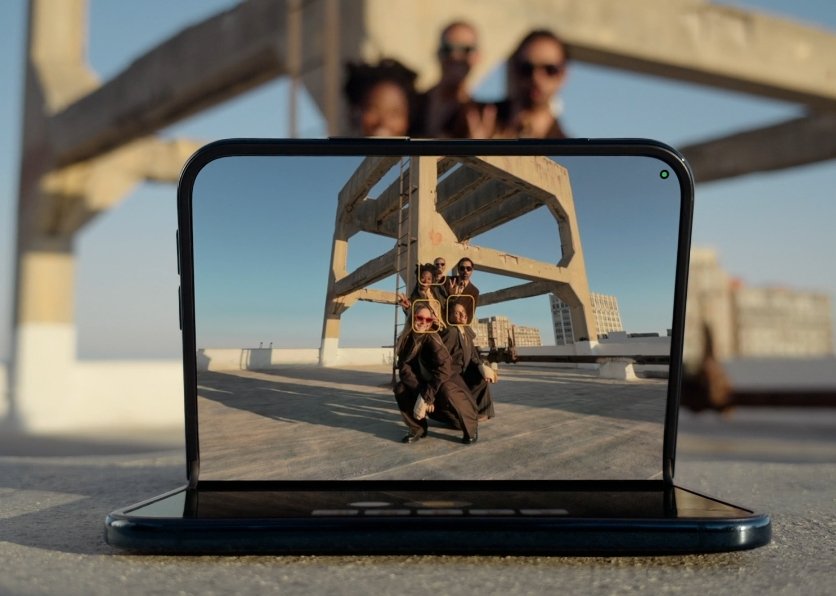
Smart Take
The A20 Pro’s on-device AI can analyze a scene and automatically capture a photo when people are ready, helping users avoid rushing back into position before a timer expires.
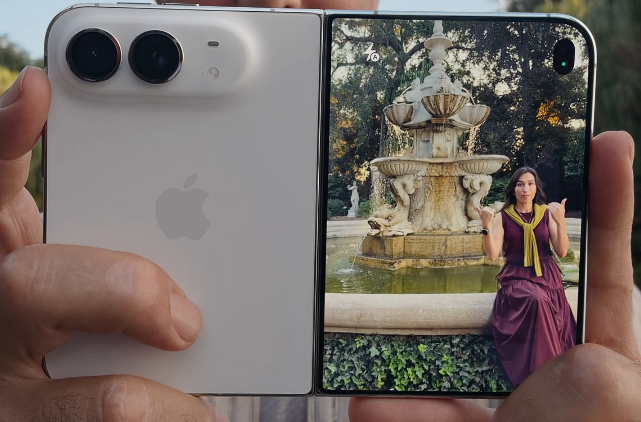
Duo Preview
The external display can show a live preview so subjects can see framing while someone uses the rear cameras.
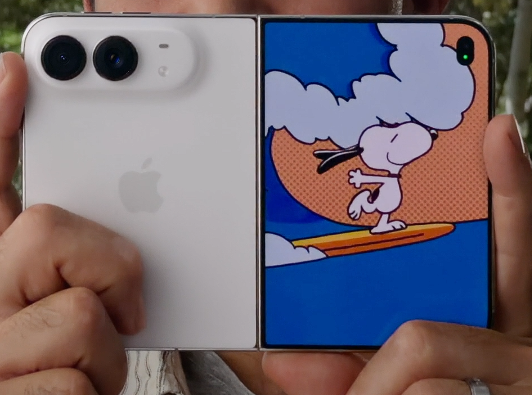
Kid Cue
Animations featuring Peanuts characters can appear on the outer display to attract children’s attention toward the camera.
Rear-Camera Selfies
The higher-resolution rear cameras can be used for selfies while the outer display acts as a preview screen.
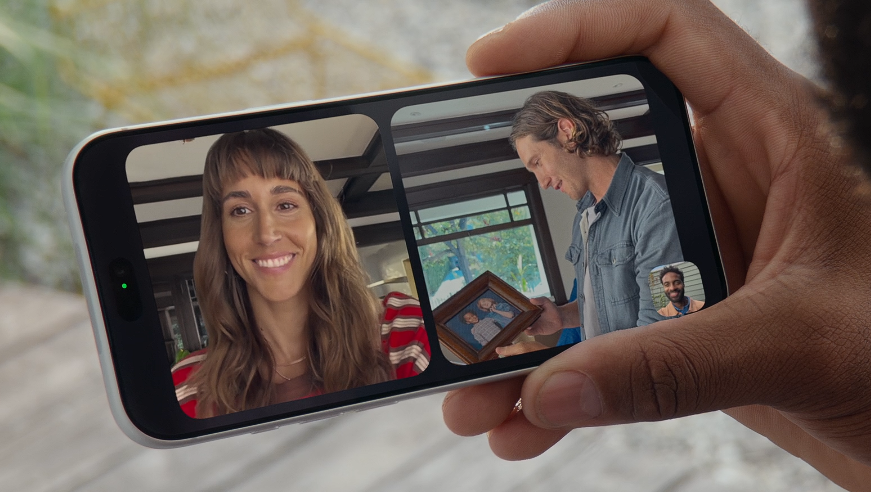
Duo FaceTime
People on the other side of a video call can use the outer display and camera in new ways when the Duo is opened or positioned on a surface.
These features are arguably more interesting than the megapixel count because they’re things a conventional iPhone simply cannot do in the same way.
Video Recording Is Still Serious
The main camera can record 4K Dolby Vision at up to 120fps.
Other video capabilities include:
- Cinematic mode up to 4K Dolby Vision at 60fps
- 4K Dolby Vision slow motion up to 120fps
- 1080p slow motion up to 240fps
- Action mode up to 2.8K Dolby Vision at 60fps
- macro video
- Dual Capture up to 4K Dolby Vision at 30fps
- stabilized 4K Dolby Vision time-lapse
- Audio Mix
- improved low-light video
The Duo also allows users to prop the phone open for longer shots without requiring a conventional tripod.
The Inner Camera Completely Disappears Into the Display
For FaceTime on the main screen, Apple uses an under-display FaceTime camera.
Apple lists this camera at ƒ/1.8 and supports 1080p video recording at 30 or 60fps, along with Center Stage for video calls.
That allows the inner screen to remain visually uninterrupted when the camera isn’t being used.


The outer display has its own 12MP Center Stage camera, which supports Center Stage for photos and video calls, Ultra-stabilized video, Smart Take, Kid Cue and Dual Capture.
This is one of the cleverest aspects of the design because it means the big inner screen doesn’t need to sacrifice a visible camera cutout.
iOS 27 Is Rebuilt for a Foldable
Hardware alone would not make the Duo useful.
Apple has redesigned iOS 27 to take advantage of the two-screen configuration.
When the phone is open, the interface can move controls and navigation toward the sides to preserve vertical space. The system can also adapt when the phone changes orientation or moves between the inner and outer displays.
Apple apps are being optimized for the larger display, while third-party developers can use updated APIs to adapt their own apps.
Apple says apps including Netflix, Zoom and Slack are already taking advantage of the foldable layout.
That will be one of the biggest long-term tests for the Duo.
A foldable can have excellent hardware, but the experience becomes far less convincing if applications simply stretch into empty space.
Finally, Split View Comes to iPhone
The larger screen allows Apple to introduce Split View multitasking on iPhone for the first time.
Users can place two apps side by side, open two windows of the same application, move between apps quickly and save pairs of apps for future use.
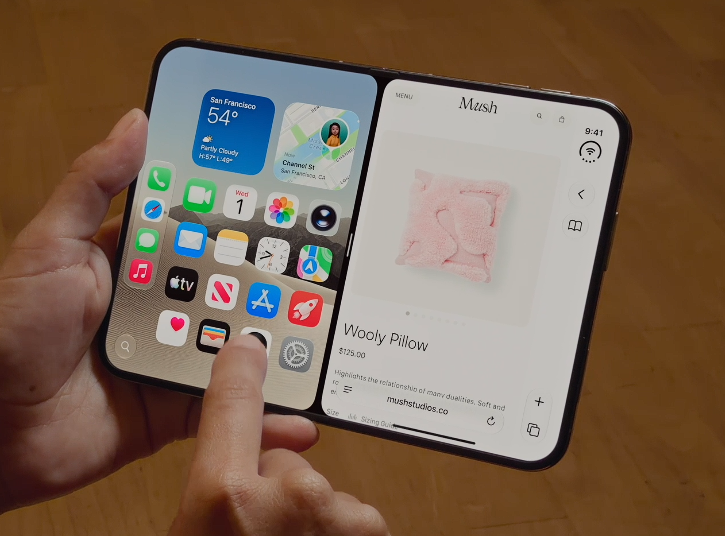
That makes the Duo much closer to a pocketable mini-tablet when opened.
You could, for example:
- browse Safari while checking Messages
- watch a video while browsing
- keep a document open beside Notes
- use Slack while referencing another application
- chat with Siri while viewing content on the other side
This is arguably the most important software change introduced with the phone.
StandBy Becomes More Useful on a Foldable
The Duo also gives Apple’s StandBy feature a physical advantage.
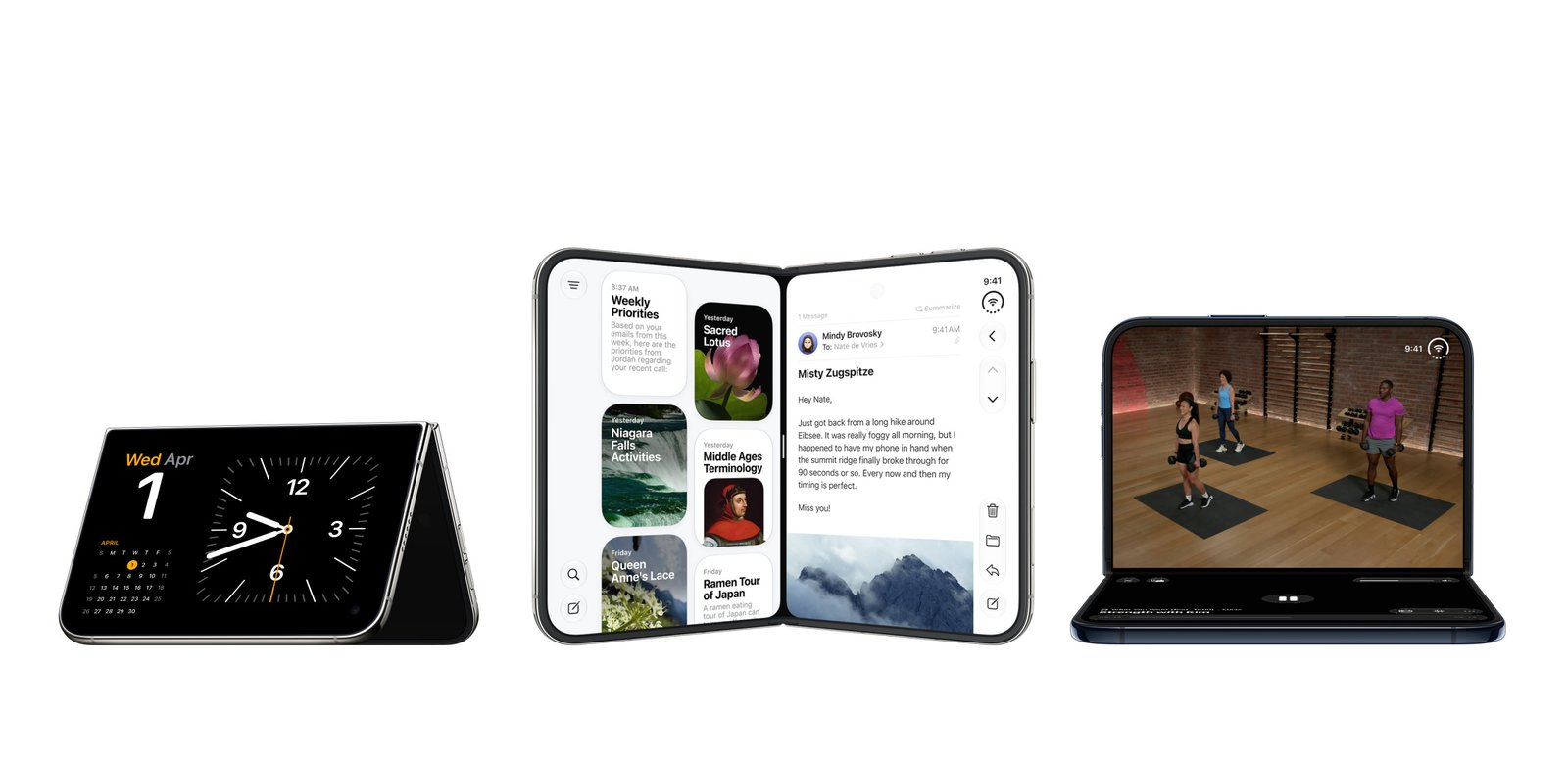
When placed on a table, the phone can enter StandBy mode on either display even when it isn’t charging. Apple says it can act as a photo frame, clock, widget hub or information display.
Because the hinge lets the Duo sit in different positions, it can function in what Apple effectively treats as multiple physical modes.
The company highlights landscape, portrait, seated and standing orientations, turning the foldable into something that can change roles depending on how it’s positioned.
Apple Pencil Support Is Coming
The Duo also supports Apple Pencil with USB-C, with support arriving later in 2026.
That allows users to take notes, sketch and mark up documents on either display.
This is a significant clue about how Apple sees the device.
The Duo isn’t merely supposed to be a larger iPhone for watching Netflix. Apple clearly wants the unfolded display to support some tablet-style tasks as well.
Siri AI Gets a Much Bigger Canvas
The Duo launches with the next generation of Apple Intelligence and Siri AI.
Siri AI can use personal context, access information across apps, understand what’s happening on screen and help users perform actions based on what they’re viewing.
The larger display is particularly useful here.
Apple demonstrates scenarios where a user can converse with Siri on one side of the screen while continuing to look at another application on the other side.
That makes AI interaction feel more like a companion process rather than forcing users to abandon their current screen.
Apple Intelligence also supports features including:
- Spatial Reframing
- Extend
- upgraded Clean Up
- Image Playground
- upcoming SynthID support
- Notify Me in Safari
Apple says its AI architecture uses on-device processing and Private Cloud Compute to handle supported workloads while maintaining its privacy focus.
Siri AI Is Rolling Out as a Beta
There is an important caveat.
Apple says Siri AI is rolling out as a beta with iOS 27, initially in English. French, Japanese, Korean, Portuguese and Spanish support is scheduled for October. Feature availability can also vary by region and language.
So buyers should not assume every AI feature shown during Apple’s presentation will behave identically in every country on day one.
C2 and N1 Bring Apple’s Connectivity In-House
The iPhone Duo uses Apple’s C2 cellular modem and N1 wireless networking chip.
The N1 provides:
- Wi-Fi 7
- Bluetooth 6
- Thread
The C2 modem handles cellular connectivity and supports Apple’s newer AI-assisted improvements to cellular performance. It also supports mmWave in the United States.
The Duo uses an eSIM-only design worldwide.
There is no physical SIM card slot. Apple says that decision saves internal space, helping maximize battery capacity.
Apple’s Indian specifications list support for two active eSIMs and storage for eight or more eSIM profiles.
USB-C and Display Output
The iPhone Duo includes USB-C with support for:
- charging
- DisplayPort
- USB 3 transfer speeds up to 10Gbps
It can also output up to 4K HDR video through DisplayPort or an appropriate USB-C adapter.
That makes the Duo potentially useful as a compact productivity machine when connected to a larger display.
Foldable Design Creates New Ways to Use the Phone
Apple is emphasizing that the Duo isn’t just two screens connected by a hinge.
The hinge and dual-display architecture let it work in several physical arrangements.
Closed Mode
Use the 5.4-inch outer display as a conventional phone.
Landscape Mode
Open the Duo for the full 7.6-inch display, particularly useful for games and video.
Portrait Mode
The wider display offers more space for typing, browsing and reading.
Seated Mode
Prop it at an angle for watching video or following content.
Standing Mode
Use the outer display for StandBy, clocks, widgets and photos.
That range of physical positions is part of Apple’s larger argument that foldables can be more versatile than conventional phones.
iPhone Duo Specifications at a Glance
| Feature | iPhone Duo |
|---|---|
| Inner Display | 7.6-inch Super Retina XDR OLED |
| Inner Resolution | 1878 × 2670 |
| Outer Display | 5.4-inch Super Retina XDR OLED |
| Outer Resolution | 1398 × 2034 |
| Refresh Rate | ProMotion up to 120Hz |
| Brightness | Up to 3,000 nits outdoor peak |
| Processor | A20 Pro |
| CPU | 6-core |
| GPU | 7-core with Neural Accelerators |
| Neural Engine | Dual 16-core |
| Rear Cameras | 48MP Main + 48MP Ultra Wide |
| Optical Zoom | Up to 2x optical-quality |
| Front Camera | 12MP Center Stage |
| Inner Camera | Under-display FaceTime camera |
| Video | Up to 4K Dolby Vision at 120fps |
| Battery | Dual-cell architecture |
| Typical Use | Up to 24 hours |
| Video Playback | Up to 44 hours outer / 31 hours inner |
| Charging | 50% in ~20 min wired |
| Wireless Charging | MagSafe/Qi2 up to 25W |
| Cellular | 5G |
| Modem | Apple C2 |
| Wi-Fi | Wi-Fi 7 |
| Bluetooth | Bluetooth 6 |
| SIM | Dual eSIM, no physical SIM |
| Storage | 256GB / 512GB / 1TB / 2TB |
| Security | Touch ID |
| Durability | IP68 |
| OS | iOS 27 |
| Weight | 254g |
| Thickness | 5.2mm open / 11.3mm folded |
| Colors | Star White, Night Sky |
Specifications are based on Apple’s official India technical specifications.
iPhone Duo Price in India
Apple has positioned the Duo firmly at the premium end of the smartphone market.
Official India pricing is:
| Storage | India Price |
|---|---|
| 256GB | ₹2,99,900 |
| 512GB | ₹3,24,900 |
| 1TB | ₹3,74,900 |
| 2TB | ₹4,49,900 |
The phone comes in Star White and Night Sky.
At ₹4,49,900 for 2TB, the top configuration is far beyond conventional flagship-phone pricing.
Even the entry-level ₹2,99,900 version is firmly a luxury purchase.
That means Apple is not trying to make foldables mainstream through low pricing. It’s entering the market at the very top.
US Price and Availability
In the United States, the iPhone Duo starts at $1,999 for 256GB.
It is offered in:
- 256GB
- 512GB
- 1TB
- 2TB
Apple lists the U.S. starting price at $1,999 and says pre-orders begin October 16, with availability beginning October 23.
The iPhone Duo will be available at launch in more than 70 countries and regions, including India, the US, China, Japan, Singapore, Australia, the UK, UAE and several European markets.
iPhone Duo Accessories Cost Extra
Apple is also launching dedicated accessories.
The iPhone Duo Case costs $79 in the US, while the iPhone Duo Folio with Kickstand costs $129.
The Folio includes an integrated kickstand and is designed around the phone’s different viewing angles. Both accessories support MagSafe and Qi2 charging.
As usual, those accessory prices are separate from the phone.
What Makes the iPhone Duo Different From the iPhone 18 Pro?
The easiest way to understand the Duo is not to think of it as an oversized iPhone 18 Pro.
The Pro models have the stronger traditional camera system, including a dedicated telephoto lens with up to 8x optical-quality zoom.
The Duo trades that camera capability for a much larger foldable display and a completely different form factor.
| Feature | iPhone Duo | iPhone 18 Pro |
|---|---|---|
| Form Factor | Foldable | Conventional |
| Main Display | 7.6-inch inner | 6.3-inch |
| Outer Display | 5.4-inch | — |
| Chip | A20 Pro | A20 Pro |
| Rear Cameras | 2 × 48MP | 3 × 48MP |
| Dedicated Telephoto | No | Yes |
| Biometric Security | Touch ID | Face ID |
| Max Storage | 2TB | 2TB |
| Foldable Multitasking | Yes | No |
| Apple Pencil | Yes | No |
| 5G | Yes | Yes |
The decision therefore comes down to what kind of device the buyer actually wants.
The iPhone Duo’s Biggest Advantages
The strengths are fairly obvious.
Large screen in a pocketable form: The 7.6-inch display gives the phone tablet-like space without requiring a separate iPad-sized device.
Multitasking: Split View and multiple windows make the large inner screen genuinely useful rather than simply larger.
Camera flexibility: The foldable design enables Smart Take, Duo Preview, rear-camera selfies and new FaceTime arrangements.
Performance: A20 Pro, vapor cooling and hardware AI acceleration give Apple plenty of headroom for demanding workloads.
Portability: At 254 grams and just 5.2mm thick when open, it is remarkably thin for a device with a 7.6-inch folding display.
The Biggest Compromises
There are also some obvious trade-offs.
Price: ₹2,99,900 is an enormous amount for a smartphone.
No dedicated telephoto: The Duo’s camera system is less versatile than the 18 Pro models for long-range photography.
eSIM-only: There is no physical SIM card option anywhere in the world.
Inner-screen power demand: Battery life is notably lower when using the large internal display compared with the outer screen.
Software adaptation: The quality of the foldable experience will increasingly depend on third-party developers updating their applications.
And, despite Apple’s sophisticated hinge and display construction, long-term durability will ultimately be something owners and independent testers—not launch-day specifications—will determine.
Was Apple Right to Call It “Crease-Free”?
This needs a little nuance.
Apple’s official language focuses on a smooth, flat inner screen and technology that minimizes crease visibility and folding stress.
Some launch coverage uses stronger “crease-free” language, but that goes beyond Apple’s more carefully worded technical description.
So the accurate takeaway is:
Apple has engineered the Duo to minimize the visible crease rather than making a literal no-crease guarantee.
That distinction matters because foldable displays are highly dependent on viewing angle and lighting.
A crease that is difficult to notice straight-on can still become visible when light reflects across the panel.
The iPhone Duo Is More Than a Foldable iPhone
The significance of the Duo isn’t simply that Apple has finally built a foldable.
Apple is using the form factor to rethink how an iPhone works.
The company has changed:
- biometric authentication
- camera behavior
- multitasking
- app layout
- StandBy
- FaceTime
- AI interaction
- display modes
- accessory design
- battery architecture
In other words, Apple hasn’t just folded an existing iPhone.
It has built a new interaction model around the hinge.
That makes the software arguably as important as the hardware.
The Launch Event Had a Few Unexpected Moments
Apple’s first foldable launch was also unusually entertainment-heavy.
During the event, streamer IShowSpeed was brought on stage and handled the iPhone Duo with CEO John Ternus. Speed later created an unexpected viral moment by attempting a backflip while holding the new foldable. He completed the stunt without dropping the phone, turning an otherwise highly choreographed product launch into a memorable bit of live entertainment.
The moment fitted the tone of Apple’s presentation surprisingly well: the company was introducing a completely new iPhone form factor, while the audience was getting an unscripted demonstration of just how much attention the device was attracting.
Apple also featured other entertainment personalities around the launch, helping position the Duo as a lifestyle product rather than purely a technical experiment.
iPhone Duo vs Traditional Foldables
Apple arrives very late to the category.
Samsung and several Chinese manufacturers have spent years refining book-style foldables, so Apple’s challenge isn’t simply proving that a foldable iPhone can exist.
It needs to explain why someone should pay Apple’s premium for one.
Its answer is familiar:
hardware and software designed together.
The Duo’s case is built around a custom hinge, two displays, Apple’s silicon, iOS 27, Apple Intelligence and a growing set of foldable-specific applications.
Whether that ecosystem advantage outweighs the higher price will be one of the key questions for the next generation of foldable phones.
Environmental Details
Apple says the iPhone Duo contains 35% recycled content overall.
That includes:
- 100% recycled cobalt in the battery
- 100% recycled titanium in the 3D-printed hinge cover
- recycled aluminum in the internal structure
- recycled lithium in the battery
- recycled gold plating and tin solder in Apple-designed circuit boards
Apple also says 60% of manufacturing electricity for the device comes from renewable electricity and that its packaging is 100% fiber-based.
These figures are Apple’s own environmental disclosures.
What Is Confirmed and What Is Not?
At this point, most of the important iPhone Duo story is no longer rumor.
Confirmed by Apple
- iPhone Duo is Apple’s first foldable iPhone.
- It has a 7.6-inch inner OLED.
- It has a 5.4-inch outer OLED.
- Both displays support ProMotion up to 120Hz.
- A20 Pro powers the device.
- It uses dual batteries.
- It has a 48MP main + 48MP ultrawide camera system.
- Touch ID is integrated into the side button.
- It is eSIM-only worldwide.
- It supports IP68.
- It supports Wi-Fi 7 and Bluetooth 6.
- It supports Apple Pencil with USB-C later this year.
- It starts at $1,999 in the US.
- It starts at ₹2,99,900 in India.
- Pre-orders begin October 16.
- Availability begins October 23.
What Still Needs Real-World Testing
- Long-term hinge durability
- Actual crease visibility under different lighting
- Sustained gaming performance
- Real-world battery life with heavy inner-display use
- Third-party app optimization
- Camera quality compared with the iPhone 18 Pro
- How comfortable the 254g device feels over long periods
Those aren’t missing specifications. They’re questions that specifications alone cannot answer.
Final Verdict
The iPhone Duo is the most radical new iPhone Apple has introduced in years, but its importance isn’t just about folding the screen in half.
Apple has used the foldable design to create a completely different iPhone experience: a 5.4-inch phone when closed, a 7.6-inch multitasking device when open, a flexible camera platform, a mini entertainment screen and, with iOS 27, a more capable workspace for AI and productivity.
The hardware is undeniably ambitious.
A20 Pro, vapor cooling, a dual-battery system, titanium construction, an under-display inner camera, Touch ID, Wi-Fi 7 and a 5.2mm-thick unfolded body make this much more than an experimental first-generation foldable.
But the price is equally ambitious.
At ₹2,99,900, the entry-level iPhone Duo costs more than many flagship-phone-and-tablet combinations. That means Apple is asking buyers to pay a considerable premium for the convenience and flexibility of the foldable format.
The camera system also isn’t Apple’s most capable. There is no dedicated telephoto lens, and the device prioritizes flexibility and form factor over matching the complete camera hardware of the iPhone 18 Pro Max.
Still, Apple has done something important.
It has finally given the foldable iPhone a reason to exist beyond simply being “an iPhone that folds.”
The real test begins on October 23, when customers start using it outside Apple’s carefully controlled demonstrations.
Until then, the iPhone Duo looks less like Apple’s answer to the foldable-phone category-and more like Apple’s attempt to reshape what a premium iPhone can actually be.
🚨 Stay Updated with TopKhoj! 🚨
Get the latest tech news, deals, and exclusive offers first!
📰 Visit News Section📲 Join our Telegram Channel for real-time updates and best deals!
🔗 Join Telegram Now💡 Stay informed and never miss a great deal with TopKhoj!
⚠️ Disclaimer: Any link provided in the article related to a product or service will redirect you to our affiliate partner(s)' website, which are affiliate links. This means that if you make a purchase through these links, we may earn a commission at no extra cost to you. This commission helps support our blog and our work.
🔔 All prices mentioned above are subject to change based on current offers and availability on e-commerce platforms. Please check the latest price and product details on the product page before making a purchase.