Add TOPKHOJ on Google:
 Preferred Source
For decades, Apple adamantly resisted the industry-wide shift toward touchscreen laptops, with executive leadership famously declaring touch on vertical clamshells ergonomically compromised. Today, that long-standing design dogma came to an end.
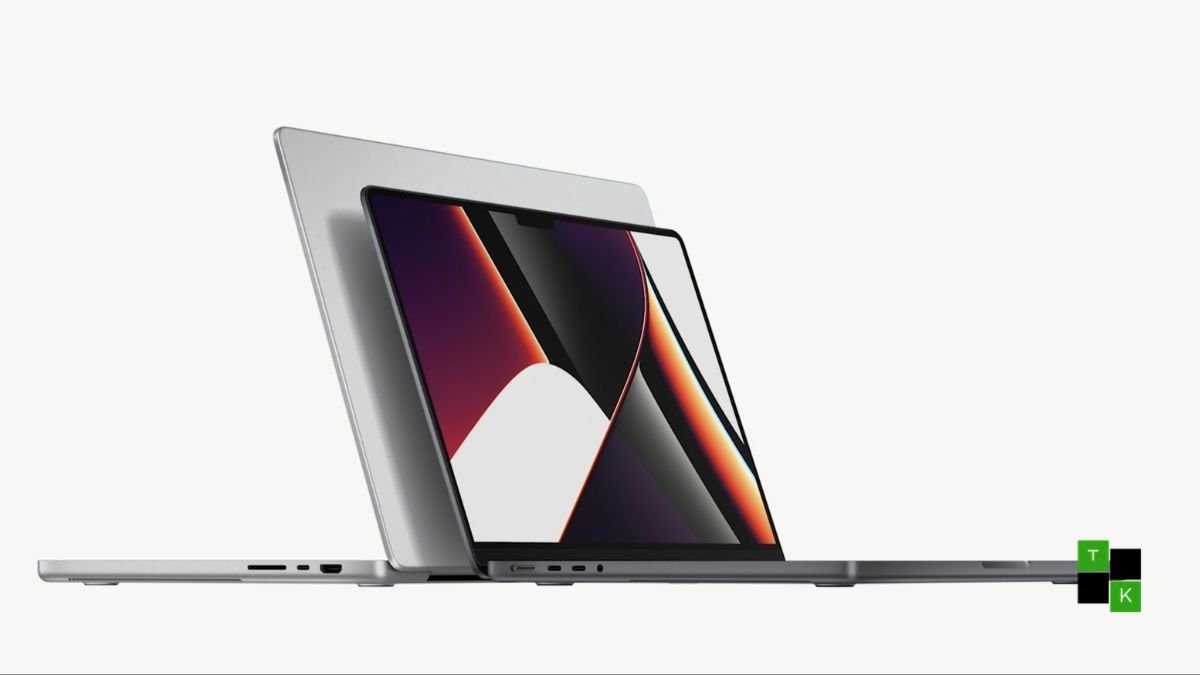
During its “Pro and Tell” hardware presentations on October 28, 2026, Apple officially unveiled its first-ever touchscreen MacBook Pro models, arriving in redesigned 14-inch and 16-inch form factors.
Positioned as an apex tier above standard portable workstations, the new laptops introduce high-contrast OLED display panels, Apple’s signature Dynamic Island in place of the static camera notch, a newly engineered stabilized hinge assembly designed specifically for touch input, and significantly lightened unibody chassis.
Driven by Apple’s high-bandwidth M5 Pro and M5 Max processors, the 14-inch touchscreen model starts at $2,899 in the United States (expected around ₹3,49,900 in India)-commanding a $400 premium over non-touch counterparts.
The launch coincides with pre-orders opening for the entry-level 14-inch M6 MacBook Pro ($1,999 / ₹2,39,900) and the redesigned 24-inch iMac with M6 ($1,499 / ₹1,34,900), with retail deliveries commencing on November 6, 2026.
Touchscreen Architecture: OLED, Dynamic Island & Zero Hinge Wobble
Rather than simply laminating a basic capacitive touch digitizer over an existing chassis, Apple completely re-engineered the display lid and mechanical hinge:
- Tandem OLED Display Canvas: Moving away from mini-LED backlights, both the 14-inch and 16-inch models feature custom OLED panels with per-pixel local dimming, near-infinite contrast ratios, true 0-nit blacks, and a blinding 1,600 nits of peak HDR brightness.
- Dynamic Island Replaces the Static Notch: The static camera cutout is replaced with an interactive Dynamic Island. Floating along the top edge, it morphs fluidly to show live background activities, active render timers, audio playback controls, AirDrop file progress, and FaceTime calls-all interactive via direct finger taps.
- Stabilized Dual-Damper Friction Hinge: The primary complaint with traditional Windows touch laptops has always been “screen bounce” during tap gestures. Apple implemented a high-rigidity, dual-damper hinge that holds the screen firm when pressed with a finger or stylus, yet glides open with one hand.
- Lighter Chassis Profile: Utilizing aerospace-grade recycled aluminum and thinner OLED sandwich panels, the overall chassis is up to 12% lighter than predecessor chassis, easing mobile lap and table usage.
Processing Engine: Why M5 Pro and M5 Max over Base M6?
While yesterday’s announcements highlighted the launch of the baseline 2nm M6 chip for entry-level tasks, Apple deliberately powered the OLED Touchscreen models with its mature, heavy-compute M5 Pro and M5 Max silicon:
- Massive Memory Bandwidth: Creative touch tasks-such as 3D digital sculpting, 8K scrub scrubbing, and multi-track audio mixing-require immense throughput. The M5 Pro and M5 Max chips deliver 307GB/s to 460GB/s of unified memory bandwidth, far surpassing the 170GB/s limit on the baseline M6.
- Up to 18-Core CPU & 40-Core GPU: Configurable with up to an 18-core CPU layout and massive 40-core GPU arrays, these machines handle high-concurrency tasks without throttling under sustained loads.
- Three Thunderbolt 5 Ports: Unlike the baseline M6 models which retain Thunderbolt 4, the touch-enabled M5 Pro and M5 Max editions feature three full-bandwidth Thunderbolt 5 (USB 4 2.0) ports delivering data transfer speeds up to 120Gbps.
macOS Interaction: Touch-Optimized UI Layers
To avoid cluttering macOS with oversized smartphone menus, Apple balanced touch functionality with professional precision:
- Hybrid UI Interaction: The trackpad and keyboard remain the primary interaction tools, while touch serves as a high-speed supplemental input. Creative professionals can scrub video timelines, paint directly onto canvases, pinch-to-zoom blueprints, or swipe away notifications.
- Fingerprint-Resistant Nano-Coating: The front glass incorporates an oleophobic anti-smudge coating designed to repel finger oils and minimize reflections in bright lighting.
- System-Wide Gestures in macOS Golden Gate: Features native three-finger app switching, tap-to-select text highlighting, and on-screen radial menus that populate around your fingertip in supported pro apps like Logic Pro, Final Cut Pro, and Xcode.
Lineup Architecture: Touchscreen OLED vs. Standard M6 MacBook Pro
| Specification Dimension | Touchscreen MacBook Pro 14 / 16 | Non-Touch MacBook Pro 14 (Base) | 24-Inch iMac Refresh (Desktop) |
| Global Starting Price | $2,899 (14″) / $3,399 (16″) | $1,999 (14″ Base) | $1,499 (Standard M6) |
| India Pricing Tier | Expected ₹3,49,900 – ₹4,09,900 | ₹2,39,900 (16GB / 1TB) | Starts at ₹1,34,900 – ₹1,74,900 |
| Display Technology | Tandem OLED with Touch Digitizer | 14.2″ Liquid Retina XDR (mini-LED) | 24″ 4.5K Retina Display |
| Screen Cutout Architecture | Interactive Dynamic Island | Static Center Camera Notch | Classic Top Border Bezel |
| Processor Platform | Apple M5 Pro or M5 Max | Apple M6 (12-Core CPU/GPU) | Apple M6 (10-Core / 12-Core) |
| Memory Bandwidth | 307GB/s to 460GB/s | Up to 170GB/s | Up to 170GB/s |
| Physical Hinge | Reinforced Dual-Damper Anti-Wobble | Standard Friction Hinge | Fixed Tilt Aluminum Stand |
| Thunderbolt Standard | 3x Thunderbolt 5 Ports (120Gbps) | 3x Thunderbolt 4 Ports | 2x or 4x Thunderbolt 4 |
| Input Modality | Direct Multi-Touch + Trackpad | Trackpad & Keyboard Only | Magic Keyboard & Mouse |
| Pre-Order & Retail Sale | Pre-orders Today; Ships Nov 6 | Pre-orders Today; Ships Nov 6 | Pre-orders Today; Ships Nov 6 |
Community Debate: Does macOS Truly Need Touch?
The announcement has triggered immediate discussion across creator communities and tech forums:
- The Creative Benefit: Audio engineers, digital illustrators, and video editors gain intuitive spatial controls-such as directly turning software EQ knobs or sliding mixer faders with two hands simultaneously-that were previously impossible with a single mouse pointer.
- The “iPad Pro Cannibalization” Question: Critics question why users would pay nearly $3,000 for a touch-enabled laptop when the iPad Pro (paired with the Apple Pencil Pro) already serves as a touch-first creative tablet. Apple’s counter-argument is full desktop macOS flexibility: terminal access, multi-window multitasking, and native compilation paired with touch immediacy.
- The $400 Price Jump: At $2,899, the $400 markup over traditional non-touch Pro hardware places these machines firmly in premium creative territory. Apple is keeping traditional non-touch mini-LED models in the lineup to ensure price-sensitive developers still have options.
Orders & Worldwide Availability
Pre-orders for the 14-inch and 16-inch Touchscreen MacBook Pro models open globally today via Apple.com and the Apple Store app. Official customer deliveries and retail store availability will begin on Friday, November 6, 2026.
🚨 Stay Updated with TopKhoj! 🚨
Get the latest tech news, deals, and exclusive offers first!
📰 Visit News Section📲 Join our Telegram Channel for real-time updates and best deals!
🔗 Join Telegram Now💡 Stay informed and never miss a great deal with TopKhoj!
⚠️ Disclaimer: Any link provided in the article related to a product or service will redirect you to our affiliate partner(s)' website, which are affiliate links. This means that if you make a purchase through these links, we may earn a commission at no extra cost to you. This commission helps support our blog and our work.
🔔 All prices mentioned above are subject to change based on current offers and availability on e-commerce platforms. Please check the latest price and product details on the product page before making a purchase.