Add TOPKHOJ on Google:
 Preferred Source
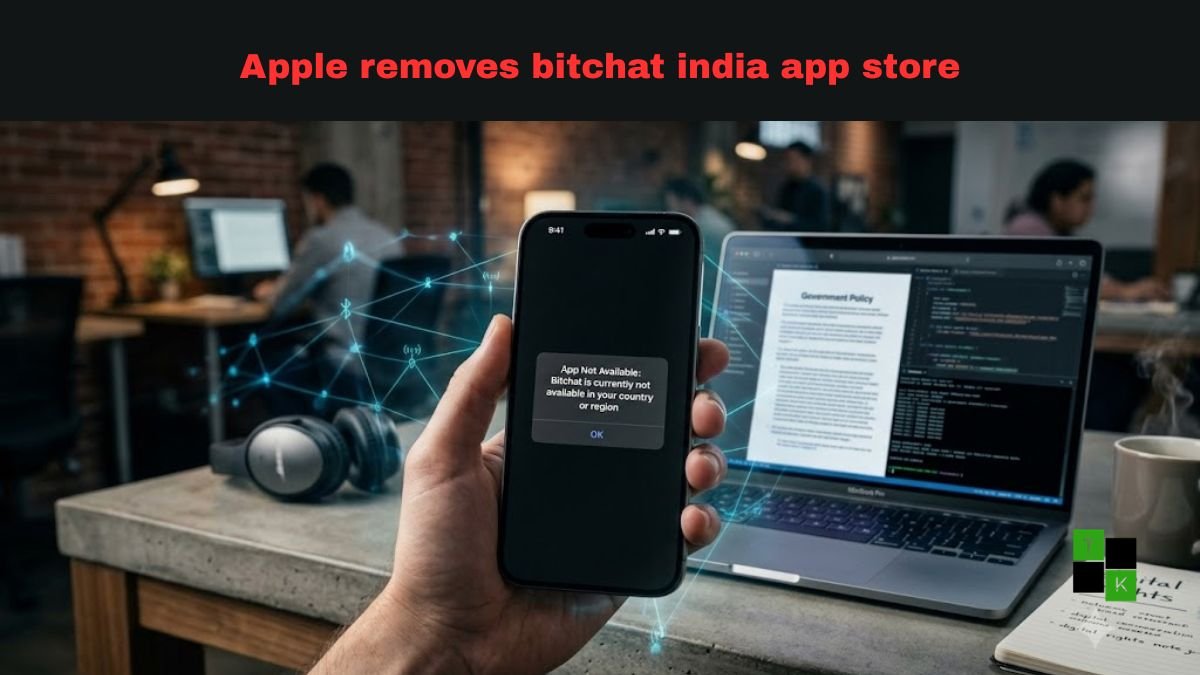
Apple has removed the decentralized offline messaging application Bitchat from the India App Store following a formal takedown directive issued by the Ministry of Electronics and Information Technology (MeitY). The regulatory action was enforced under Section 69A of the Information Technology Act, 2000, which empowers the central government to restrict public access to digital content, software, and online intermediaries in the interest of state security, public order, and the sovereignty of India.
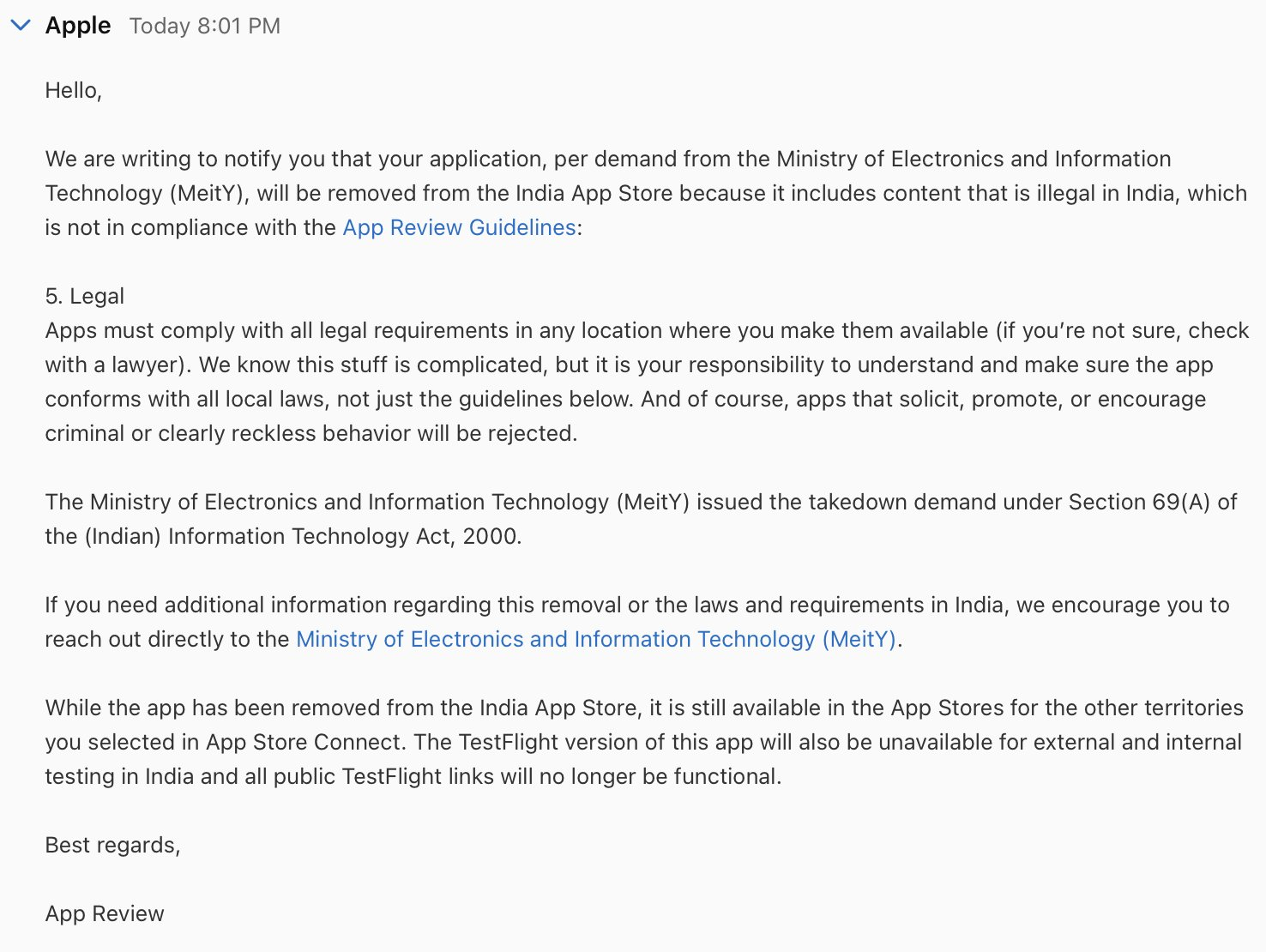
The development came to light on Saturday, October 3, 2026, when Twitter co-founder and open-protocol proponent Jack Dorsey posted on X: “Government of India officially removes Bitchat from the App Store”. Dorsey also shared a screenshot of the official notification issued by Apple’s App Review legal operations team informing the developer that the app had been taken down from the Indian storefront for hosting content deemed illegal under domestic statutory regulations.
Apple’s Legal Notice & Revocation of TestFlight Beta Access
According to the official communication shared by Dorsey, Apple cited jurisdictional compliance obligations as the primary driver behind the removal:
- Mandatory Statutory Compliance: Apple informed the developers that apps distributed via the App Store must strictly comply with all statutory laws and local legal obligations in every country where they are offered.
- Regional Geo-Fencing: While Bitchat has been removed from the India App Store, Apple confirmed that the application remains fully accessible in other international markets and territories selected by the developer.
- Termination of TestFlight Beta Access: Alongside delisting the production application, Apple disabled all TestFlight beta testing builds for users located in India. Public TestFlight invitation links originating from Indian IP addresses or registered to Indian Apple IDs have ceased functioning.
- No Specific Illegal Content Identified: Notably, Apple’s notice did not detail the specific content, features, or messages deemed unlawful by Indian authorities, nor did it disclose the detailed statutory grounds cited in MeitY’s blocking order. Instead, Apple directed the developer to contact MeitY directly for further clarification.
How Bitchat Operates: Serverless Bluetooth Mesh Networking
Unlike mainstream messaging platforms such as WhatsApp, Signal, or Telegram, Bitchat does not rely on traditional telecom networks, internet service providers (ISPs), or cloud data servers:
- Bluetooth Low Energy (BLE) Mesh: The app transmits encrypted messages by forming ad-hoc, peer-to-peer radio frequency meshes directly over Bluetooth.
- Decentralized Packet Hopping: Devices in proximity act as decentralized relays, passing encrypted packets across multiple hops to expand overall transmission range without needing active cellular reception or Wi-Fi connectivity.
- Zero Registration Identity: The service operates without phone numbers, SIM cards, email addresses, or centralized accounts. Users generate cryptographic key pairs locally on their device.
- Resilience During Internet Shutdowns: Because communications remain confined to local radio frequencies, the application stays operational even during government-mandated mobile internet suspensions or telecom outages.
Bitchat vs. Conventional Messaging Platforms
| Core Architecture Parameter | Conventional Messengers (WhatsApp, Telegram) | Bitchat Offline Mesh Platform |
| Connectivity Dependency | Continuous 4G/5G Cellular Data or Wi-Fi | 100% Offline (Direct Bluetooth Low Energy) |
| Registration Requirements | Mandatory Mobile Number / Email ID | Zero Registration (Local Cryptographic Keys) |
| Server Infrastructure | Centralized Global Cloud Data Centers | Serverless (Peer-to-Peer Mesh Only) |
| Lawful Interception | Metadata/IP logs accessible via court warrants | Technically Infeasible (No servers or logs) |
| Impact of Internet Bans | Ceases functioning completely | Uninterrupted Local Operation |
| Governing Action | Intermediary Guidelines Compliance | Section 69A IT Act Blocking Order |
| India App Store Status | Fully Accessible | Delisted by Apple |
Escalating Regulatory Actions: From July GitHub Takedowns to App Store Ban
The App Store delisting follows earlier government interventions targeting Bitchat’s development and distribution channels:
- July 2026 GitHub Repositories Blocked: In July, the Indian Cyber Crime Coordination Centre (I4C) under the Ministry of Home Affairs (MHA) issued an emergency directive ordering Microsoft-owned GitHub to remove repositories hosting Bitchat. That earlier action was initiated under Section 79(3)(b) of the IT Act, making the latest Section 69A directive a distinct and escalated government enforcement.
- Law Enforcement Surveillance Concerns: Authorities raised formal concerns that decentralized, serverless communication tools could be leveraged by bad actors, cybercrime syndicates, and anti-national elements to evade lawful surveillance.
- Absence of Centralized Intermediaries: Under Indian telecommunications and cybersecurity frameworks, digital platforms must maintain designated grievance officers and assist law enforcement agencies with subscriber validation and data retrieval during criminal probes. Because Bitchat lacks central servers, administrative databases, or customer logs, statutory compliance cannot be executed.
- Usage During Civil Protests: Reports noted that demonstrators and civil rights groups had utilized Bitchat to coordinate local logistics during protests when temporary mobile broadband curbs were imposed. Reacting to these regulatory actions, Jack Dorsey stated: “The Government of India does not like technologies like Bitchat and wants it taken down”.
Implications for iOS Users and Alternative Platforms
Because Apple maintains a closed operating ecosystem in India without third-party sideloading support, the App Store delisting blocks new user acquisition across iPhones in the country:
- Impact on Existing iOS Installations: The takedown prevents new downloads and updates but cannot remotely erase the app from devices where it is already installed, nor can authorities block local Bluetooth transmissions between devices in proximity.
- Android Distribution Channel: While Google Play Store listings remain vulnerable to similar regulatory directives, Android users can continue installing the application via standalone APK packages and third-party decentralized repositories.
- Legal Recourse: The development team can appeal the blocking directive before MeitY’s administrative review committee or challenge the order under Article 19 of the Indian Constitution before a High Court.
🚨 Stay Updated with TopKhoj! 🚨
Get the latest tech news, deals, and exclusive offers first!
📰 Visit News Section📲 Join our Telegram Channel for real-time updates and best deals!
🔗 Join Telegram Now💡 Stay informed and never miss a great deal with TopKhoj!
⚠️ Disclaimer: Any link provided in the article related to a product or service will redirect you to our affiliate partner(s)' website, which are affiliate links. This means that if you make a purchase through these links, we may earn a commission at no extra cost to you. This commission helps support our blog and our work.
🔔 All prices mentioned above are subject to change based on current offers and availability on e-commerce platforms. Please check the latest price and product details on the product page before making a purchase.