Add TOPKHOJ as a Preferred Source on Google
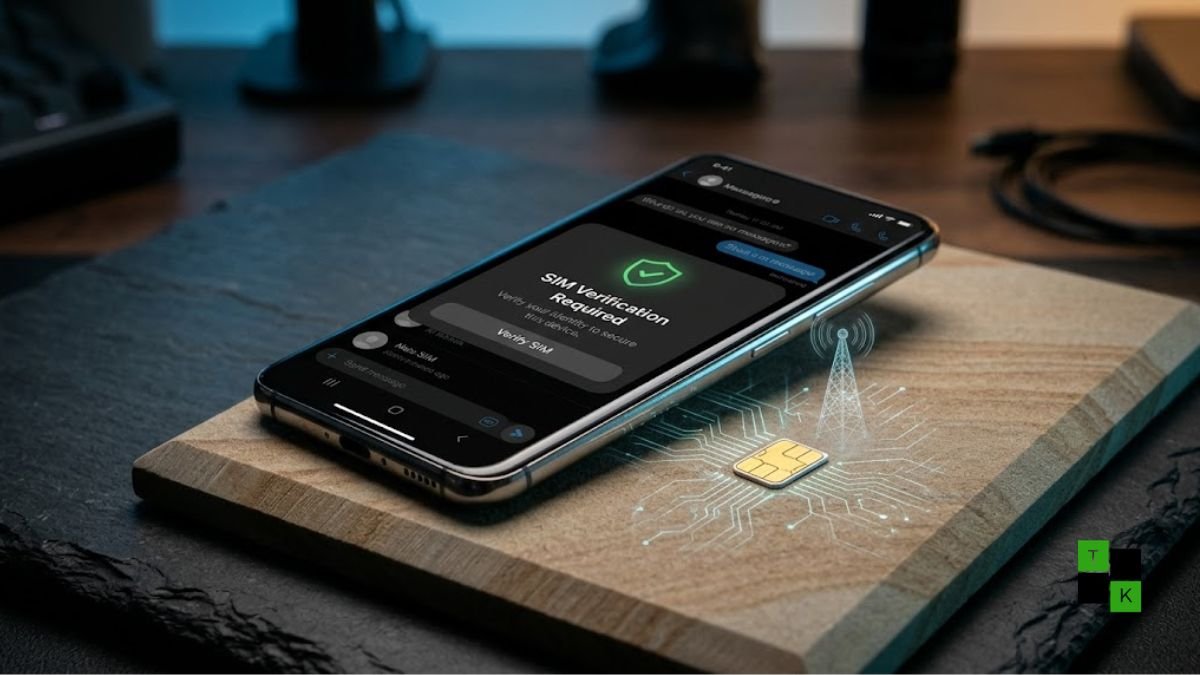
In one of the most consequential cybersecurity policy interventions in the country’s digital history, the Department of Telecommunications (DoT) under the Ministry of Communications has officially mandated SIM binding for messaging apps in India starting January 1, 2027. Platforms like WhatsApp, Telegram, and Signal will be legally required to tie user accounts directly to the active, physical SIM card or registered eSIM installed inside the handset.
The regulatory framework closes a structural loophole that cybercrime syndicates have exploited for years.
Under current mobile app architecture, a user needs a SIM card only once to receive an SMS one-time password (OTP) during registration. Once authenticated, the SIM card can be discarded, removed, deactivated, or exported abroad while the messaging profile remains operational over standard Wi-Fi networks.
With Indian citizens losing over ₹22,800 crore to cyber scams, phishing syndicates, and “digital arrest” frauds in 2024 alone, the government is establishing the same continuous SIM-handshake security model that Unified Payments Interface (UPI) and mobile banking apps rely on.
However, while security agencies view the mandate as essential, the technical implementation introduces logistical friction for multi-device workflows, dual-SIM power users, and international travelers.
What Is SIM Binding and Why Is the Government Enforcing It?
To understand the shift, it is necessary to look at how criminal networks conduct cross-border fraud using Indian telecom identities:
- The “One-Time OTP” Exploitation: Historically, fraudulent operations have purchased pre-activated Indian SIM cards using counterfeit identity documents, completed WhatsApp or Telegram onboarding, and then removed or destroyed the physical SIM cards. The apps were then operated via Wi-Fi from offshore call centers in Southeast Asia to orchestrate investment rackets and fake law enforcement extortion scams.
- Continuous Hardware Handshaking: Under the DoT’s new Telecom Cyber Security Rules, messaging platforms cannot rely on a single verification checkpoint. The application must maintain a continuous or periodic cryptographic handshake with the baseband cellular modem.
- Automatic Deactivation: If the registered SIM card is pulled out of the tray, swapped into another phone, or deactivated by the telecom operator due to non-recharge, the messaging application will immediately freeze access or terminate active sessions until the verified SIM is detected again.
Impact on Everyday Users: WhatsApp Web, Tablets, and Multi-Device
The most immediate concern for law-abiding consumers is how SIM binding affects daily convenience across multiple screens:
- WhatsApp Web & Companion Devices: Under existing WhatsApp Linked Devices architecture, users can link up to four secondary devices-including Windows PCs, Macs, iPads, and secondary smartphones-independent of whether the primary phone is online. The DoT directives enforce stricter guardrails on these instances: web service sessions must automatically log out periodically (no later than every 6 hours), requiring users to re-authenticate using QR codes and biometric confirmation from the active SIM device.
- Dual-SIM Phones: Handsets with two active physical SIMs or dual eSIMs will function normally, provided the messaging account corresponds to the specific SIM slot assigned to that phone number. However, running “dual apps” or cloned profile containers will require both respective SIMs to remain active simultaneously in the same device.
- Secondary Tablets and Wi-Fi Handsets: Running standalone messaging accounts on a Wi-Fi-only tablet or a secondary phone without a SIM slot using an external phone number will no longer be permitted within Indian IP jurisdictions.
The International Traveler Dilemma: What Happens Abroad?
For frequent flyers, business executives, and students moving between countries, the mandate introduces distinct operational hurdles:
- Swapping to Local Travel SIMs: Currently, an Indian traveler landing in London, Dubai, or Singapore can pop out their Indian SIM card, insert a local prepaid tourist SIM for affordable cellular data, and continue chatting on their existing Indian WhatsApp number over local data. Under strict SIM binding, removing the Indian SIM card would automatically lock the messaging account.
- The eSIM Workaround: To avoid account suspension abroad, travelers will increasingly need to transition their Indian phone numbers to eSIMs. This allows the Indian eSIM profile to remain active in the background for device-binding checks while a physical foreign SIM or second travel eSIM handles mobile data roaming.
- International Roaming Packs: Users on phones that support only a single physical SIM may be forced to keep their Indian SIM inserted and subscribe to international roaming data packs, raising travel expenses.
Current App Verification vs. DoT SIM-Binding Mandate (2027)
| Operational Feature | Current Messaging Architecture (2026) | DoT SIM-Binding Mandate (Enforceable 2027) |
| Authentication Model | One-time SMS OTP verification at sign-up | Continuous physical SIM-to-hardware binding |
| SIM Removal Behavior | App functions indefinitely over Wi-Fi | App freezes/suspends until valid SIM is reinserted |
| Web Client Sessions | Persistent login (stays active for weeks) | Mandatory periodic logout (every 6 hours max) |
| SIM Deactivation Impact | Account operates until manual re-registration | Immediate service cutoff upon carrier deactivation |
| Cross-Border Fraud Vector | High (Offshore actors using Indian numbers) | Significantly mitigated (Requires physical SIM) |
| Multi-Device Pairing | Independent cloud sync across 4 devices | Secondary links require frequent primary re-auth |
| Traveler Compatibility | Seamless over local foreign data SIMs | Requires active dual-SIM or background eSIM setup |
| End-to-End Encryption | Fully preserved (Signal protocol) | Fully preserved (Encryption keys remain untouched) |
Read Also: Arc Browser Shutting Down Dec 22: How to Migrate to Dia
Privacy, Encryption, and Technical Feasibility
When the directives were first proposed under the Telecom Cyber Security framework, privacy advocates raised alarms regarding message interception. Ministry officials have clarified the technical boundaries:
- No Backdoors or Encryption Compromise: Officials emphasized that SIM binding does not weaken or intercept End-to-End Encryption (E2EE). The Signal Protocol and private cryptographic keys used by WhatsApp and Signal remain locally encrypted on the device. SIM binding operates purely at the telecommunication identifier and device-handshake layer, confirming hardware presence rather than inspecting message payloads.
- Platform Testing Underway: Implementation is already progressing behind the scenes. Apple has integrated SIM-binding hooks within recent iOS releases, and WhatsApp has begun active beta testing for Android devices. While Telegram is adapting its infrastructure, Signal has expressed reservations regarding platform-agnostic portability, though government authorities have signaled that compliance is mandatory for any platform using Indian telecommunication numbering resources.
Implementation Timeline and What You Should Do
The Department of Telecommunications has established a phased transition to prevent abrupt communication blackouts for India’s 500+ million messaging users:
- The Compliance Deadline: Messaging platforms have until December 31, 2026, to finalize their client-side application updates and backend carrier APIs.
- Official Go-Live: The enforcement mandate takes legal effect on January 1, 2027. Non-compliant platforms risk having their service access restricted or barred from operating over Indian telecom networks.
- Recommended User Action: If you currently operate WhatsApp or Telegram on a secondary device that does not house your physical SIM card, plan to migrate that account to your primary handset before the end of 2026. For users with single-SIM handsets who travel internationally, converting physical telecom profiles to an eSIM via Airtel, Jio, or Vi will ensure your Indian number remains bound to your handset without blocking travel data slots.
By locking OTT communication identifiers to verified physical SIM cards, India is taking an aggressive regulatory step to dismantle digital scam networks.
While it curtails the flexible multi-device freedom users have enjoyed for over a decade, closing an annual ₹22,800 crore cybercrime pipeline has made continuous SIM binding an unavoidable reality of India’s modern telecom landscape.
🚨 Stay Updated with TopKhoj! 🚨
Get the latest tech news, deals, and exclusive offers first!
📰 Visit News Section📲 Join our Telegram Channel for real-time updates and best deals!
🔗 Join Telegram Now💡 Stay informed and never miss a great deal with TopKhoj!
⚠️ Disclaimer: Any link provided in the article related to a product or service will redirect you to our affiliate partner(s)' website, which are affiliate links. This means that if you make a purchase through these links, we may earn a commission at no extra cost to you. This commission helps support our blog and our work.
🔔 All prices mentioned above are subject to change based on current offers and availability on e-commerce platforms. Please check the latest price and product details on the product page before making a purchase.