
Add TOPKHOJ as a Preferred Source on Google
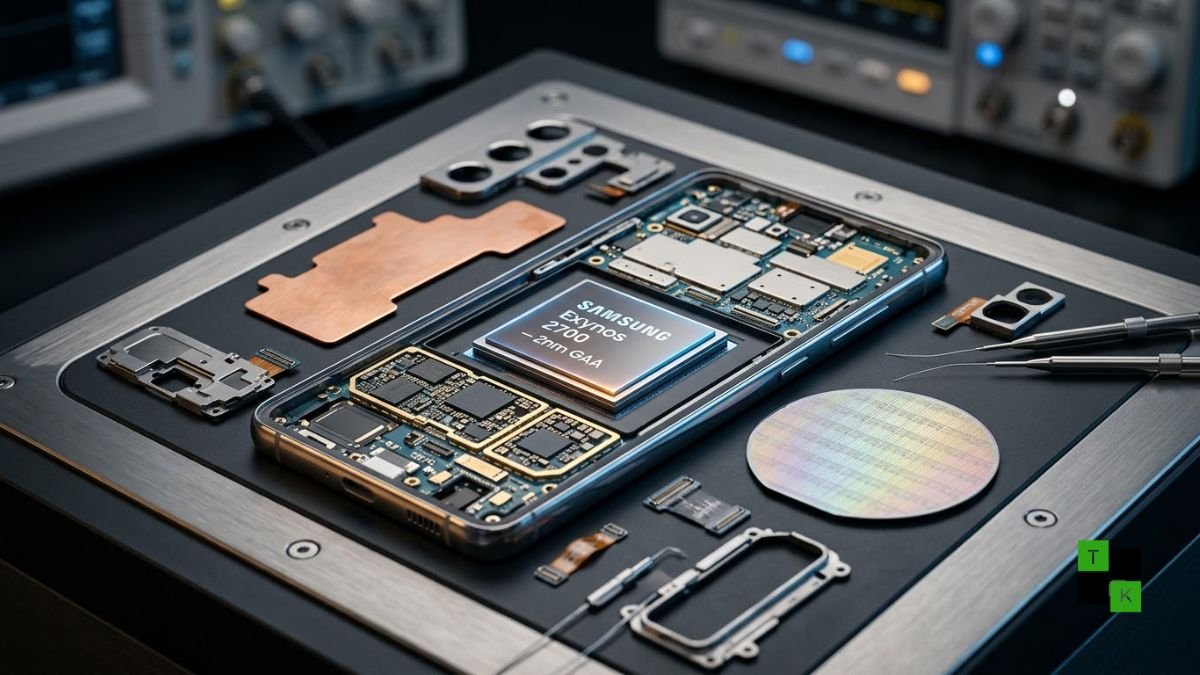
In what could mark the most consequential mobile semiconductor shakeup in years, Samsung Electronics is actively weighing whether to deploy its in-house Exynos 2700 processor inside its flagship Galaxy S27 Ultra.
The potential pivot comes in the wake of internal quality-assurance evaluations where Qualcomm’s next-generation flagship silicon (tentatively identified as the Snapdragon 8 Elite Gen 6) encountered severe thermal bottlenecks. According to supply-chain insiders, the Qualcomm chipset reportedly exceeded maximum allowable operating temperatures during high-stress validation benchmarks, triggering steep performance throttling across sustained gaming and generative AI workloads.
Samsung formally notified Qualcomm of the thermal irregularities last month, issuing a mid-October 2026 deadline for engineering fixes. With Samsung’s proprietary 2-nanometer (2nm) Exynos 2700 scheduled to commence commercial mass production before the end of the year, company executives are preparing the chip as a viable drop-in replacement-a move that would return Samsung silicon to the top-tier “Ultra” designation for the first time since the Galaxy S22 Ultra five years ago.
The Thermal Dilemma: Qualcomm Given Mid-October Ultimatum
Samsung’s mobile division (MX) maintains rigorous thermal and acoustic operating envelopes for its consumer devices, particularly given the ultra-thin 1.28mm display bezels and tightly packed internal vapor chambers planned for the S27 series:
- Sustained Load Throttling: During final engineering qualification runs, Qualcomm’s test units reportedly showed substantial heat dissipation spikes. While peak burst speeds met expectations, the processor could not maintain target clock frequencies under continuous load, downclocking sharply to prevent system resets.
- The Formal Red Flag: Samsung officially alerted Qualcomm of the thermal issues in September 2026, establishing a strict mid-October deadline for firmware mitigations, revised voltage-frequency tables, or minor stepping revisions.
- Collaborative Remediation: Both engineering teams are collaborating to optimize kernel drivers, lower core operating voltages, and adjust governor curves without sacrificing the architectural gains expected from Qualcomm’s custom Oryon CPU cores.
The 2nm Exynos 2700 Alternative: Mass Production by Year-End
While Qualcomm works against the clock to stabilize thermals, Samsung’s Device Solutions (DS) semiconductor unit has positioned the Exynos 2700 as a ready alternative:
- Advanced 2nm GAA Fabrication: The Exynos 2700 represents Samsung Foundry’s flagship deployment of its 2-nanometer Gate-All-Around (GAA / MBCFET) process node. GAA transistor architecture provides superior electrostatic gate control, reducing leakage currents and improving energy efficiency at lower operating voltages compared to standard FinFET designs.
- Q4 2026 Mass Production Ramp: Internal schedules indicate that wafer tape-outs have yielded positive parametric metrics, putting the Exynos 2700 on track to initiate commercial volume manufacturing before the close of 2026-aligning with assembly schedules for the Galaxy S27 family.
- Next-Gen Xclipse GPU & NPU: The chipset integrates Samsung’s latest neural processing engine for local Galaxy AI features alongside an updated AMD RDNA-based Xclipse graphics processor optimized for mobile ray tracing and high-frame-rate rendering.
Galaxy S27 Ultra Silicon Strategy: Reported Status Overview
| Operational Dimension | Reported Status & Supply-Chain Analysis |
| Primary Issue | Qualcomm next-gen silicon exceeded thermal limits and throttled |
| Target Device | Samsung Galaxy S27 Ultra (Global Flagship Tier) |
| Proposed Alternative | In-House Samsung Exynos 2700 (2nm GAA Process Node) |
| Production Timeline | Exynos 2700 mass production scheduled to begin by late 2026 |
| Supplier Notification | Samsung issued formal warning to Qualcomm with mid-October deadline |
| Historical Milestone | First potential Exynos Ultra model since Galaxy S22 Ultra (2022) |
| Strategic Benefit | Boosts Samsung Foundry utilization and cuts external component costs |
| Commercial Launch | Galaxy S27 series launch remains scheduled for January/February 2027 |
Historical Context: Ending a Five-Year All-Snapdragon Run on Ultra
If Samsung proceeds with an Exynos-powered Galaxy S27 Ultra-whether globally or as a regional split-it will break a five-year precedent:
- The S22 Ultra Era (2022): The Galaxy S22 series was the last generation where the Ultra model was divided between Qualcomm (Snapdragon 8 Gen 1) and Samsung (Exynos 2200). That release suffered from public controversies surrounding thermal throttling and inconsistent battery performance between regions.
- Snapdragon Exclusivity (S23 Ultra to S26 Ultra): Starting with the Galaxy S23 Ultra in 2023, Samsung signed multi-year global agreements with Qualcomm, making Snapdragon processors the exclusive engine of its top-tier Ultra models worldwide. This exclusive arrangement restored consumer confidence and unified software optimization across global markets.
- Re-Entering the Top Tier: Reintroducing an Exynos processor into the S27 Ultra would serve as a major vote of confidence from Samsung’s mobile division in its own foundry technology.
Strategic Implications: Foundry Utilization vs. Component Costs
Beyond resolving thermal performance, adopting the Exynos 2700 offers significant commercial advantages for Samsung Electronics:
- Slashing Bill of Materials (BoM) Overhead: High-end processors from third-party suppliers have grown increasingly expensive, with flagship mobile silicon commanding upwards of $200 per unit. Utilizing an internal processor substantially reduces per-device component expenses, boosting profit margins on the premium S27 Ultra.
- Revitalizing Samsung Foundry: Samsung’s contract chip manufacturing division has actively sought marquee clients for its 2nm GAA production lines. Packaging the Exynos 2700 inside tens of millions of flagship Galaxy smartphones immediately provides the manufacturing scale and real-world telemetry needed to attract external fabless customers.
- Supplier Leverage: Even if Qualcomm delivers a satisfactory thermal fix in time to retain its spot inside the S27 Ultra, possessing a verified, high-yield 2nm Exynos alternative gives Samsung significant leverage during annual contract and pricing negotiations.
Current Outlook Ahead of Early 2027 Launch
For now, the situation remains fluid. Samsung and Qualcomm engineers are conducting joint thermal mitigation tests, and the final decision will depend heavily on whether Qualcomm’s revised power profiles can pass stability stress runs without degrading peak benchmark scores.
With the Galaxy S27 series scheduled for an official unveiling in January or February 2027, Samsung must lock down its final motherboard layouts and Bill of Materials by November. Should Qualcomm fall short of Samsung’s operating thresholds, the Galaxy S27 Ultra could herald the triumphant-and closely watched-return of Exynos to the top of the Android hierarchy.
🚨 Stay Updated with TopKhoj! 🚨
Get the latest tech news, deals, and exclusive offers first!
📰 Visit News Section📲 Join our Telegram Channel for real-time updates and best deals!
🔗 Join Telegram Now💡 Stay informed and never miss a great deal with TopKhoj!
⚠️ Disclaimer: Any link provided in the article related to a product or service will redirect you to our affiliate partner(s)' website, which are affiliate links. This means that if you make a purchase through these links, we may earn a commission at no extra cost to you. This commission helps support our blog and our work.
🔔 All prices mentioned above are subject to change based on current offers and availability on e-commerce platforms. Please check the latest price and product details on the product page before making a purchase.