Add TOPKHOJ as a Preferred Source on Google
In the modern flagship smartphone landscape, stepping up from a standard model to a “Pro” variant almost universally guarantees higher numbers across every line of the specification sheet: larger displays, faster charging, sharper zoom lenses, and expanded battery cells. However, Vivo has inverted that conventional hierarchy with the rollout of its flagship X500 lineup.
While the standard Vivo X500 ships with a massive 7,500mAh battery and the halo Vivo X500 Pro Max tops out at 8,000mAh, the middle-tier Vivo X500 Pro battery is configured at 6,510mAh.
On paper, learning that a higher-priced Pro smartphone carries nearly 1,000mAh less capacity than its entry-level sibling has sparked debate across enthusiast forums and tech review circles. Yet, an examination of internal chassis architecture reveals that this decision was neither an oversight nor a cost-cutting shortcut. Instead, it reflects a calculated engineering trade-off designed to deliver a true compact premium flagship without compromising on thermal headroom or imaging hardware.
The X500 Battery Hierarchy: An Inverted Lineup Dynamic
To understand why the Vivo X500 Pro battery capacity is lower, one must look at how Vivo segmented the three models in the family:
- Vivo X500 (Base Model): Engineered as an everyday endurance champion, featuring a 6.59-inch display, the 3nm MediaTek Dimensity 9600M processor, and a 7,500mAh battery.
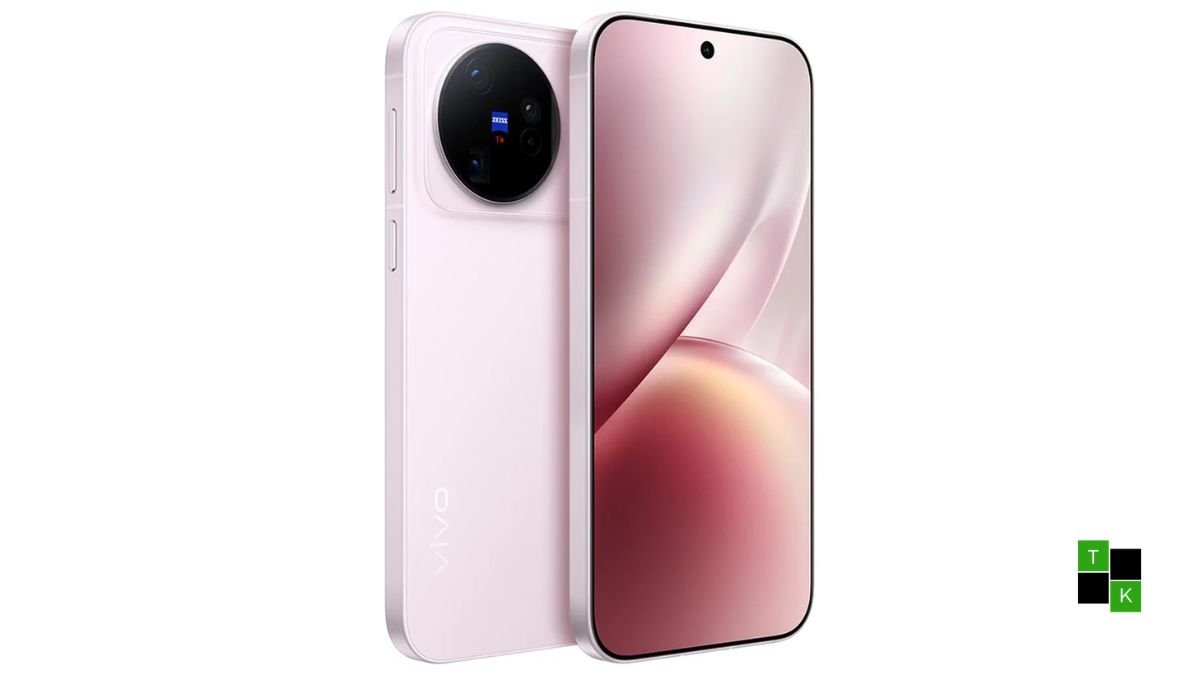
- Vivo X500 Pro: Engineered as a balanced, ergonomic compact flagship, housing a 6.36-inch LTPO OLED screen, the cutting-edge 2nm Dimensity 9600 Pro processor, and a 6,510mAh battery.
- Vivo X500 Pro Max: Engineered for maximum media consumption and mobile photography, packing a 6.85-inch 2K panel, a 200MP Zeiss periscope lens, and an 8,000mAh battery.
In most product stacks, the standard model acts as the compact baseline while the Pro and Pro Max expand in physical volume. With the X500 generation, Vivo designated the X500 Pro as the smallest physical device in the lineup, creating a physical packaging bottleneck that dictated a smaller cell footprint.
Form Factor Constraints: The 6.36-Inch Compact Footprint
The primary factor driving the smaller battery is physical volume. The Vivo X500 Pro measures just 151.78 × 71.92 × 7.95 mm and weighs 192 grams, compared to the broader, heavier frames of its counterparts:
- Chassis Volume Differential: The base X500 utilizes a 6.59-inch front fascia, granting its motherboard tray substantially more longitudinal surface area to lay out a wider silicon-carbon anode sheet. The Pro’s 6.36-inch frame reduces available internal chamber space by roughly 12%.
- Sub-8mm Thickness Ceiling: Despite housing an advanced cooling stack and multi-axis optical stabilizers, Vivo capped the X500 Pro’s chassis thickness under 8 millimeters. Fitting a 7,500mAh pack into this footprint would have forced the chassis past 9.2mm in thickness, breaking the phone’s slim, one-handed ergonomics.
- Hand-Feel Optimization: Consumer feedback on earlier flagship generations consistently complained about “wrist fatigue” caused by top-heavy camera phones exceeding 220 grams. By settling on 6,510mAh, Vivo preserved a lightweight sub-195g balance.
Optical Packaging and Wireless Charging Coils
Internal chassis real estate is a zero-sum game. The space occupied by battery cells on the standard X500 is repurposed on the Pro model to accommodate high-end hardware:
- Zeiss APO Periscope Telephoto Assembly: Unlike the standard X500, which relies on a more compact standard telephoto module, the X500 Pro integrates a dedicated Zeiss APO super-telephoto camera powered by Sony’s LYTIA 610 sensor with an 85mm portrait focal length. The physical prism, motor magnets, and optical stabilization floating rails consume critical volume in the top third of the chassis.
- 40W Wireless Charging Induction Coils: The base X500 omits wireless charging hardware to maximize space for its battery pouch. In contrast, the X500 Pro incorporates a 40W wireless fast-charging induction coil alongside reverse wireless charging shielding, adding vertical layers directly over the battery compartment.
- Dual Ingress Sealing: Both models feature IP68 and IP69 water and dust resistance. Sealing an active compact chassis against high-pressure water jets requires thicker silicone gasket boundaries around internal edges, further constraining battery pouch dimensions.
Lineup Comparison: Vivo X500 vs. X500 Pro vs. X500 Pro Max
| Specification | Vivo X500 (Base) | Vivo X500 Pro | Vivo X500 Pro Max |
| Display Size | 6.59″ 1.5K 144Hz OLED | 6.36″ 1.5K 144Hz LTPO | 6.85″ 2K 144Hz OLED |
| Processor | Dimensity 9600M (3nm) | Dimensity 9600 Pro (2nm) | Dimensity 9600 Pro (2nm) |
| Battery Capacity | 7,500mAh | 6,510mAh | 8,000mAh |
| Wired Charging | 90W Flash Charge | 90W Flash Charge | 90W Flash Charge |
| Wireless Charging | Not Supported | 40W Wireless Charging | 40W Wireless Charging |
| Periscope Camera | Standard Telephoto | 64MP Zeiss APO (3.5x) | 200MP Zeiss APO (4x ISZ) |
| Chassis Weight | ~213 grams | 192 grams | 225 grams |
| Thickness | ~8.15 mm | 7.95 mm | 7.95 mm |
Can Silicon Efficiency Offset the Capacity Deficit?
While 6,510mAh is quantitatively lower than 7,500mAh, the real-world battery life disparity is narrowed by component efficiency:
- 2nm Architecture Benefits: The X500 Pro is powered by MediaTek’s Dimensity 9600 Pro, fabricated on a cutting-edge 2nm process node. Compared to the 3nm Dimensity 9600M inside the base X500, the 2nm silicon yields roughly 15% to 18% better power efficiency under sustained CPU and GPU tasks.
- LTPO Dynamic Refresh Rate: The Pro variant features an advanced LTPO display backplane capable of dynamically modulating its refresh rate between 1Hz and 144Hz depending on on-screen content. The base X500 utilizes a standard LTPS OLED panel that switches between fixed step frequencies, consuming measurably more static display power when reading text or viewing lock-screen elements.
- Contextual Endurance Reality: Even with its smaller cell, a 6,510mAh capacity remains significantly larger than the battery packs found in traditional competitors-such as the Galaxy S26 Ultra (5,000mAh) or iPhone 17 Pro Max (~4,800mAh)-delivering multi-day endurance for most power users.
Buying Verdict: Should You Choose the X500 or the X500 Pro?
Vivo’s product strategy forces buyers to weigh physical comfort against maximum capacity:
- Choose the Base Vivo X500: If pure battery longevity and maximum screen real estate per dollar are your primary criteria. At an entry price around $820 (~₹80,000), it offers the biggest battery per dollar in the entire lineup.
- Choose the Vivo X500 Pro: If you prioritize pocketable ergonomics, top-tier Zeiss portrait photography, 40W wireless charging convenience, and the sustained power efficiency of 2nm computing. At around $950 (~₹93,000), the Pro is built for users who want flagship power without carrying a cumbersome phone.
- Choose the Pro Max: If you refuse to compromise on either front and want both the massive 8,000mAh battery and the flagship 200MP periscope zoom lens, provided you are comfortable with a 225g chassis.
Ultimately, the Vivo X500 Pro battery reduction is not an arbitrary downgrade, but an intentional design choice that delivers one of the most capable compact Android flagships on the market.
🚨 Stay Updated with TopKhoj! 🚨
Get the latest tech news, deals, and exclusive offers first!
📰 Visit News Section📲 Join our Telegram Channel for real-time updates and best deals!
🔗 Join Telegram Now💡 Stay informed and never miss a great deal with TopKhoj!
⚠️ Disclaimer: Any link provided in the article related to a product or service will redirect you to our affiliate partner(s)' website, which are affiliate links. This means that if you make a purchase through these links, we may earn a commission at no extra cost to you. This commission helps support our blog and our work.
🔔 All prices mentioned above are subject to change based on current offers and availability on e-commerce platforms. Please check the latest price and product details on the product page before making a purchase.