Add TOPKHOJ as a Preferred Source on Google
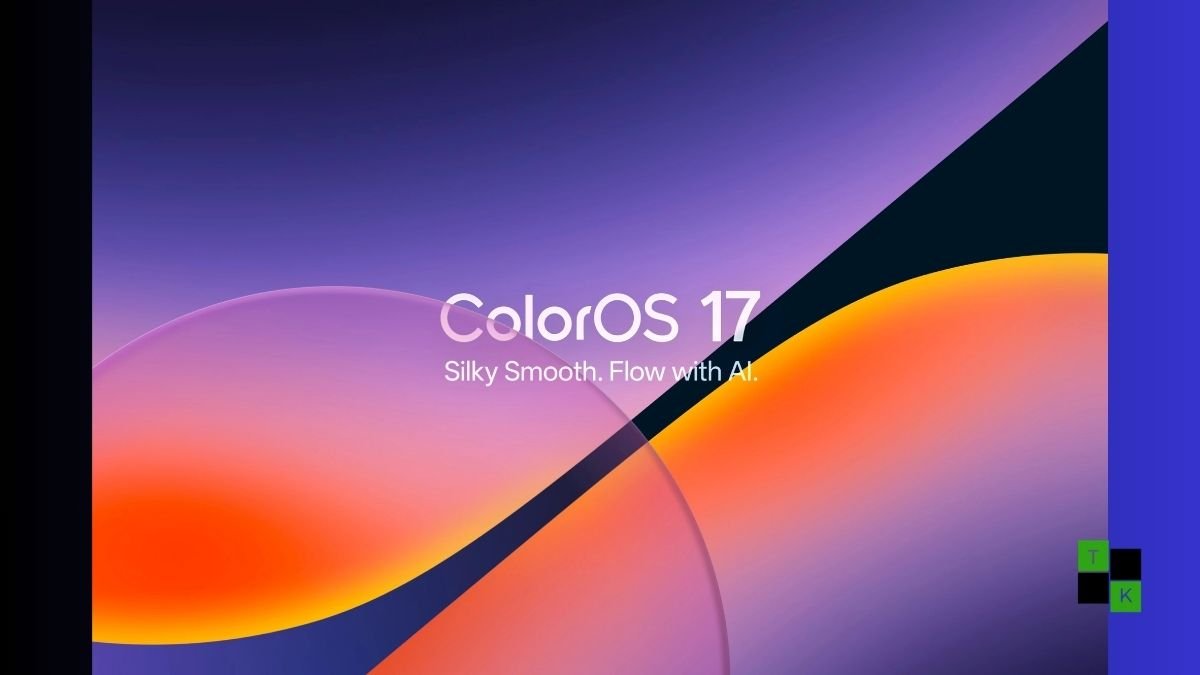
At its annual developer and ecosystem keynote, Oppo has officially introduced ColorOS 17, the company’s next-generation mobile platform built on the newly released Android 17. Representing one of the most substantial aesthetic and functional upgrades in the skin’s history, ColorOS 17 targets two distinct user priorities: physics-accurate visual fluidity and autonomous on-device artificial intelligence.
Headlined by the new Living Flow Design philosophy, ColorOS 17 integrates real-time adaptive rendering to eliminate dropped frames and micro-stutters during heavy multitasking. Beyond visual refinements, the update introduces an overhauled, highly customizable Control Center-already drawing favorable comparisons to iOS for its smoothness-alongside native AI agents like Mind Pilot for automated multi-step actions and AI Call Guard for real-time scam interception.
With public stable rollouts kicking off on October 29, 2026, for flagship devices including the OnePlus 15 and Oppo Find series, ColorOS 17 serves as the unified software baseline that will streamline firmware across Oppo, OnePlus, and Realme portfolios through early 2027.
Living Flow Design: Elastic Physics & Real-Time Adaptive Rendering
The core visual identity of ColorOS 17 centers on Living Flow Design, an animation architecture built from the ground up to mirror natural mechanical momentum:
- Elastic Motion Dynamics: Transition animations no longer follow rigid, linear trajectories. System dialogs, gesture dismissals, and folder expansions now feature elastic physical properties-reacting dynamically to finger velocity, angle of flick, and sudden directional interruptions without tearing or stuttering.
- Parallel Adaptive Rendering Engine: Addressing the frame drops that traditionally occur when heavy graphical overlays (like blur shaders) intersect with active 120Hz/144Hz app feeds, ColorOS 17 decouples UI animation threads from app content rendering. Swiping down the notification shade while running graphics-intensive games maintains consistent frame times.
- Refined Depth & Material Physics: System sheets feature real-time Gaussian blurs with dynamic chromatic dispersion, giving menus and translucent panels a grounded, tactile appearance that adapts to day/night light transitions.
Redesigned Control Center: Granular Customization and iOS Comparisons
The Control Center has undergone a ground-up redesign, shifting away from generic Android quick-toggle rows toward a modular, media-rich command deck:
- Modular Widget Architecture: Users can freely rearrange, resize, and group control tiles-expanding Wi-Fi and Bluetooth panels into full device-selector hubs with a single long-press, or shrinking less-used toggles into compact buttons.
- Fluid Volume & Brightness Sliders: Featuring curved, tactile vertical sliders that respond with precision haptic feedback from the linear motor, the interface has drawn widespread praise from tech commentators for matching and in some cases exceeding the tactile responsiveness of modern iOS.
- Integrated Media & Smart Home Carousel: The active playback controller supports smooth track scrubbing and one-tap AirPlay/Cast output routing, accompanied by direct shortcut access to Matter- and Google Home-linked smart appliances without opening companion apps.
Autonomous AI Capabilities: Mind Pilot & AI Call Guard
ColorOS 17 integrates foundational AI directly into system-level services rather than siloing it inside standalone apps:
- Mind Pilot (Autonomous Task Engine): Powered by an on-device multimodal reasoning model, Mind Pilot can execute complex, multi-step user requests across disparate applications. For example, a user can command: “Look at the concert ticket confirmation in my messaging app, add the date and venue to my calendar, set an alarm for three hours before, and check traffic times.” Mind Pilot navigates app boundaries, extracts semantic entities, and completes the sequence autonomously with user confirmation.
- AI Call Guard: Operating locally on the phone’s NPU, Call Guard analyzes incoming unknown calls in real time. It screens for known fraudulent telemarketing patterns, synthetic deepfake voice clones, and urgent social engineering scripts (such as fake parcel delivery or bank freeze scams). When a threat is detected, the phone flashes high-contrast contextual warning cards and can automatically route the caller to an interactive AI screening assistant.
- Smart Productivity Suite: Includes AI Summarizer 2.0 (for long web articles and multi-speaker voice recordings), AI Writer for context-aware email replies, and one-tap AI Object Eraser 3.0 with localized generative inpainting.
ColorOS 17 vs. ColorOS 16: Feature Comparison
| Software Dimension | ColorOS 16 (Android 16) | ColorOS 17 (Android 17) |
| Base Architecture | Android 16 Core Platform | Android 17 Foundation |
| Design Language | Aquamorphic Design 2.0 | Living Flow Design (Elastic Dynamics) |
| Animation Rendering | Standard Linear Compositor | Parallel Adaptive Rendering Engine |
| Control Center | Fixed Grid Toggles | Modular, Resizable & Fluid Command Hub |
| AI Task Execution | Single-App Prompt Tools | Mind Pilot (Cross-App Autonomous Actions) |
| Security & Privacy | Standard Spam Call Blocking | AI Call Guard (Real-Time Deepfake/Scam Detection) |
| Interruption Handling | Limited Gesture Interruption | Full Dynamic Interruption Curves |
| Ecosystem Unity | Separate Sub-Brand Branches | Unified Codebase across Oppo, OnePlus & Realme |
| Public Rollout Start | Late Q4 Cycle | October 29, 2026 (Rapid Flagship Wave) |
Ecosystem Unification: Harmonizing Oppo, OnePlus, and Realme
Under the hood, ColorOS 17 solidifies the shared software architecture uniting the broader consumer hardware family:
- Unified Kernel Scheduling: The core kernel algorithms-managing CPU frequency scaling, GPU workload slicing, and memory defragmentation-are now completely shared across ColorOS 17, OxygenOS 17, and Realme UI 7.0. This allows performance optimizations engineered for next-gen silicon (such as the Snapdragon 8 Elite Gen 6 and Dimensity 9500) to deploy across all three brand portfolios simultaneously.
- Distinct Brand Identity Preserved: While sharing foundational graphics engines and AI frameworks, each brand maintains its distinct identity. OnePlus retains its clean, minimalist aesthetic and signature red/white accents, Realme continues its punchy, high-contrast street-style iconography, and Oppo emphasizes refined corporate elegance.
- Cross-Device Interconnect: Enhanced O-Work and cross-screen sharing allow frictionless drag-and-drop file transfers, shared clipboards, and notification mirroring between ColorOS phones, OnePlus tablets, and Windows/Mac PCs.
Rollout Roadmap: Starting October 29
Oppo has outlined a structured, multi-phase deployment schedule designed to seed public stable builds rapidly without server congestion:
Phase 1: Flagship Launch Wave (Starting October 29, 2026)
- Oppo Find Series: Oppo Find X8, Find X8 Pro, Find X8 Ultra, and next-generation Find flagships.
- OnePlus Flagships: OnePlus 15, OnePlus 13, and OnePlus Open.
Phase 2: Performance & Premium Mid-Range (November – December 2026)
- OnePlus Series: OnePlus 15R, OnePlus 13R.
- Oppo Reno Series: Oppo Reno 14 Pro+, Reno 14 Pro, Reno 14.
- Oppo Foldables: Find N3, Find N3 Flip.
- Select Realme Flagships: Realme GT 7 Pro, GT Neo 7.
Phase 3: Volume & Value Tiers (January – Early 2027)
- Oppo K & F Series: Oppo K14 Plus 5G, F35 Pro, F35, K13 series.
- OnePlus Nord Lineup: OnePlus Nord 5, Nord CE 5.
- Realme Numbered Series: Realme 14 Pro+ / Pro, P4s series.
- Oppo Pad Series: Oppo Pad 3 Pro, Pad Air series.
The Verdict
With ColorOS 17, Oppo directly challenges the long-held perception that Android manufacturer skins must compromise on animation consistency and tactile finesse. By pairing its elastic Living Flow Design and customizable Control Center with practical on-device AI tools like Mind Pilot and AI Call Guard, ColorOS 17 sets a refined standard for modern Android software as it rolls out to global users this fall.
🚨 Stay Updated with TopKhoj! 🚨
Get the latest tech news, deals, and exclusive offers first!
📰 Visit News Section📲 Join our Telegram Channel for real-time updates and best deals!
🔗 Join Telegram Now💡 Stay informed and never miss a great deal with TopKhoj!
⚠️ Disclaimer: Any link provided in the article related to a product or service will redirect you to our affiliate partner(s)' website, which are affiliate links. This means that if you make a purchase through these links, we may earn a commission at no extra cost to you. This commission helps support our blog and our work.
🔔 All prices mentioned above are subject to change based on current offers and availability on e-commerce platforms. Please check the latest price and product details on the product page before making a purchase.