Add TOPKHOJ as a Preferred Source on Google
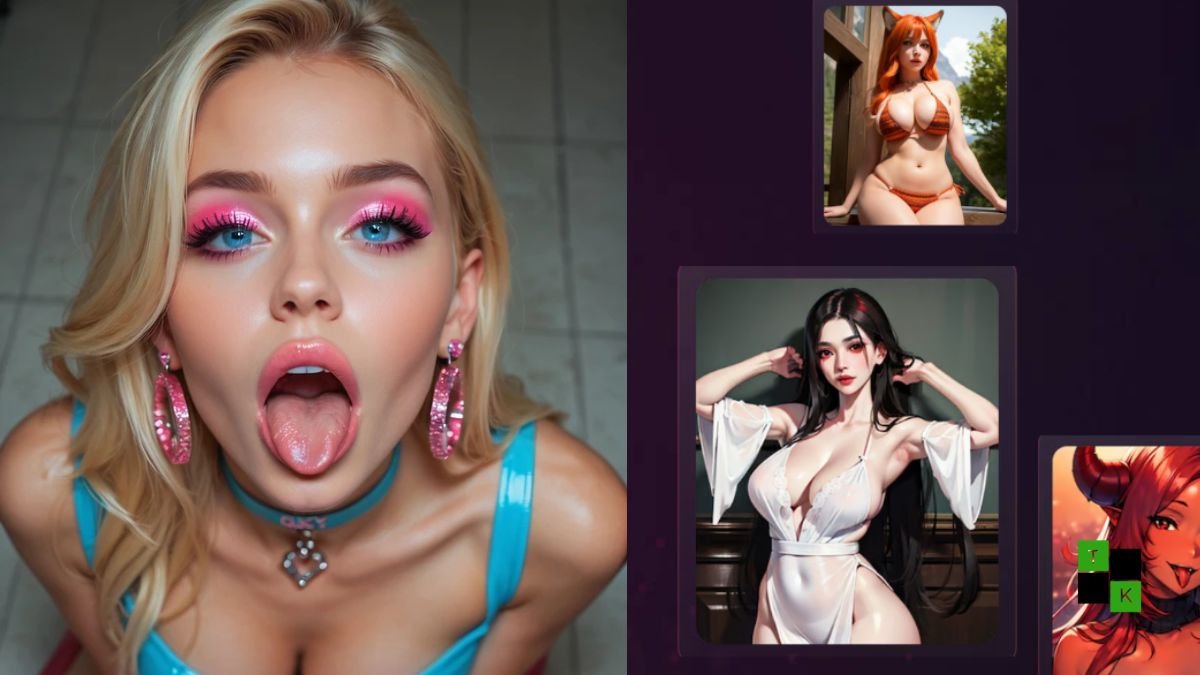
While mainstream commercial generative engines-such as Midjourney, OpenAI’s DALL-E 3, and Google Imagen-enforce strict prompt filtering and safety guardrails, a parallel ecosystem of developer-friendly and unrestricted creative platforms has matured. Driven by the open-source diffusion community and fine-tuned checkpoints, these platforms cater to digital artists, character designers, and adult visual creators seeking unrestricted creative control.
Navigating this space requires balancing raw model capability against data privacy, cloud computing overhead, and platform moderation rules. Below is a structured architectural comparison of the top ten platforms-alongside a notable specialized bonus engine-operating across the generative synthesis landscape in 2026.
At a Glance: Feature & Infrastructure Matrix
| Platform | Primary Specialty | Underlying Architecture | Hosting / Privacy Model | Pricing / Access Model |
| 1. HammerAI | Private Local/Cloud Chat & Art | Open-Source LLMs & SD Checkpoints | Local Device or Zero-Log Cloud | Free Tier; Optional Cloud Compute |
| 2. Civitai | Open-Source Model Hub & Web Gen | SDXL, Flux, Pony, Illustrious | Cloud Airship & Direct Downloads | Free (Buzz Token System / VIP) |
| 3. Promptchan AI | Photorealistic & Anime Visuals | Fine-Tuned Proprietary Diffusion | Cloud Hosted | Freemium (Credit / Tiered Sub) |
| 4. Crushon AI | Multimodal Roleplay & Portraits | Uncensored LLMs + Image Pipeline | Cloud Hosted | Free Daily Credits; Paid Sub |
| 5. PixAI | Dedicated Anime & Stylized Art | SDXL Derivatives & Custom LoRAs | Cloud Hosted (Browser & Mobile) | Daily Free Credits; Pro Pass |
| 6. Muah AI | Multimodal Companion & Video | Hybrid Multimodal Framework | Encrypted Cloud | Free Demo; Tiered VIP Access |
| 7. OurDream AI | Motion Synthesis & Posed Rendering | Fine-Tuned Video Diffusion | Cloud Hosted | Credit-Based / Monthly Plans |
| 8. NovelAI | Stylized Illustration & Fiction | NovelAI Diffusion Anime V3 (Custom) | Cloud (Zero-Log Token Architecture) | Tiered Subscription (Opus / Scroll) |
| 9. Candy AI | Character Modeling & Photos | Proprietary Generative Pipeline | Cloud Hosted | Freemium Subscription |
| 10. DreamGF AI | Avatar Posing & Outfit Direction | High-Resolution Portrait Engine | Cloud Hosted | Subscription with Token Top-Ups |
| Bonus: Ehentai AI | 2D Manga & Doujin Illustration | Fine-Tuned 2D Diffusion Weights | Cloud Hosted | Credit-Based System |
Detailed Platform Analysis
1. HammerAI (hammerai.com)
- Core Architecture: Built to run quantized open-source models directly inside the user’s web browser via WebGPU or locally via desktop client, eliminating third-party server data transmission.
- Key Capabilities: Provides multimodal roleplay alongside text-to-image rendering without remote prompt logging.
- Best For: Privacy-focused creators who prefer self-hosted or zero-telemetry workflows without maintaining complex Python environments.
2. Civitai (civitai.com)
- Core Architecture: The primary repository for the open-source AI art community, hosting hundreds of thousands of custom Checkpoints, LoRAs, Textual Inversions, and ControlNet modules.
- Key Capabilities: Enables users to download weights for local tools (AUTOMATIC1111, ComfyUI) or generate directly in-browser using its “Airship” cloud engine powered by the site’s Buzz token economy.
- Best For: Advanced digital artists seeking deep pipeline control, style stacking, and access to fine-tuned community models like Pony Realism and Illustrious.
3. Promptchan AI (promptchan.com)
- Core Architecture: A hosted visual suite supporting photorealistic, anime, and cinematic styles through simple text prompting.
- Key Capabilities: Features automated pose transfer, face restoration, background removal, and short video animation clips derived from initial renders.
- Best For: Casual to intermediate creators wanting fast, unmoderated cloud generation without local hardware constraints.
4. Crushon AI (crushon.ai)
- Core Architecture: An interactive platform that combines uncensored conversational large language models with dynamic image synthesis.
- Key Capabilities: Generates contextual visual portraits tied to continuous roleplay scenarios and user-defined character sheets.
- Best For: Narrative designers and writers building companion interactions with real-time visual output.
5. PixAI (pixai.art)
- Core Architecture: Cloud-based anime art platform integrating custom LoRA training, inpainting, ControlNet, and model merging.
- Key Capabilities: Offers an accessible web and mobile workspace with a generous daily credit allotment, supporting fine-tuned community anime checkpoints.
- Best For: Manga illustrators, concept artists, and enthusiasts focused on high-quality 2D aesthetic rendering.
6. Muah AI (muah.ai)
- Core Architecture: A multimodal suite combining natural-language interaction, voice synthesis, and visual media generation.
- Key Capabilities: Delivers on-demand photo requests, short-form video generation, and real-time voice exchange under an encrypted user vault.
- Best For: Users seeking a multi-format, conversational platform with integrated media synthesis.
7. OurDream AI (ourdream.ai)
- Core Architecture: A hosted visual synthesis tool with an emphasis on motion generation and character continuity.
- Key Capabilities: Generates complex character framing, outfit transitions, and short looping video sequences with minimal prompt rejections.
- Best For: Creators experimenting with AI-generated video shorts and rapid concept prototyping.
8. NovelAI (novelai.net)
- Core Architecture: Powered by custom-trained generative diffusion models (NovelAI Diffusion Anime V3) and proprietary LLMs (Kayra, Clio).
- Key Capabilities: Employs end-to-end encrypted storage where prompt histories and generated outputs are never logged or stored server-side.
- Best For: Professional illustrators, storytellers, and fantasy world-builders demanding prompt consistency and verified data privacy.
9. Candy AI (candy.ai)
- Core Architecture: A character-generation and companion platform built around high-fidelity portrait models.
- Key Capabilities: Allows granular control over physical traits, clothing styles, and lighting conditions via guided UI menus alongside text prompts.
- Best For: Non-technical users looking for straightforward photo generation without prompt engineering.
10. DreamGF AI (dreamgf.ai)
- Core Architecture: An interactive visual studio centered on consistent persona creation and procedural photo requests.
- Key Capabilities: Features a step-by-step avatar builder, pose selectors, outfit libraries, and automated scene generation.
- Best For: Creating recurring, visually consistent digital avatars for social media campaigns or character portfolios.
Bonus: Ehentai AI (ehentai.ai)
- Core Architecture: A specialized niche engine fine-tuned exclusively on classical 2D manga, anime, and doujinshi illustration styles.
- Key Capabilities: Excels at linework precision, cel shading, and stylized character anatomy that general-purpose photorealistic diffusion models often struggle to reproduce.
- Best For: Fans and digital artists focused strictly on Japanese 2D comic art styles.
Technical & Architectural Considerations
1. Hosted Web Platforms vs. Self-Hosted Pipelines
- Cloud Convenience: Hosted web applications (e.g., Promptchan, PixAI, NovelAI) eliminate the need for expensive local hardware, running heavy diffusion passes on enterprise cloud GPUs (Nvidia H100/A100 clusters).
- Local Control: For total independence and zero recurring cost, downloading open checkpoints from Civitai to run locally via ComfyUI or AUTOMATIC1111 remains the industry gold standard for privacy and technical control, provided the user has a modern GPU with at least 8GB to 16GB of VRAM.
2. Base Model Architectures
- SD 1.5 vs. SDXL vs. Modern Checkpoints: While legacy models relied on Stable Diffusion 1.5 due to low memory footprints, modern unrestricted generation has shifted toward SDXL, Pony Diffusion, and emerging Flux-based fine-tunes, which offer improved prompt adherence, accurate anatomical hands, and natural skin textures.
3. Privacy, Data Retention, and Security
- Data Logging: When using third-party hosted generators, review service-level data policies. Platforms like NovelAI and HammerAI prioritize encryption and zero-log architectures, whereas standard ad-supported platforms may retain generation histories on shared caching servers.
- Ethical Compliance: Uncensored tools must be operated responsibly. Commercial platforms enforce strict bans on non-consensual deepfakes, realistic depictions of non-consenting real individuals, and any illegal imagery, backed by mandatory age-verification gates across jurisdictions.
Choosing the right platform depends on your technical setup and artistic goals. Creators seeking granular workflow control and custom styling will find the strongest foundation in open-source hubs like Civitai, while those prioritizing convenience or end-to-end encryption will benefit from specialized suites like NovelAI or browser-based tools like PixAI.
🚨 Stay Updated with TopKhoj! 🚨
Get the latest tech news, deals, and exclusive offers first!
📰 Visit News Section📲 Join our Telegram Channel for real-time updates and best deals!
🔗 Join Telegram Now💡 Stay informed and never miss a great deal with TopKhoj!
⚠️ Disclaimer: Any link provided in the article related to a product or service will redirect you to our affiliate partner(s)' website, which are affiliate links. This means that if you make a purchase through these links, we may earn a commission at no extra cost to you. This commission helps support our blog and our work.
🔔 All prices mentioned above are subject to change based on current offers and availability on e-commerce platforms. Please check the latest price and product details on the product page before making a purchase.