Add TOPKHOJ as a Preferred Source on Google
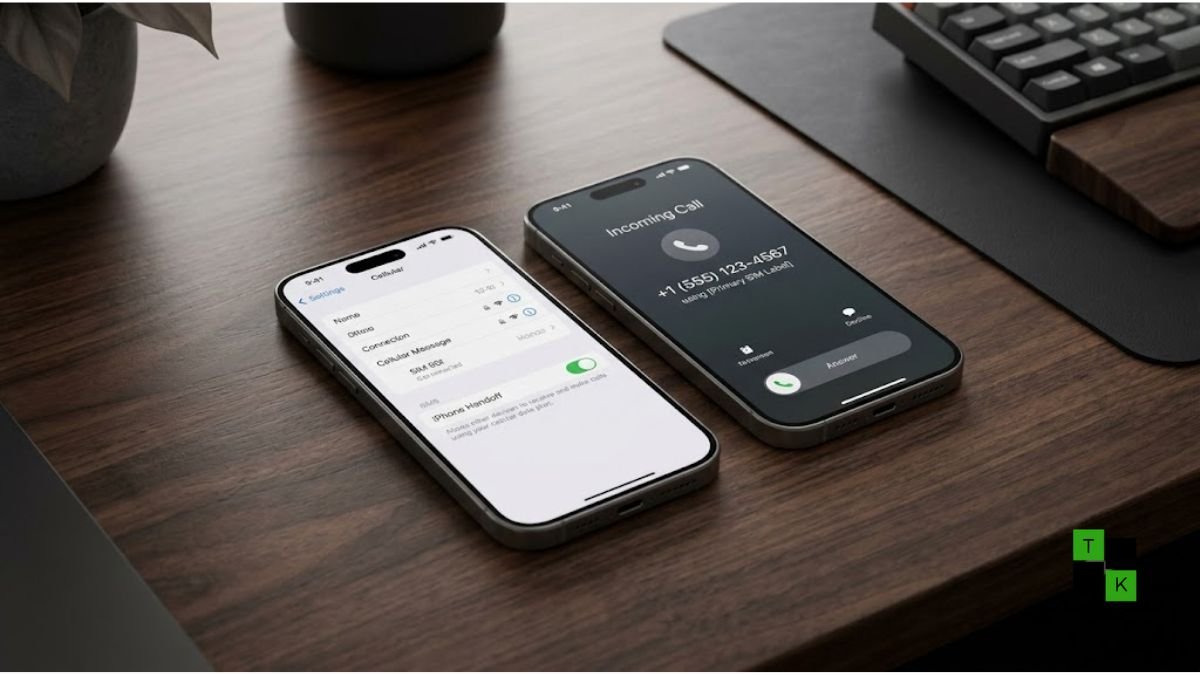
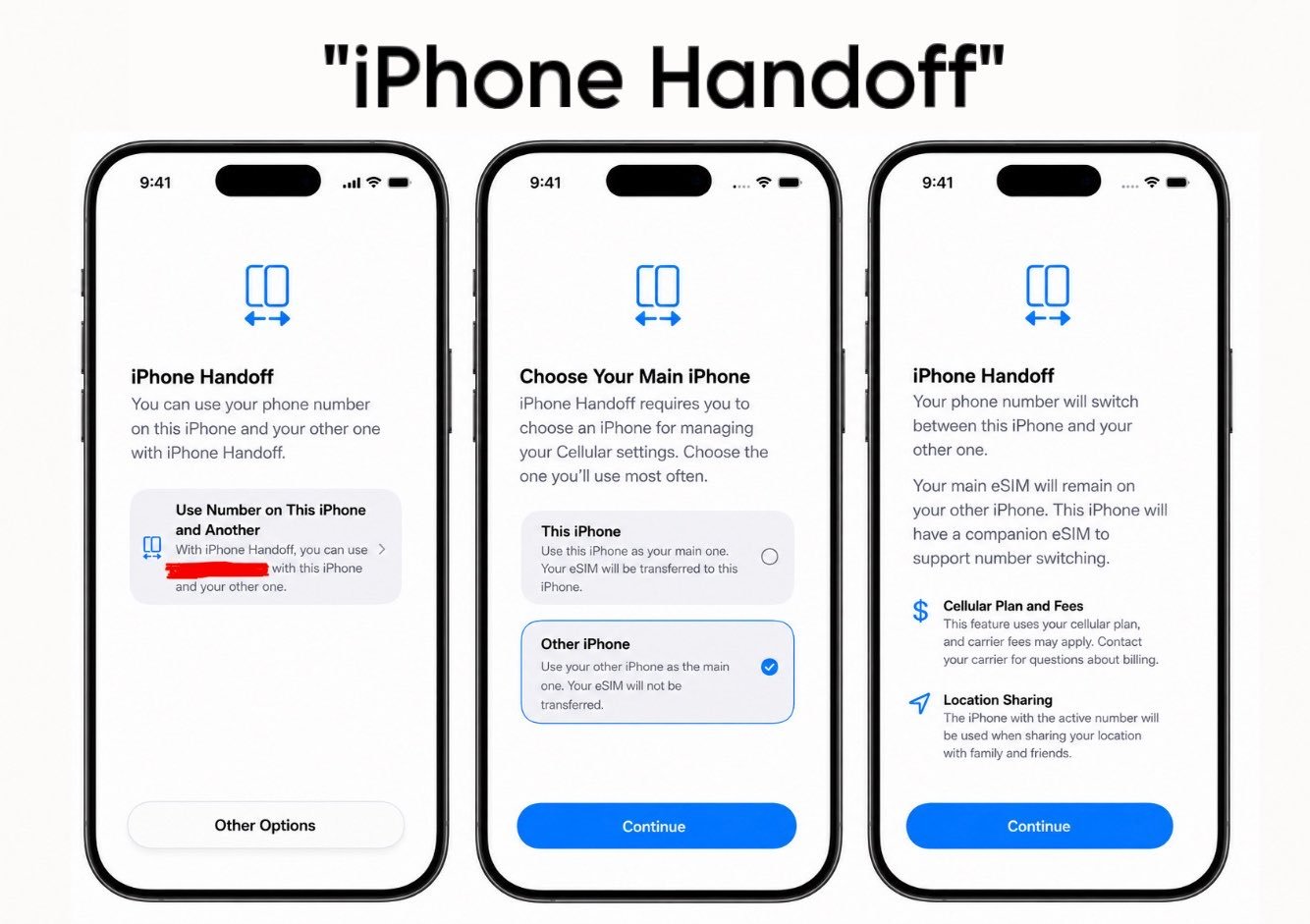
Apple has integrated a dedicated “iPhone Handoff” feature into its upcoming iOS 27 operating system, enabling users to share a single cellular phone number across two separate iPhones. First teased briefly on a feature slide during the WWDC 2026 keynote and recently demonstrated through the Xcode 27 developer environment, the functionality allows users to toggle active cellular communication between a daily primary handset and a secondary companion iPhone without requiring a second paid mobile line.
The implementation addresses a long-standing workflow friction for multi-device owners-including developers, business professionals, and travelers-who maintain secondary or compact backup phones.
30-Second TL;DR
- Core News: Apple’s iOS 27 adds “iPhone Handoff,” allowing two iPhones to share one cellular phone number.
- Setup Architecture: Configured via the Cellular settings menu by designating one device as the primary iPhone and the second as a companion.
- eSIM Mechanics: The main iPhone retains the primary eSIM profile, while the secondary handset receives an assigned companion eSIM.
- Dynamic Routing: Incoming calls and cellular data route to whichever iPhone is actively designated, while global account settings remain on the primary device.
- Carrier Dependent: The feature requires iOS 27 on both devices along with network carrier support, with T-Mobile and Deutsche Telekom tipped among the early partners.
How iPhone Handoff Works in iOS 27
Configured directly inside the native Settings > Cellular menu, the setup process guides users through establishing a multi-device link:
- Primary Device Assignment: Users select the primary iPhone they carry most frequently. This hardware retains the core carrier profile, authentication keys, and master billing configuration.
- Companion eSIM Provisioning: The secondary iPhone is paired over the user’s Apple Account and provisioned with a secure “companion eSIM” linked to the same mobile directory number.
- Active State Toggling: Rather than both devices ringing at all times like traditional multi-SIM cards, Apple utilizes an active handoff model. Users can switch active cellular duties from the Action Center, lock screen, or Cellular settings whenever they leave home with their secondary phone.
- Contextual Location Sharing: “Find My” and emergency location routing automatically adapt based on which physical iPhone is actively carrying the line at any given moment.
Apple iPhone Handoff vs. Traditional Carrier MultiSIM
| Feature / Metric | Traditional Carrier MultiSIM | iOS 27 iPhone Handoff |
| Supported Devices | Phones, Apple Watch, Cellular Tablets | Two iPhones running iOS 27 |
| Incoming Call Behavior | Rings all connected devices simultaneously | Directs calls to the actively chosen iPhone |
| Cellular Management | Carrier portals / Separate SIM profiles | Centralized inside Primary iPhone Settings |
| Location Sharing | Tied to individual hardware GPS | Dynamically follows the active phone |
| Setup Process | Manual QR codes or branch activation | On-device Settings pairing via Apple Account |
| Carrier Prerequisite | Standard Multi-Device Plan | eSIM Companion Plan Authorization |
Key Practical Use Cases
The introduction of iPhone Handoff solves several practical dilemmas for smartphone power users:
- Work vs. Personal Partitioning: Users can carry a compact or stripped-down iPhone during weekends or outdoor sports without banking or enterprise work apps, while remaining reachable at their main contact number.
- Form Factor Flexibility: Allows users to alternate between a large flagship (like an iPhone Pro Max or prospective foldable) for media consumption at home and a smaller, lighter model (such as an iPhone Air or mini) during commutes and workouts.
- Developers and Testers: Provides hardware reviewers and iOS software engineers the ability to test pre-release builds on a secondary handset without constantly moving their physical SIM or transferring eSIM profiles between phones.
Carrier Requirements and Deployment Timeline
While the underlying software protocol is built into the final developer betas of iOS 27, widespread availability will depend heavily on telecommunications operators. Because telecom providers must authorize paired companion eSIM profiles on cellular network switches, carriers must implement Apple’s handoff provisioning protocol.
Early developer findings indicate that T-Mobile in the United States and Deutsche Telekom in Germany may be among the initial carriers to roll out network support. Apple is expected to officially discuss carrier partnerships and deployment timelines when iOS 27 rolls out to the public later this month.
🚨 Stay Updated with TopKhoj! 🚨
Get the latest tech news, deals, and exclusive offers first!
📰 Visit News Section📲 Join our Telegram Channel for real-time updates and best deals!
🔗 Join Telegram Now💡 Stay informed and never miss a great deal with TopKhoj!
⚠️ Disclaimer: Any link provided in the article related to a product or service will redirect you to our affiliate partner(s)' website, which are affiliate links. This means that if you make a purchase through these links, we may earn a commission at no extra cost to you. This commission helps support our blog and our work.
🔔 All prices mentioned above are subject to change based on current offers and availability on e-commerce platforms. Please check the latest price and product details on the product page before making a purchase.